Introduction
Actively disengaged employees cost the U.S. economy approximately $1.9 trillion annually in lost productivity, according to Gallup's 2024 research. That figure covers both not-engaged and actively disengaged workers—and the difference is sharp. Not-engaged employees go through the motions. Actively disengaged employees work against you.
They spread negativity, miss deadlines, resist feedback, and drag down team morale. In a small business with a lean team, one actively disengaged employee can hit productivity, retention, and culture hard.
Below, you’ll learn how to spot active disengagement early, what causes it, and how to act before it spreads.
Key Takeaways:
- Actively disengaged employees resent the organization and work against its goals
- About 17% of U.S. workers fall into this category as of 2024
- Small businesses face higher risk—one toxic employee can shape the whole culture
- Honest conversations and root-cause analysis can sometimes reverse disengagement
- Expert HR support helps you handle performance management and compliance risks
What Does It Mean to Be an Actively Disengaged Employee?
An actively disengaged employee is resentful, vocal about their dissatisfaction, and working against your business.
Gallup defines actively disengaged workers as those who are "resentful and potentially harmful to team morale and outcomes."
They differ sharply from simply "not engaged" employees, who are disconnected but not destructive. Not-engaged workers show up, do the minimum, and leave. Actively disengaged employees spread cynicism, undermine leadership decisions, and discourage engaged coworkers.
The Contagion Effect
Negativity spreads. Research on emotional contagion found that absorbed anger in the workplace correlates with increased accidents and injuries. While this Italian study of 1,000 employees didn't prove that one actively disengaged worker causes others to disengage, it demonstrates how toxic emotions ripple through teams.
Real-world example: Imagine an administrative employee who constantly complains about leadership, misses deadlines, dismisses new initiatives as "doomed to fail," and tells new hires that "no one lasts here long." That employee is actively poisoning your workplace culture.
Why Small Businesses Are Especially Vulnerable
When you have five employees instead of fifty, one toxic team member represents 20% of your workforce. Their negativity reaches everyone. They can:
- Derail team meetings with cynical remarks
- Discourage new hires during their critical first 90 days
- Damage client relationships through poor service
- Force your best employees to pick up slack, leading to burnout and turnover
Small businesses often lack dedicated HR support to address these issues quickly, allowing the problem to fester.
The Three Levels of Employee Engagement
Not all disengagement looks the same. Understanding where an employee falls on the engagement spectrum helps you respond appropriately.
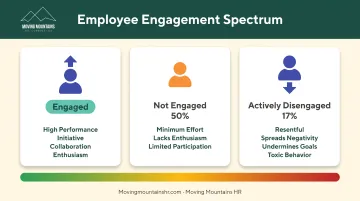
Engaged Employees
Engaged employees are emotionally committed to their work and aligned with your company's mission. They demonstrate:
- High performance and consistent quality
- Initiative and problem-solving without being asked
- Strong peer relationships and collaboration
- Discretionary effort beyond the job description
- Genuine enthusiasm about company goals
These employees care about outcomes, not only the paycheck.
Not Engaged Employees
Not engaged employees represent the largest category. Gallup's 2023 data showed 50% of U.S. workers were not engaged. These workers:
- Do the minimum required but lack enthusiasm
- Show up, complete tasks, and go home without emotional investment
- Rarely volunteer for projects or contribute ideas
- Miss deadlines without strong emotional reaction
- Participate minimally in meetings
This is often a transitional state. Not-engaged employees haven't given up yet, but they aren't thriving. Without intervention, they may slide toward active disengagement.
Actively Disengaged Employees
Actively disengaged employees are resentful and act out their unhappiness in ways that harm your business. As of 2024, 17% of U.S. workers fell into this category, up from 13% in 2018-2019.
These employees:
- Openly criticize leadership and company decisions
- Spread cynicism and discouragement to coworkers
- Resist feedback and new responsibilities
- Work against organizational goals, sometimes deliberately
- Create a toxic atmosphere that drives others away
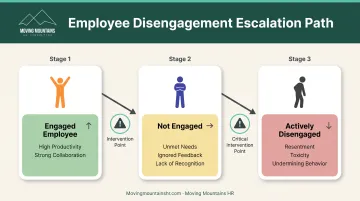
Active disengagement usually builds over time. Employees often move from engaged to not engaged, then tip into active disengagement after prolonged frustration and unaddressed concerns.
7 Warning Signs of Actively Disengaged Employees
Spotting active disengagement early gives you a chance to intervene before it damages your culture. Look for repeated patterns across multiple areas:
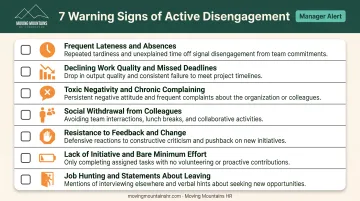
Frequent Lateness, Extended Breaks, or Unexplained Absences
Actively disengaged employees signal their apathy through attendance. They:
- Arrive late and leave early regularly
- Take extended lunch breaks or frequent smoke/coffee breaks
- Call in sick often, especially on Mondays or Fridays
- Use up all PTO immediately and request additional unpaid time
Research on work withdrawal links lateness, absence, and reduced hours to disengagement. A 2022 meta-analysis of 179 studies covering over 139,000 employees found that lower engagement predicts future absenteeism.
Decline in Work Quality and Missed Deadlines
Performance nosedives when employees stop caring. Warning signs include:
- Sloppy work that requires constant correction
- Missed deadlines with excuses rather than ownership
- Blame shifted to others, systems, or circumstances instead of ownership
- Declining attention to detail
- Incomplete projects and half-finished tasks
Toxic Negativity and Chronic Complaining
Disengagement rarely stays quiet. These employees vocalize dissatisfaction. They:
- Criticize leadership decisions openly and cynically
- Disparage company goals and initiatives
- Gossip about coworkers and management
- Spread cynicism in meetings and conversations
- Frame every change as negative
- Use phrases like "That'll never work here" or "Nothing ever changes"
This behavior is particularly damaging because negativity spreads through teams faster than positivity.
Social Withdrawal or Strained Relationships with Colleagues
Isolation and friction with coworkers show up next:
- Skip team lunches, social events, and optional gatherings
- Avoid collaboration and prefer working alone
- Respond curtly or dismissively to coworkers
- Undermine or belittle colleagues' achievements
- Create cliques or divisive "us vs. them" dynamics
Resistance to Feedback, Change, or New Responsibilities
When you try to course-correct, actively disengaged employees dig in:
- Become defensive when receiving constructive feedback
- Refuse growth opportunities or new projects
- Resist process changes with "We've always done it this way"
- Frame development conversations as attacks
- Dismiss training or coaching as a waste of time
Research on reactions to organizational change shows that fear, low participation, and negative reactions reduce effort and work quality.
Lack of Initiative and Refusal to Go Beyond the Bare Minimum
Initiative drops off. They stop volunteering and wait to be told what to do:
- Never raise their hand for new projects
- Avoid taking ownership of problems
- Wait for explicit instructions rather than problem-solving independently
- Do only what's written in their job description
- Show no interest in professional development
Indications of Job Hunting or Open Statements About Leaving
Sometimes the intent to leave is hard to miss:
- Updated LinkedIn profiles and active networking
- References to recruiters or interviews
- Passive-aggressive comments like "I'm looking for something better"
- Sudden requests for time off for "appointments"
- Withdrawal of long-term commitment (declining projects that extend months ahead)
These behaviors signal the employee has mentally checked out.
What Causes Active Disengagement?
Employees rarely start out actively disengaged. It's the result of prolonged frustration and unmet needs. Each cause below points to a different place to intervene.
Poor Leadership and Management
Gallup associates 70% of the variance in team engagement with management. Common leadership failures include:
- Micromanagement and lack of autonomy
- Inconsistent or absent feedback
- Favoritism and perceived unfairness
- Lack of transparency in decision-making
- Unclear expectations or constantly shifting priorities
Unmet Basic Workplace Needs
Gallup's Q12 engagement survey identifies core needs:
- Clear expectations and necessary resources
- Recognition and strengths-based work
- Feeling cared for and supported
- Opportunities for development and growth
- Voice in decisions and alignment with purpose
When these needs go unmet over time, employees disengage.
Toxic Workplace Culture
MIT Sloan research analyzing 34 million employee profiles found that toxic culture was 10.4 times more predictive of turnover than compensation. Elements include:
- Disrespect or incivility
- Non-inclusive environment
- Unethical behavior
- Cutthroat competition among employees
- Abusive management
Personal Stressors and Burnout
Sometimes disengagement stems from personal life challenges:
- Health issues or chronic pain
- Family crises or caregiving responsibilities
- Financial stress
- Burnout from prolonged overwork
Temporary burnout often improves with support. Chronic active disengagement is different: it grows from resentment toward the organization.
The Escalation Path
Employees typically move from engaged → not engaged → actively disengaged when their concerns go unaddressed. Each unmet need, each ignored feedback request, and each perceived injustice pushes them further down the slope.
How to Re-Engage Actively Disengaged Employees
Some actively disengaged employees can be re-engaged if you act quickly and address root causes. Others will not respond, and spotting that early protects the rest of your team.
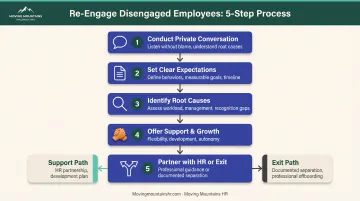
Conduct a Private, Direct Conversation Early
Address the issue immediately in a psychologically safe setting. Open with curiosity, not blame, and cover the same ground Gallup ties to meaningful weekly conversations: recognition, collaboration, goals, priorities, and strengths.
Best practices:
- Avoid accusatory language ("You're being negative")
- Seek to understand: "I've noticed some changes. What's going on?"
- Listen actively without interrupting
- Ask about unmet needs: workload, clarity, recognition, growth
Set Clear Expectations and Document Everything
Establish specific behavioral expectations and measurable performance goals. SHRM recommends documenting all conversations for consistency and legal compliance.
Documentation should include:
- Specific incidents and observable behaviors
- Clear, attainable performance targets
- Timeline for improvement
- Consequences of continued issues
Avoid vague labels like "bad attitude." Focus on observable conduct: missed deadlines, attendance patterns, and measurable output.
Identify Root Causes and Address Systemic Issues
Before blaming the employee, assess whether disengagement stems from:
- Workload imbalance or unrealistic expectations
- Lack of recognition or growth opportunities
- Poor management or unclear goals
- Misalignment with company values or role
If systemic issues exist, fix them. You can't expect an employee to re-engage in a toxic or unsupportive environment.
Offer Support, Flexibility, and Growth Opportunities
Re-engagement tactics include:
- Flexible work arrangements or schedule adjustments
- Professional development opportunities
- Clearer career pathways and promotion criteria
- Increased autonomy on meaningful projects
- Regular feedback and recognition
Research on bottom-up interventions found that strengths-based work improves engagement.
Partner with HR Early
Small businesses should not wait until the situation has damaged team morale. Bring in HR support early to navigate:
- Performance management guidance
- Compliance concerns and documentation
- Difficult conversations and intervention strategies
Moving Mountains HR provides performance management support, fractional CHRO services, and ongoing HR consultation for small businesses that need help addressing disengagement before it escalates.
Know When to Cut Your Losses
Some actively disengaged employees cannot or will not re-engage. When that becomes clear, parting ways is often the better call for the organization.
Consider termination when:
- The employee refuses to improve despite support
- Their behavior damages team morale and productivity
- They create legal or compliance risks
- Re-engagement efforts have failed over a documented period
SHRM advises skipping a performance improvement plan only for willful misconduct, gross negligence, serious risk, or repeated unexplained failure. Always consult HR or legal counsel before terminating an employee.
Frequently Asked Questions
What does it mean to be an actively disengaged employee?
An actively disengaged employee is resentful, openly unhappy, and works against organizational goals by undermining coworkers, spreading negativity, and resisting leadership. They are not merely unmotivated; their behavior actively harms the workplace.
What are the three levels of employee engagement?
The three levels are engaged (passionate, committed, and aligned with company goals), not engaged (doing the minimum without enthusiasm or initiative), and actively disengaged (resentful, toxic, and working against the organization).
What are signs of a disengaged employee?
Common signs include frequent absences or lateness, declining performance, chronic negativity, withdrawal from team activities, and little or no initiative.
How do you deal with a disengaged employee?
Address the issue early with a private, direct conversation to understand root causes. Set clear expectations, document everything, offer support and flexibility, and partner with HR for guidance. If re-engagement efforts fail, be prepared to part ways.
Can an actively disengaged employee become engaged again?
Some can be re-engaged if root causes such as poor management, lack of recognition, or unclear expectations are fixed and the employee is willing to change. Chronic active disengagement often ends in separation.
When should you terminate an actively disengaged employee?
Termination should be considered when the employee refuses to improve despite documented support, damages team morale or productivity, or creates legal or compliance risks. Consult HR or legal counsel first and follow a documented performance management process.