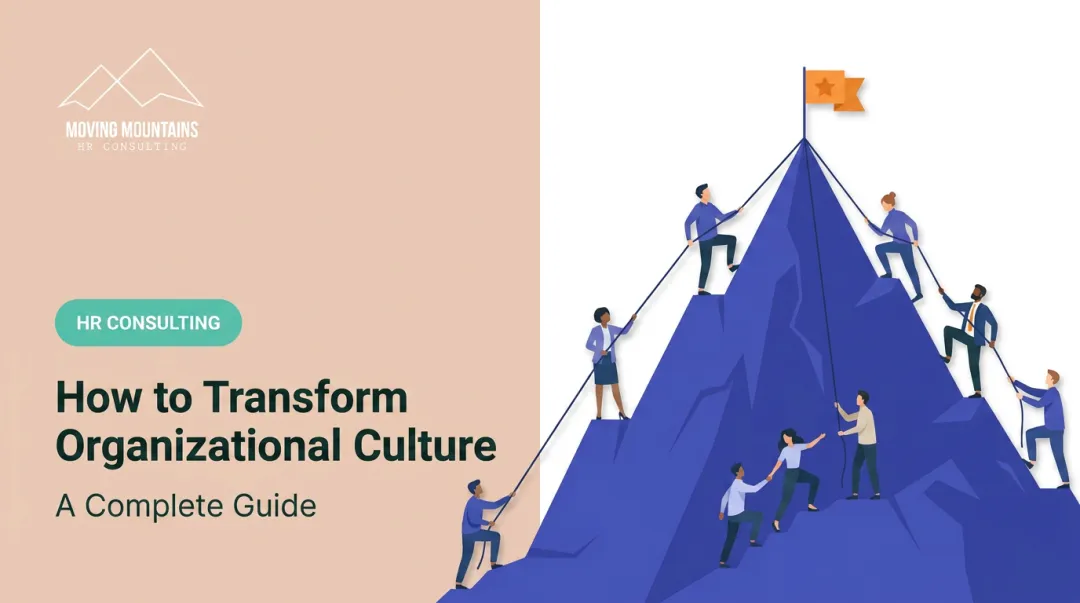
This is one of the most common challenges small and mid-size business owners face, and one of the most mismanaged. Most culture change efforts don't fail because leaders lack good intentions. They fail because there's no clear plan connecting intention to daily behavior.
This guide breaks down what culture change actually means, the warning signs that tell you it's time to act, and a practical, step-by-step framework you can use to lead the shift with confidence.
Key Takeaways
- Culture change is intentional: a deliberate shift in values and behaviors, not natural drift
- Success hinges on leadership commitment, employee engagement, and HR systems that reinforce new behaviors
- Watch for high turnover, falling engagement scores, leadership transitions, and rising workplace complaints
- Track progress with real data: surveys, eNPS, and direct behavioral observation
What Is Culture Change? How Cultures Develop and Evolve
Organizational culture change is the deliberate transformation of a company's shared values, beliefs, behaviors, and unwritten norms to better fit where the business is headed. That's different from organic cultural drift, which happens on its own as people come and go, without any plan steering it.
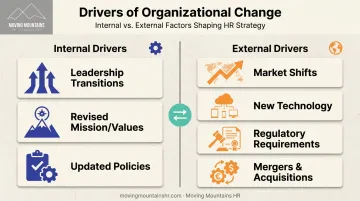
Culture doesn't form in a vacuum. It's shaped by leadership behavior, shared experiences, and the environment employees operate in every day. It typically evolves through two pathways:
Internal drivers (what the organization controls):
- Leadership transitions or a new executive team
- A revised mission, vision, or set of stated values
- Updated policies or founder-driven priorities
External drivers (pressure from outside):
- Market shifts and competitive pressure
- New technology changing how work gets done
- Regulatory requirements, especially in healthcare and other regulated fields
- Mergers, acquisitions, and evolving workforce expectations
Here's the part most companies miss: culture lives in everyday behaviors, symbols, and unspoken norms. A new values poster in the breakroom doesn't change any of that. Leadership behavior and internal systems have to shift too, or the old culture simply reasserts itself.
That connection shows up in the numbers. Employees who strongly agree they feel connected to their organization's culture are 4.3 times more likely to be engaged at work, according to Gallup's Organizational Culture Indicator. They are also 47% less likely to be job hunting and 62% less likely to report frequent burnout.
For small and mid-size businesses without an internal HR leader, this is often where a fractional HR partner adds the most value. Moving Mountains HR steps in at this stage to turn abstract culture concepts into a concrete, actionable plan so owners are not left guessing what "fixing the culture" actually requires.
Signs Your Organization Needs a Culture Change
Culture problems rarely announce themselves clearly. They show up as a collection of smaller signals that, together, paint a clear picture.
Watch for:
- Leadership transitions that leave employees unsure of direction
- A merger or acquisition blending two different ways of working
- Declining engagement scores or a noticeable drop in initiative
- Stagnant innovation, where the same ideas keep circling without traction
- A gap between the values on your website and what actually happens day to day
Compliance Red Flags in Regulated Industries
When those signals show up in healthcare and other regulated workplaces, they often surface first as compliance problems. A rise in employee complaints, harassment or discrimination claims, or inconsistent policy enforcement rarely happens in isolation. These are usually symptoms of a deeper cultural problem, not one-off incidents.
Gallup research shows replacing an employee can cost anywhere from half to two times that employee's annual salary. Waiting until turnover spirals—or a complaint turns into litigation—costs far more than fixing culture early.
How to Successfully Navigate Culture Change: A Step-by-Step Framework
Unlike the slow drift that culture undergoes naturally, successful culture change has to be actively planned, led, and reinforced. The following six steps outline what most successful transformations have in common.
Step 1: Assess the Current Culture and Define the Target Culture
You can't close a gap you haven't measured. Start with a structured culture audit using employee surveys, focus groups, and one-on-one interviews to understand how things actually work today, not just how leadership assumes they work.
Moving Mountains HR approaches this through a process similar to its HR Document Audit:
- Review existing policies and employee-facing documents
- Hold direct conversations with leadership
- Run a gap analysis against regulatory requirements and industry best practices
The output is a clear picture of where you stand and where you need to go.
Step 2: Secure Leadership Commitment and Alignment
Employees will not change behavior faster than their leaders do. Every layer of management, from executives through middle managers, needs to visibly model the new behaviors before asking staff to follow suit.
Inconsistent leadership behavior is one of the top reasons culture initiatives collapse. If a manager preaches collaboration but still makes every decision unilaterally, employees notice, and they'll trust the behavior over the messaging every time.
Step 3: Build and Communicate a Clear Change Management Plan
A culture shift needs a documented plan: timelines, milestones, and a communication strategy that repeats the "why" behind the change, not just the "what." One announcement in an all-hands meeting won't cut it.
Effective plans typically include:
- Multiple communication channels (team meetings, written updates, one-on-ones)
- Repeated messaging over weeks and months, not a single rollout
- Clear milestones so employees can see tangible progress
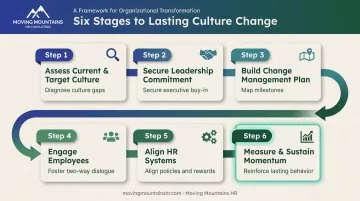
Step 4: Engage Employees at Every Level
Culture change imposed from the top down rarely sticks. Build feedback loops that let employees shape the new culture rather than just receive it. Ask for input, then actually use it.
Publicly recognize early adopters who model the new behaviors before they're required. That visibility builds momentum—people follow peers faster than they follow memos.
Step 5: Align HR Systems and Policies to Reinforce the New Culture
This is where good intentions either become permanent or quietly die. Performance reviews, hiring criteria, onboarding, and recognition programs all need to reward the behaviors you're trying to build. If your performance review still scores employees on the old priorities, you're sending mixed signals.
Small businesses without dedicated HR staff often bring in an outside consulting partner, such as Moving Mountains HR, to redesign these systems while keeping them compliant during the transition. That combination of strategic redesign and compliance oversight matters, especially for regulated industries where a policy misstep carries real legal risk.
Step 6: Measure Progress, Adjust, and Sustain Momentum
Culture change isn't an event you check off a list. It's a sustained effort tracked over months or years. Watch leading indicators such as survey responses and participation in new initiatives, along with lagging indicators like retention and engagement scores.
Ongoing HR support built around regular check-ins—periodic consulting or a fractional CHRO in leadership meetings—helps organizations catch backsliding early and adjust before momentum stalls.
Overcoming Common Challenges in Culture Change
Even a well-designed plan runs into friction. Here's what typically derails culture change, and how to push through it.
Resistance to change is the most common obstacle by far. Fear of the unknown and comfort with the status quo don't respond to a single memo. They need proactive, repeated communication and real employee involvement—not one-way updates.
Inconsistent leadership behavior undercuts progress just as fast. When expectations aren't clear—or one manager enforces new norms while another lets old habits slide—employees default to the easier standard. Leading by example has to be non-negotiable at every level of management.
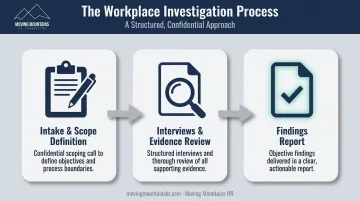
Unresolved conflict blocks culture work until it's handled. Harassment, discrimination, or ongoing hostility often calls for a neutral third-party investigation so findings hold up. Internal teams, even well-meaning ones, can struggle to stay objective when they're close to the people or politics involved. Partners like Moving Mountains HR run structured, confidential investigations that typically cover:
- Intake and scope definition
- Interviews and evidence review
- A clear findings report
That process gives you a credible foundation instead of papering over the problem.
How to Measure Whether Your Culture Change Is Working
You need a baseline before you launch anything. Without one, you're guessing at whether things actually improved or just feel different.
Low-lift ways small and mid-size businesses can track progress:
- Pulse surveys sent quarterly or monthly to track sentiment over time
- Employee Net Promoter Score (eNPS) to gauge whether staff would recommend working there
- Exit interview themes to catch recurring complaints before they spread
- Informal manager check-ins that surface issues surveys might miss
Pair the numbers with qualitative feedback—focus groups and open-ended comments—so you know why morale shifted, not only that it did.
The payoff for getting this right can be substantial. Gallup has reported client outcomes including a 50-point increase in employee engagement over a three-year period and an 85% increase in net profit over five years following sustained culture-focused work. Your results will differ, but consistent baseline-to-pulse tracking is how you prove the investment is paying off.
Frequently Asked Questions
How do cultures develop and change?
Cultures develop through shared experiences, leadership behavior, and the surrounding environment. They change through internal shifts, such as new leadership or practices, and external influences, including technology, market conditions, and contact with other organizations.
What is an example of a culture change?
A common example is a company shifting from a rigid, hierarchical structure to a more collaborative, flexible one after a merger or leadership change. Decision-making moves closer to the front line, and communication becomes more open across departments.
What are the 5 C's of culture change?
There's no single universal framework—HR sources define the "5 C's" differently. Common elements include clarity, commitment, communication, consistency, and culture champions who model the desired behaviors day to day.
How long does a culture change typically take?
Meaningful culture change is typically measured in months to years, not weeks. The exact timeline depends on how large the gap is between your current culture and your target culture, and how consistently the plan gets reinforced.
Who should lead a culture change initiative?
Senior leadership must sponsor and visibly model the change, but effective initiatives also involve HR, middle managers, and employee culture champions at every level. Many small and mid-size businesses bring in a fractional CHRO or outsourced HR leader to guide the process without a full-time hire.
What's the difference between culture change and organizational change?
Organizational change is the broader category, covering shifts in structure, strategy, or systems. Culture change specifically targets underlying values, beliefs, and behaviors. The two often happen together, but culture change is the narrower, people-focused piece.