
Workplace gossip is more than idle chatter. When speculation and unverified commentary replace direct communication, teams fracture, productivity drops, and your organization faces compliance risk. The good news? You can stop gossip at the source by recognizing its patterns, addressing it directly, and building a culture where transparency replaces triangulation.
This article explains what workplace gossip actually is, why it thrives, how to spot warning signs, and actionable strategies to address it—whether you're an individual contributor or a leader responsible for setting team norms.
Key Takeaways
- Workplace gossip is judgmental talk about someone who isn’t present—and it can damage reputations fast
- Gossip thrives in information vacuums: when leaders don’t communicate, speculation fills the gap
- Both spreading rumors and passively listening signal participation; silence can communicate approval
- Stop gossip early with calm redirection and clear, transparent communication
- Open a formal investigation when gossip ties to harassment, discrimination, or a hostile work environment
What Is Workplace Gossip?
Workplace gossip is conversation about someone who isn't present that typically involves unverified details, speculation, or judgmental commentary. Research defines it as evaluative communication from a sender to a receiver about an absent or unaware target, and listening counts as participation.
Gossip is not the same as legitimate workplace conversation. Discussing a colleague's missed deadline with your manager to resolve a project bottleneck is work-related communication. Speculating with peers about why that colleague "probably got written up" or sharing rumors about their personal life crosses into gossip.
The distinction matters. Gossip can damage reputations, spread misinformation, and create distrust. Necessary workplace discussions address performance, coordination, and accountability through proper channels.
Why Silence Signals Approval
Passive participation, listening without redirecting, reinforces gossip. Studies show that recipients often interpret silence as agreement or validation. When you hear speculation about a colleague and say nothing, you signal that the behavior is acceptable. Redirect gossip early, even when you didn't start it, or it keeps spreading.
Why Workplace Gossip Happens and Its Impact
Gossip helps people bond, vent frustration, and fill information gaps. Research points to emotional venting, information gathering, and norm enforcement as common drivers. Those functions come at a real cost to teams and employers.
Gossip Thrives in Information Vacuums
A foundational corporate-rumor study found that uncertainty, anxiety, importance, and belief predict rumor activity. When employees lack official information about layoffs, reorganizations, or leadership changes, they create stories to explain what's happening. Gossip becomes the unofficial communication channel when formal updates are missing or inconsistent.
Measured Impact on Engagement and Mental Health
The damage isn't abstract:
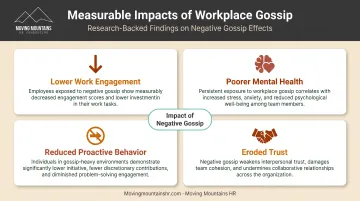
- A 2023 study linked negative gossip to lower work engagement among 334 employees
- Among tourism workers, negative gossip correlated with poorer mental health
- A 2024 study found negative gossip reduced proactive behavior, with anxiety in the middle of that path
- Recipient research shows self-serving gossip erodes trust and often spreads further when people try to "check" the rumor
Samples vary by industry and country, but the pattern holds: negative gossip weakens psychological safety and day-to-day performance.
That harm shows up in lost focus and, in some cases, legal exposure.
Productivity and Legal Risk
SHRM flags wasted time, anxiety, divisiveness, reputational harm, and attrition as common costs. There is no single universal "hours lost" benchmark, but the operational drag is familiar to most managers.
The legal risk is real. When gossip targets protected characteristics such as race, gender, age, or disability, it can feed harassment claims. Federal law requires a link to a protected basis and conduct severe or pervasive enough to create an unlawful environment.
In Parker v. Reema, a rumor that a woman earned a promotion through sex was enough to support a sex-based hostile-environment claim at the pleading stage. California goes further: FEHA prohibits harassment based on protected categories and can apply even in workplaces with fewer than five employees.
Types and Warning Signs of Workplace Gossip
Gossip takes different forms depending on the underlying motive and content. Recognizing these patterns helps you intervene effectively.
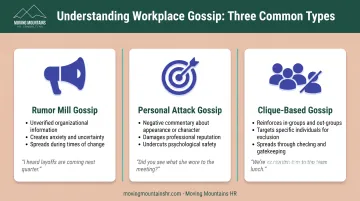
Rumor Mill Gossip
This is unverified information about organizational changes (layoffs, promotions, leadership decisions, mergers) that spreads through informal channels and creates anxiety. Research on corporate rumors identifies these as common subjects during periods of uncertainty.
Example: "I heard they're closing the Portland office next quarter. My friend in accounting said they saw the budget report."
Personal Attack Gossip
This is negative commentary about a colleague's appearance, relationships, personal life, or character. It damages reputation and undercuts psychological safety at work. SHRM examples include premature disclosure of a marriage, speculation about pregnancy, or claims that an employee drinks at lunch.
Example: "Did you see what she wore to the client meeting? I don't know how she expects to be taken seriously."
Clique-Based Gossip
This gossip reinforces in-groups and out-groups. The same employees become regular targets of negative talk and social exclusion.
Recipient research finds that allies of a target often see negative gossip as malicious. People without a clear relationship to the target tend to check the story with trusted in-group sources, which spreads it further.
Example: A team consistently excludes one member from lunch invitations and speculates about their "attitude problem" in group chats.
Warning Signs That Gossip Is a Problem
- Frequent whispered conversations that stop abruptly when others approach
- Employees excluding colleagues from informal gatherings or social events
- Noticeable drops in morale, increased anxiety, or rising absenteeism
- Reluctance to share information openly in meetings
- Repeated transmission of rumors even after official clarification
These signs don't prove gossip on their own, but they warrant closer observation and, if patterns hold, timely intervention.
How to Stop Workplace Gossip: A Step-by-Step Framework
For Individuals
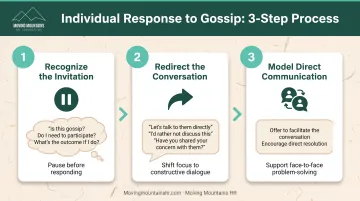
Step 1: Recognize When You're Being Invited Into Gossip
If someone starts talking about a colleague who isn't present in a speculative or judgmental way, pause before responding. Ask yourself:
- Is this person sharing verified, work-relevant information?
- Would I be comfortable if the subject of this conversation were standing here?
- Am I being asked to participate in speculation or judgment?
Step 2: Redirect the Conversation
Use clear, respectful phrases to exit the conversation without accusing the gossiper:
- "I don't feel comfortable talking about [name] when they're not here."
- "Have you spoken directly to [name] about this?"
- "Let's focus on what we can control."
- "I'd rather not speculate—do you have verified information?"
SHRM recommends making a polite, direct request to stop personal discussions, then escalating to a manager or HR if the behavior continues.
Step 3: Model Direct Communication
Encourage the gossiper to address their concern directly with the person or with a manager. Offer to help facilitate that conversation if appropriate. For example: "If you're frustrated with how the project is going, let's set up a meeting with the team to talk through it."
For Managers and Leaders
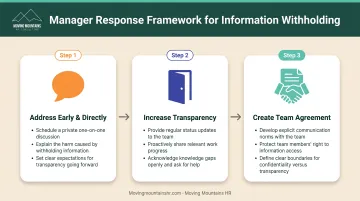
Step 4: Address Gossip Early and Directly
When you observe or hear about gossip, speak privately with those involved. Explain why the behavior is harmful and what you expect instead.
SHRM suggests labeling unverified personal rumors as irrelevant to the team's business, stating your respect expectation, and asking everyone to stop further transmission.
Example script: "I've noticed some speculation about [situation]. I understand people are curious, but unverified personal talk can damage trust and reputations. Moving forward, I expect us to address concerns directly with the people involved or bring them to me."
Step 5: Increase Transparency and Communication
Gossip fills the vacuum left by missing information. Hold regular team meetings, share updates proactively, and create channels for employees to ask questions.
When you can't share details yet, say so: "I know there are questions about the restructure. I'll share what I can as soon as it's finalized, and I'll keep you updated along the way."
Research shows that sharing prompt, credible updates during periods of change reduces rumor activity.
Step 6: Create a Team Agreement or Code of Conduct
Establish explicit norms for respectful communication, direct feedback, and conflict resolution. Your agreement should:
- Prohibit unverified personal or reputation-damaging talk
- Require direct, respectful channels for concerns
- Preserve employees' rights to discuss wages, working conditions, and workplace concerns
- Identify confidential escalation routes for serious issues
Avoid blanket "no gossip" rules. An NLRB judge found that a policy banning personal and professional discussion—and allowing termination for it—was overly broad because it restricted employees' rights to discuss wages and working conditions (protected concerted activity).
When to Address Gossip Informally vs. Formally
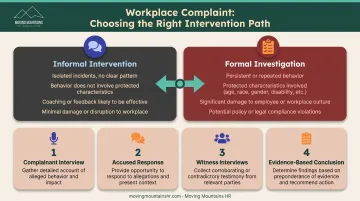
Informal Intervention Is Appropriate When:
- Gossip is isolated and hasn't escalated
- The behavior doesn't involve harassment or create a hostile environment
- Coaching and redirection are likely to resolve the issue
- No significant reputational or career damage has occurred
Use one-on-one conversations, clear expectations, and increased transparency to address these situations.
Formal Intervention Is Necessary When:
- Gossip persists after informal coaching
- The content involves protected characteristics (race, gender, age, disability) or creates a hostile environment
- Gossip has caused significant reputational or career damage
- Allegations, if true, would violate policy or law
California's Civil Rights Department advises that less serious conduct may be addressed through counseling, but allegations that would violate policy or law require investigation. A formal investigation should include:
- Interviews with the complainant, the accused, and witnesses
- A clear opportunity for the accused to respond
- A fair conclusion based on the evidence
When to Engage a Neutral Investigator
When gossip escalates into potential harassment or discrimination claims, bring in a neutral third-party investigator. Impartiality protects the process and helps you stay compliant.
Moving Mountains HR handles workplace investigations involving hostile work environments, harassment, discrimination, retaliation, and code-of-conduct concerns. Typical engagements include confidential interviews, evidence collection, and a written findings report, with anti-retaliation safeguards in place.
Common Mistakes When Addressing Workplace Gossip
Mistake 1: Ignoring Gossip and Hoping It Goes Away
Gossip rarely self-corrects. Published research links unaddressed negative gossip to anxiety, lower engagement, and poorer mental health. When leaders ignore gossip, employees interpret silence as permission. Address it early, before it escalates and entrenches itself in team culture.
Mistake 2: Participating in Gossip Yourself or Becoming Defensive
Leaders who gossip or react defensively when they're the subject undermine their credibility and model the wrong behavior. According to a 2023 study, self-serving gossip reduces trust in the gossiper.
Stay calm, address concerns directly in team meetings, and model the direct communication you expect from others.
Mistake 3: Punishing Without Understanding Root Causes
Gossip is often a symptom of deeper issues:
- Poor communication
- Unresolved conflict
- Lack of psychological safety
- Unclear expectations
Harsh punishment without fixing those systemic problems leaves the root cause intact. Research on workplace rumors confirms that missing formal information encourages rumor creation and transmission. Fix the communication gap, not just the behavior.
How to Prevent Workplace Gossip: Building a Healthy Culture
Stopping gossip at the source means building a culture where people raise issues directly, policies draw clear lines, and leaders model the standard every day.
Foster Open Communication and Psychological Safety
Train managers on active listening and conflict resolution so employees raise concerns with them—not through the rumor mill. Research on positive gossip links psychological safety to more open dialogue and less employee silence. When people can speak up without fear of retaliation, side-channel venting loses its appeal.
Establish Clear Policies and Expectations
Put explicit language in handbooks and codes of conduct. Define prohibited behavior narrowly, and protect lawful discussion:
- Unverified personal talk and reputation-damaging speculation
- Harassment or conduct that targets someone’s character
- Protected: wages, working conditions, and other concerted workplace concerns
The NLRB protects concerted activity and wage discussion. Overly broad no-gossip rules can violate those rights.
Model the Behavior You Want to See
Leaders set the tone. SHRM emphasizes honesty, integrity, and respectful conduct as the foundation of a gossip-resistant culture. In practice:
- Share context transparently when you can
- Address problems directly with the people involved
- Refuse to talk negatively about employees behind their backs
- Recognize staff who bring issues forward the right way
If your managers need structured support, Moving Mountains HR builds these habits through training in conflict resolution, employee relations, respectful workplace practices, and leadership development—practical tools teams can use right away.
Conclusion
Workplace gossip is more than harmless chatter. It erodes trust, damages morale, reduces productivity, and creates legal risk when it involves protected characteristics or contributes to a hostile environment. Stopping gossip takes individual discipline and organizational commitment: redirect conversations, model direct communication, and back that up with clear policies, transparency, and leadership accountability.
If you're an employee, commit to not participating in gossip starting today. Redirect conversations, ask questions, and encourage direct communication. If you're a leader, audit how you communicate, treat gossip as a cultural priority, and respond early: increase transparency, set clear expectations, and shut down speculation before it spreads.
That work is foundational. Trust and accountability have to replace speculation and side conversations if you want a healthy culture. If you need help tightening policies, training leaders, or investigating issues that have already taken root, Moving Mountains HR can help you take the next step.
Frequently Asked Questions
Can I be fired for gossiping at work?
Yes. Employers can discipline or terminate employees for gossip that violates policy, creates a hostile environment, or involves harassment or defamation. California employers may treat harassment-related gossip as grounds for termination, but discipline cannot target protected concerted activity or wage discussions.
What's the difference between workplace gossip and normal conversation?
Gossip is evaluative talk about someone who isn't present—unverified details, speculation, or judgment that can harm their reputation. Normal conversation is casual social chat or verified, work-relevant discussion that doesn't damage trust. Ask: Is the person absent? Is the content speculative or judgmental?
How do I stop gossip without seeming unfriendly or judgmental?
Use polite, direct redirection: "I'd rather not speculate," "Let's talk about something else," or "Have you talked to them directly?" You can exit the conversation kindly without accusing the gossiper. The goal is to set a boundary, not to shame the other person.
Should I report gossip to HR?
Report to HR when gossip involves harassment, discrimination, retaliation, protected characteristics, or a hostile environment—or when informal attempts have failed and you lack neutrality. For isolated personal talk, polite redirection is usually enough.
What should managers do when workplace gossip is about them?
Stay calm. Address concerns openly in team meetings, correct misinformation without demanding sources, and model the direct communication you expect. Avoid retaliation. If you're accused of misconduct, use a neutral HR or investigation channel.
Is all gossip bad, or can some gossip be harmless?
Not all informal talk is harmful. Praise, recognition, and verified good news can reinforce norms and psychological safety. Redirect any talk that speculates about or judges someone absent, spreads unverified information, or damages trust.