Introduction
Only 16% of nearly 15,000 employees rated their last conversation with their manager as "extremely meaningful," according to Gallup's 2026 workplace analysis.
The gap is even wider for departing employees: 45% of workers who voluntarily left their jobs never had a single proactive conversation about their satisfaction, performance, or future during their final three months.
Many managers struggle with what to ask beyond surface-level check-ins. Status updates consume the time, while deeper concerns about workload, career development, and team dynamics go unexplored. The result is unproductive meetings that neither engage employees nor surface retention risks early.
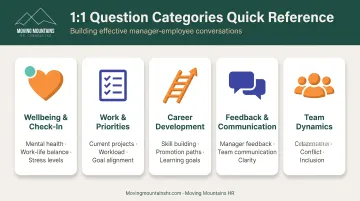
This article provides 50 actionable questions organized by category—employee wellbeing, work priorities, career development, feedback, and team dynamics. You’ll also get guidance on when and how to use them so 1:1s become meaningful developmental conversations.
Key Takeaways
- Regular 1:1 meetings with strategic questions drive employee engagement, development, and long-term retention
- Effective 1:1 questions focus on recognition, goals, collaboration, growth, and wellbeing, not just task status
- Preparation, employee-led agendas, and genuine follow-through turn routine check-ins into trust-building conversations
- Small businesses gain competitive advantage when managers use direct relationships to support development and address concerns early
Why One-on-One Meeting Questions Matter
Strategic questions turn status updates into developmental conversations that build trust and surface issues before they escalate. When managers ask about recognition, collaboration, goals, strengths, and support needs—not only task completion—employees feel heard, valued, and invested in their work.
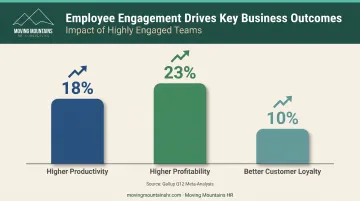
The business case is concrete. Gallup's Q12 meta-analysis of 347 organizations found that highly engaged teams showed:
- 18% higher productivity
- 23% higher profitability
- 10% better customer loyalty
Engagement alone doesn't guarantee those results, but the link is strong enough that practices building connection and clarity are worth the time.
The right questions also help managers spot compliance risks, burnout signs, and retention concerns early. In Gallup's survey of 717 voluntary leavers, 42% believed their departure could have been prevented, most often through better manager interactions, career opportunities, or workload adjustments. Asking about satisfaction, future plans, workload sustainability, and what would make someone stay can surface those concerns while they're still addressable.
A 2023 peer-reviewed study of line managers in education and healthcare flagged early burnout signals such as:
- Emotional-control problems
- Difficulty concentrating
- Lower confidence
- Increased absence
Managers who opened the conversation and offered help were better positioned to respond, though employees sometimes hid symptoms. Regular wellbeing questions create space for disclosure without diagnosing or replacing professional support.
50 One-on-One Meeting Questions by Category
These 50 questions are organized into categories based on common 1:1 objectives. Mix them based on your meeting frequency, employee needs, and what matters most in each conversation.
General Check-In and Wellbeing Questions
Start every 1:1 with these to gauge how someone is doing and set a tone for honest conversation. They surface stress, workload concerns, or personal challenges that may affect performance.
- How are you feeling about work right now?
- How's your work-life balance been this week?
- What's your energy level like compared to last month?
- Is anything causing you stress or worry that I should know about?
- On a scale of red, yellow, or green, how would you describe your workload right now?
- What's one thing that would make this week easier for you?
- Are you getting enough time to recharge outside of work?
Current Work and Priorities Questions
These questions help align on workload, identify roadblocks, and ensure clarity on expectations. They're ideal for weekly or bi-weekly 1:1s focused on near-term progress.
- What are your top three priorities this week?
- What progress have you made on [specific project] since we last talked?
- What obstacles are slowing you down right now?
- Do you have the resources and support you need to hit your deadlines?
- Is anything unclear about what's expected of you?
- What's taking more time than you anticipated?
- Are there any upcoming deadlines that concern you?
- What can I do to help remove roadblocks?
Career Development and Growth Questions
Ask these monthly or quarterly to explore long-term goals, skill-building opportunities, and career aspirations. They show you're invested in the employee's future.
- What skills would you like to develop over the next six months?
- Where do you see your career going in the next 1-3 years?
- What learning opportunities interest you most right now?
- What does the next step in your career look like to you?
- Is there someone here or in your network you'd like to learn from or shadow?
- What professional development progress have you made since our last career conversation?
- What parts of your current role do you want to do more of?
- What new responsibilities or challenges would energize you?
Feedback and Communication Questions
These create two-way dialogue where both manager and employee can share constructive feedback. Use them to refine how you work together and improve transparency.
- How can I better support you in your role?
- What's your preferred way to receive feedback—written, verbal, or in the moment?
- Do you feel recognized for your contributions?
- What's one thing I could do differently to help you succeed?
- Are there areas where you'd like more coaching or feedback?
- Do you feel comfortable speaking up when something's not working?
- What's one thing going well in how we communicate, and one thing we could improve?
Team Dynamics and Collaboration Questions
These help you see how team relationships affect individual performance and spot collaboration gaps or friction.
- How's communication within the team right now?
- Are there any collaboration challenges I should be aware of?
- Who on the team has been especially helpful to you recently?
- How are your working relationships with [other department or team]?
- Is there anything about our team culture you'd like to see change?
- Are there conflicts or tensions I'm not seeing that need attention?
- What's one thing the team does well, and one thing we could improve?
Manager Support and Leadership Questions
These invite employees to provide feedback on management style and identify what support they need most. They build psychological safety and model openness.
- What's the most helpful thing I do as your manager?
- What's one leadership quality you value most in a manager?
- Do you feel like you have enough input into decisions that affect your work?
- Am I giving you too much direction, too little, or about the right amount?
- Do you trust that I'll support you if you make a mistake or take a calculated risk?
- How can I create more space for you to lead or take ownership?
- Is there anything I do that makes your job harder?
Purpose and Motivation Questions
Turn to these when you want to reconnect someone with meaning in their work and understand what drives engagement—especially if motivation dips or the role is shifting.
- What's the most meaningful work you've done recently?
- How does your role connect to the company's mission or goals?
- What motivates you most in your day-to-day work?
- Are we using your strengths effectively?
- What energizes you at work, and what drains you?
- What would make your work feel more purposeful or impactful?
How to Choose the Right Questions for Your 1:1s
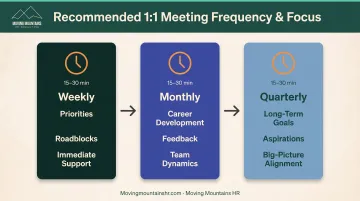
Match question types to meeting frequency:
- Weekly 1:1s should focus on priorities, roadblocks, and immediate support needs
- Monthly meetings create space for career development, feedback, and team dynamics
- Quarterly sessions explore long-term goals, aspirations, and big-picture alignment
Read the room before diving into your agenda. If an employee seems stressed, disengaged, or distracted, prioritize wellbeing and workload questions over tactical updates. Conversely, if they arrive energized and ready to problem-solve, shift toward collaboration or development topics.
Prepare 5-7 questions in advance but remain flexible. Gallup notes that frequent 15-30 minute conversations can be sufficient when they're meaningful, while less-frequent check-ins need longer catch-up time. Allow important threads to expand naturally rather than forcing every prepared question.
Alternate between manager-led and employee-led agendas. Baylor HR recommends that employees prepare and send the agenda in advance while leaving room for manager topics. This ensures both parties' concerns are addressed and signals that the meeting belongs to the employee.
Small businesses should prioritize questions that create competitive advantage:
- Development opportunities
- Meaningful work
- Direct manager relationships
These are areas where agility and personal connection often outweigh larger competitors' resources.
Best Practices for Asking Questions in 1:1 Meetings
Good 1:1 questions only work when employees feel safe answering them. Use these habits when you ask.
Lead with curiosity. A 2020 peer-reviewed study found that supervisors' active-empathetic listening supports open communication and supportive working conditions. Listen more than you talk, and resist the urge to solve every problem on the spot.
Take notes during or immediately after 1:1s. Track themes, commitments, and follow-up items over time. Baylor HR advises recording topics, decisions, and action commitments for later reference. Notes also help you spot patterns—recurring stress, unmet development needs, or shifting priorities.
Ask follow-up questions to dig deeper. When employees share concerns, challenges, or aspirations, probe with "Tell me more about that" or "What would success look like?" SHRM recommends follow-ups like "Based on what we're discussing, what do you think you could say or do differently?"
Respond to feedback non-defensively. CIPD emphasizes that genuine two-way communication requires managers to listen and act on feedback. If an employee takes the risk of sharing honest criticism, acknowledge it, ask clarifying questions, and say what you'll do next. Follow-through builds trust; silence after criticism shuts the next conversation down.
Common Mistakes to Avoid in 1:1 Meetings
Don't turn 1:1s into status update meetings. Baylor HR notes that updates that can be emailed should not consume 1:1 time. Use asynchronous tools for project progress and reserve live 1:1 time for development, feedback, roadblocks, and goals.
Avoid asking the same questions every time. Repeating identical prompts without adapting to the employee's current situation or development stage creates mechanical, low-value meetings. Rotate question categories and respond to what's happening in their work and career.
Don't ask questions without genuine curiosity or follow-through. Asking for input and then taking no action erodes trust quickly. SHRM cautions against ignoring upward criticism, and CIPD confirms that real two-way communication includes acting on what you hear.
Resist focusing only on weaknesses or problems. Gallup found that conversations built on recognition, relationships, goals, enough time, and strengths feel more meaningful than ones centered on weaknesses. Balance constructive feedback with appreciation and growth opportunities.
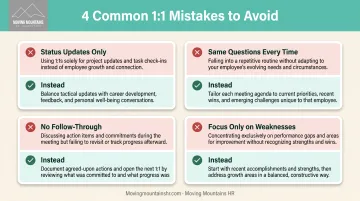
Avoiding these patterns is easier when managers have a clear 1:1 framework. Moving Mountains HR helps organizations build performance management systems and training programs so leaders can run consistent, developmental conversations—not status check-ins.
Frequently Asked Questions
What are good one-on-one questions for employees?
Good 1:1 questions cover well-being, priorities, development goals, feedback, and team dynamics—not just task status. Ask what's going well, where support is needed, how goals are tracking, and what would make the work more meaningful.
How do I run a 1:1 with an employee?
Schedule 1:1s weekly or bi-weekly, prepare questions in advance, and create a safe space for honest dialogue. Let the employee drive the agenda, listen actively, note commitments, and follow up on action items next time.
How many questions should I ask in a 1:1 meeting?
Prepare 5–7 questions for a 30-minute meeting, but stay flexible. Let important topics expand naturally—quality conversation on fewer questions beats surface coverage of many.
How often should managers conduct 1:1 meetings?
Weekly or bi-weekly is ideal for staying connected and catching issues early. Gallup supports frequent 15–30 minute check-ins, and Baylor HR recommends 30 minutes weekly in most cases. Meet at least monthly to keep continuity.
What's the difference between a performance review and a 1:1 meeting?
1:1s are frequent, informal talks about near-term work, support, and growth. Performance reviews are formal, periodic evaluations tied to pay and advancement. ADP defines 1:1s as recurring, real-time check-ins—not year-end feedback.
Should employees prepare questions for 1:1 meetings too?
Yes. Baylor HR recommends employees propose the agenda in advance while leaving room for manager topics. When both sides bring questions, the conversation stays two-way and both sets of needs get met.