This scenario illustrates a painful reality: technical ability alone doesn't predict workplace success. According to SHRM's 2019 study of over 1,000 employed US adults, one in five Americans left a job in the prior five years because of bad workplace culture, contributing to an estimated $223 billion in turnover costs. The primary culprits? Weak manager listening, poor communication, and leadership deficiencies—all soft skills failures.
LinkedIn's 2019 survey of more than 5,000 talent professionals across 35 countries found that 92% considered soft skills as important as or more important than hard skills when hiring. For small business owners without dedicated HR departments, understanding and prioritizing these capabilities can mean the difference between a thriving team and a revolving door of turnover.
Key Takeaways
- Poor soft skills cost US businesses an estimated $223 billion annually in culture-related turnover
- 92% of talent professionals rate soft skills as equally or more important than technical abilities when hiring
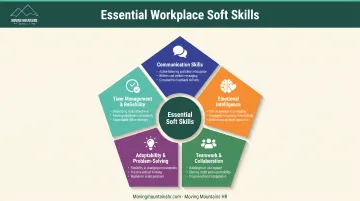
- Core workplace soft skills include communication, emotional intelligence, teamwork, adaptability, and reliability
- Structured behavioral interviews and reference checks reveal soft skills patterns more reliably than gut feelings
- Soft skills can be developed through targeted feedback, practice opportunities, and consistent coaching
What Are Soft Skills? Understanding the Basics
Defining Soft vs. Hard Skills
Soft skills are transferable personal attributes and interpersonal abilities that determine how employees work, communicate, solve problems, and interact with others. Unlike technical knowledge, these capabilities apply across industries and roles.
The US Department of Labor identifies them as behaviors governing how work is performed, including interaction, judgment, and self-management.
Hard skills, by contrast, are specific technical knowledge and training used to perform job tasks. They're typically occupation-specific and directly demonstrable through tests, certifications, or work samples.
Key Soft Skills Examples:
- Professionalism and work ethic
- Oral and written communication
- Teamwork and collaboration
- Critical thinking and problem-solving
- Active listening
- Time management and reliability
Key Hard Skills Examples:
- Software proficiency (Excel, Salesforce, AutoCAD)
- Accounting and financial reporting
- Data analysis and statistics
- Equipment operation
- Foreign language fluency
- Technical certifications
The distinction matters during hiring. You can train an employee to use your CRM software in a week, but teaching them to communicate clearly under pressure or collaborate respectfully with difficult colleagues takes months of consistent feedback and practice.
Why Soft Skills Matter for Small Business Success
Direct Impact on Productivity and Efficiency
Employees with strong communication and time management skills complete work more efficiently. They clarify expectations upfront, ask the right questions, and organize tasks logically.
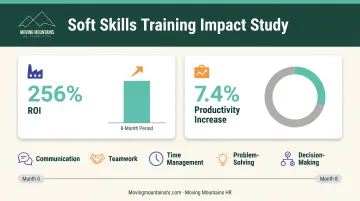
A randomized study of 2,703 employees in five Indian garment factories found that an 80-hour program covering communication, teamwork, time management, problem-solving, and decision-making raised productivity by 7.4%, with an eight-month ROI of 256%. The setting was specific, but the result still shows structured soft-skills training can deliver measurable gains.
The Retention and Culture Connection
Poor soft skills create workplace conflict, erode trust, and build toxic cultures that drive people away.
SHRM's 2024 global culture report found that 83% of employees who rated culture as good or excellent were motivated to produce high-quality work, versus 45% in poor or terrible cultures. Active job searching was 15% in positive cultures and 57% in negative ones.
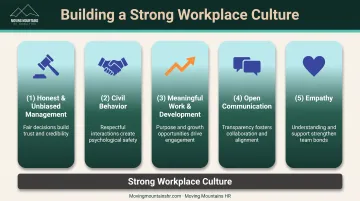
The five elements of positive workplace culture identified by SHRM are:
- Honest and unbiased management
- Civil behavior
- Meaningful work and development opportunities
- Open communication
- Empathy
Each element depends heavily on soft skills—particularly manager listening, communication, and leadership capabilities.
Reducing Legal and Harassment Risk
Employees with empathy, professionalism, and conflict-resolution skills help prevent harassment claims and hostile work environment issues. The EEOC recommends civility training and bystander-intervention programs as part of holistic harassment prevention.
No study pins an exact legal-cost savings percentage. Still, training people to spot inappropriate conduct, handle uncomfortable moments, and escalate concerns early makes it less likely that minor friction turns into formal complaints.
Customer Service and Relationship Building
Client-facing employees need interpersonal skills to build relationships, read customer needs, and retain business. A 2020 study of 211 employee-customer pairs found that employee empathy raised customer satisfaction through customer-oriented behavior.
When salespeople, account managers, or support staff listen well, adapt to different personalities, and stay calm under pressure, customers feel valued and stay longer.
The 5 Most Important Workplace Soft Skills
These five soft skills show up on nearly every high-performing team. They shape how people communicate, handle pressure, and deliver work others can count on.
Communication Skills
Communication covers verbal, written, and listening skills. Active listening means giving full attention, grasping meaning, asking the right questions, and not cutting people off.
Clear writing prevents costly mistakes by documenting instructions and expectations. Verbal presentation skills help employees advocate for ideas, lead meetings, and represent the company professionally.
Workplace examples:
- Clear email communication prevents project errors and reduces unnecessary back-and-forth
- Active listening during conflict de-escalates tension and surfaces the real issue
- Presentation skills enable employees to pitch ideas, secure buy-in, and influence decisions
Open communication is one of SHRM's five positive-culture elements. Google's research on team effectiveness also points to regular goal communication, soliciting input, clear meeting agendas, and role clarification.
Emotional Intelligence and Empathy
Emotional intelligence is the ability to manage your own emotions while reading other people's. Empathy is the applied side: responding well to a teammate's or client's emotional state. A 2017 meta-analysis found self-reported emotional intelligence correlated with organizational commitment at .43 and turnover intentions at -.33.
Workplace applications:
- De-escalating tense customer or coworker situations by acknowledging emotions before problem-solving
- Reading unspoken client needs and adjusting your approach accordingly
- Supporting struggling teammates without being asked, strengthening team bonds
Teamwork and Collaboration
Collaboration means working toward shared goals, offering ideas, and staying open to others' input. Most projects need cross-functional collaboration—marketing needs sales input, operations depends on finance, and product development leans on customer service feedback. Poor teamwork creates bottlenecks, duplicated work, and resentment.
Google's Project Aristotle, which studied 180 internal teams, found that psychological safety and dependability mattered more than individual talent. Strong team cultures were associated with lower turnover, better use of diverse ideas, higher revenue, and twice the executive effectiveness rating.
Collaboration essentials:
- Sharing workload fairly without being asked
- Communicating progress and roadblocks proactively
- Accepting constructive feedback without defensiveness
- Contributing ideas while genuinely considering others' perspectives
Adaptability and Problem-Solving
Adaptability is responding effectively to change, shifting priorities, and unexpected challenges without derailing. Problem-solving means using knowledge and data to resolve workplace obstacles rather than waiting for someone else to fix them. The two skills reinforce each other: adaptable employees identify solutions when plans change instead of dwelling on what went wrong.
Business impact:
- When a key vendor misses a deadline, adaptable employees immediately identify alternative suppliers or workarounds
- When client requirements shift mid-project, problem-solvers reassess timelines and communicate realistic new deliverables
- When market conditions change, flexible teams pivot strategy without extended resistance
MIT's soft-skills training study bundled problem-solving and decision-making with communication and teamwork, treating them as a core skill set employers expect.
Time Management and Reliability
Reliability means consistently meeting deadlines, following through on commitments, and maintaining quality work. Google defines team dependability as completing quality work on time, ranking it as the second most important team dynamic after psychological safety.
Why reliability matters:
- Unreliable employees create cascading delays as coworkers wait for late deliverables
- Managers waste time micromanaging instead of focusing on strategy
- Clients lose trust when commitments aren't met, damaging long-term relationships
- Dependable team members earn autonomy and advancement opportunities
Time management supports reliability. Employees who organize tasks, estimate effort accurately, and communicate early when delays are unavoidable maintain trust even when challenges arise.
How to Identify Soft Skills During the Hiring Process
Soft skills rarely show up clearly on a resume. You uncover them with structured interviews, live observation, and reference questions aimed at how people actually work with others.
Use Structured Behavioral Interview Questions
Only 41% of employers in LinkedIn's 2019 research had a formal soft-skills measurement process. Structured interviews—using the same questions, order, and rating scale for every candidate—reduce bias and improve prediction of future performance.
Behavioral questions ask candidates to describe past situations, revealing actual behavior patterns rather than hypothetical answers. Effective behavioral questions follow the STAR structure: situation, task, action, result.
Sample behavioral questions:
- "Tell me about a time you had to work with a difficult coworker. What made the situation challenging, what did you specifically do, and what was the outcome?"
- "Describe a project where unclear communication threatened the deadline. How did you identify the problem, what actions did you take, and what changed as a result?"
- "Give me an example of when you had to adapt quickly to a significant change. What was the change, how did you respond, and what did you learn?"
Add Situational Questions for Judgment Assessment
Situational questions present realistic workplace scenarios and ask how the candidate would respond. These assess judgment, values, and problem-solving approach.
Sample situational questions:
- "A client asks for a rush project, but you're already at capacity with existing deadlines. How would you handle this?"
- "You notice a coworker consistently arriving late, which forces others to cover their responsibilities. What would you do?"
- "Midway through a project, leadership changes direction and previous work becomes irrelevant. How would you approach the situation?"
Observe Communication and Listening During the Interview
Pay attention to how candidates communicate, not just what they say:
- Listening through the full question before answering, versus interrupting
- Thoughtful clarifying questions when something is unclear
- Clear, organized, concise answers
- Specific examples with concrete details instead of vague generalities
- Professional tone when probed or challenged
These real-time observations often predict workplace communication patterns more accurately than rehearsed answers.
Check References Specifically for Soft Skills
Reference checking serves to verify claims, compare experience with job competencies, and identify information missed by other methods. Most reference checks focus on job titles and dates, missing the opportunity to assess soft skills.
Reference check questions focused on soft skills:
- "How would you describe [candidate's] communication style with coworkers and clients?"
- "Can you give me a specific example of how [candidate] handled a conflict or disagreement?"
- "How reliably did [candidate] meet deadlines and follow through on commitments?"
- "How did [candidate] respond when priorities changed or unexpected challenges arose?"
- "Would you rehire this person, and why or why not?"
Partner with HR Expertise
Small businesses without in-house HR departments often struggle to develop effective interview processes and assessment criteria. Moving Mountains HR helps organizations build structured hiring frameworks that surface strong soft skills with clear criteria and rating scales. Customized training and ongoing HR support help your team run consistent interviews and cut down on costly mis-hires.
Developing Soft Skills in Your Current Team
Provide Regular Feedback and Coaching
Address soft-skills gaps just as you would technical deficiencies. Gallup reported in 2024 that 80% of employees who received meaningful feedback in the prior week were fully engaged. While this is an association rather than proof of causation, frequent specific feedback tied to observable behavior creates opportunities for improvement.
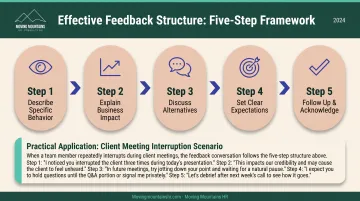
Effective feedback structure:
- Describe the specific behavior you observed
- Explain the business impact of that behavior
- Discuss alternative approaches
- Set clear expectations for future behavior
- Follow up to acknowledge improvement
Example: "In yesterday's client meeting, you interrupted the client twice before they finished explaining their concern. This made them visibly frustrated and we didn't get the full information we needed. Next time, wait until they're completely finished, then summarize what you heard before responding. Let's practice this approach in our next internal meeting."
Create Opportunities for Skill Practice
Soft skills improve through repeated practice in real work situations, not just training sessions. Assign projects that require employees to use target skills:
- Cross-functional project teams build collaboration and communication
- Meeting facilitation develops listening, organization, and conflict management
- Client presentation opportunities strengthen verbal communication and adaptability
- Mentoring newer employees reinforces empathy, patience, and coaching skills
- Process improvement projects require problem-solving and teamwork
Debrief after these opportunities: What went well? What was challenging? What would you do differently next time?
Model and Reinforce Desired Behaviors
Business owners and managers set the culture. Google's team-effectiveness guidance recommends that leaders treat work as a learning problem, admit their own mistakes, model curiosity, ask for input, and call out strong soft skills when they see them.
When you demonstrate active listening in meetings, respond calmly to setbacks, communicate transparently about challenges, and treat every team member with respect, you create a behavioral standard others will follow.
Build Soft Skills Into Performance Management
Soft-skills growth sticks when it shows up in how you set expectations, give feedback, and review performance—not only in a once-a-year form. Clear criteria, regular check-ins, and simple progress tracking keep development visible between formal reviews.
Moving Mountains HR helps small and mid-size businesses put those habits in place through performance management support, fractional CHRO guidance, and practical training on leadership, communication, and conflict resolution.
Frequently Asked Questions
What are the 5 essential soft skills in the workplace?
Five essentials stand out: communication, teamwork, problem-solving/adaptability, emotional intelligence, and time management/reliability. Together they enable coordination, drive project success, help teams navigate change, reduce conflict, and keep commitments on track.
Can soft skills be taught, or are they innate?
Yes. Soft skills develop through training, feedback, and practice. A 2019 meta-analysis found moderate positive effects from emotional-intelligence training, and team-training research supports better team outcomes.
How do I address soft skills deficiencies in current employees?
Have a private conversation describing the specific behavior and its business impact. Set clear expectations, offer training or coaching, and give regular feedback. Document progress; if improvement doesn't follow reasonable support, treat it as a performance issue.
What's the ROI of investing in soft skills development?
One MIT study reported 256% firm ROI eight months after training, but it covered a specific manufacturing setting in India, not a general US small-business benchmark. Track your own outcomes instead: turnover rates, customer complaints, and project delays. Strong soft-skills cultures typically see lower turnover, higher productivity, and better customer satisfaction.
How can small businesses without HR departments build a soft skills culture?
Model soft skills yourself, set clear behavioral expectations at onboarding, give regular feedback on interpersonal performance, and recognize employees who demonstrate them. Fractional HR support like Moving Mountains HR can add structured performance systems, customized training, and expert guidance without a full-time HR hire.
Are soft skills more important than technical skills?
Both matter for different reasons. Technical skills determine whether someone can do the job; soft skills determine whether they work well with others, adapt to change, and grow into leadership. LinkedIn found 92% of talent professionals view soft skills as equally or more important when hiring.