Small morale-boosting activities like recognition moments, desk games, and team challenges can make a measurable difference. These don't require expensive programs or elaborate planning—what matters is consistency, inclusivity, and genuine effort to connect with your employees. This guide walks you through 10 practical, budget-friendly activities suitable for small to mid-size businesses, plus tips for implementing them successfully.
Key Takeaways
- Regular recognition and appreciation activities reduce turnover by up to 45%
- Themed days, desk games, and other low-cost activities lift morale without a large budget
- Structured, voluntary activities raise engagement for both in-person and remote teams
- Consistency beats frequency: start with one activity per quarter, then scale up
Why Employee Morale Matters for Business Success
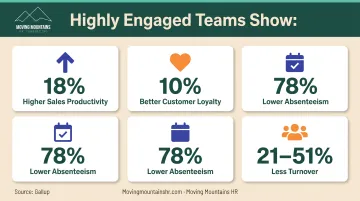
High morale isn't just a nice-to-have; it directly impacts your bottom line. According to Gallup's 2025 workplace research, businesses with highly engaged teams experience:
- 18% higher sales productivity
- 10% better customer loyalty and engagement
- 78% lower absenteeism
- 21% to 51% less turnover, depending on industry
Poor morale shows up in visible ways: employees disengage from their work, call in sick more often, miss deadlines, and eventually leave.
Replacement costs are steep. Gallup estimates turnover expenses at roughly 200% of salary for managers, 80% for technical roles, and 40% for frontline positions. These figures don't include the lost institutional knowledge or the hit to team morale when valued colleagues leave.
Many departures are preventable. In a Gallup study of 717 U.S. employees who voluntarily resigned, 42% said their manager or organization could have done something to keep them. Yet 36% never spoke to anyone before deciding to quit.
Proactive morale-building activities, especially regular recognition and manager check-ins, create opportunities to address concerns before they become resignation letters.
10 Fun Employee Morale Boosting Activities and Games
These activities are accessible, inclusive, and effective at strengthening team bonds in many work environments. Choose the ones that best match your team's interests and workplace culture.
Activity 1: Office Trivia Competitions
Organize a workplace trivia game covering company history, pop culture, or industry knowledge. Trivia works equally well for in-person and virtual teams. Platforms like Kahoot or Quizizz let remote employees compete in real time.
Benefits:
- Encourages friendly competition and team bonding
- Helps employees learn about company milestones and each other's interests
- Provides a mental break from routine tasks
Implementation tips:
- Keep rounds short (15-20 minutes) to avoid disrupting workflow
- Rotate question creators so different team members contribute
- Offer small prizes like gift cards or extra break time
- Mix question difficulty to keep everyone engaged
Activity 2: Recognition and Appreciation Circle
Set up a structured activity where team members take turns recognizing a colleague's contribution or positive trait during a group meeting or dedicated session.
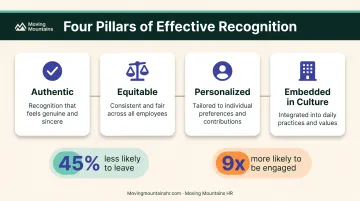
Gallup's two-year study of nearly 3,500 employees found that well-recognized employees were 45% less likely to leave their jobs and 65% less likely to look for new ones.
Workers whose recognition was authentic, equitable, personalized, and embedded in company culture were nine times more likely to be engaged.
Benefits:
- Fosters a culture of gratitude and appreciation
- Boosts individual confidence and job satisfaction
- Strengthens interpersonal connections across teams
Implementation tips:
- Schedule monthly or quarterly, depending on team size
- Keep participation voluntary but encourage everyone to join
- Provide prompts for hesitant participants: "Who helped you solve a problem this month?" or "Who went above and beyond recently?"
- Make recognition specific—vague praise feels less meaningful
Activity 3: Themed Dress-Up Days
Organize regular themed days where employees dress according to fun themes: decades day, favorite movie character, sports team colors, or holiday themes. This is one of the lowest-cost morale boosters available.
Benefits:
- Easy to organize with zero or minimal budget
- Breaks up workplace routine and sparks conversation
- Creates opportunities for laughter and connection
Implementation tips:
- Poll employees for theme ideas so they have buy-in
- Ensure themes are inclusive, culturally appropriate, and accessible
- Share photos on internal communication channels to extend engagement
- Make participation 100% optional—never penalize those who opt out
Activity 4: Lunch and Learn Sessions
Host informal sessions where employees share skills, hobbies, or knowledge during lunch. Sessions can be catered, potluck-style, or simply provide a dedicated time and space for learning.
Benefits:
- Values employee expertise beyond their job descriptions
- Creates learning opportunities without expensive outside trainers
- Builds respect and connection among colleagues
Implementation tips:
- Invite volunteers to present rather than assigning speakers
- Keep sessions to 30-45 minutes to respect schedules
- Provide lunch or snacks to boost attendance
- Rotate presenters across departments to expose teams to different perspectives
- Topics can range from job-related skills to personal hobbies like photography or cooking
Activity 5: Team Challenges and Competitions
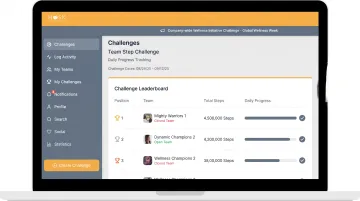
Set up friendly competitions like step challenges, recycling contests, or department cook-offs.
Research on workplace wellness challenges found that team participants were more engaged than people competing alone. In a study of 9,729 employees across 16 institutions, team challenge participants averaged 1,922 more steps per day and posted much higher completion rates.
Benefits:
- Encourages healthy habits and wellness
- Promotes connections across departments
- Adds excitement and variety to the workday
Implementation tips:
- Ensure challenges are accessible to all fitness and skill levels
- Offer small prizes or public recognition to maintain momentum
- Track progress publicly using leaderboards or team updates
- Keep challenges time-bound (2-4 weeks) to sustain interest
Activity 6: Volunteer Together as a Team
Organize group volunteer activities at local food banks, charities, or community events. Research from Stanford on employer-sponsored volunteering involving more than 53,000 UK employees found that volunteering together strengthened coworker bonds and increased organizational commitment.
Benefits:
- Builds team unity through shared purpose
- Enhances company reputation in the community
- Gives employees a sense of meaningful contribution beyond daily work
Implementation tips:
- Partner with local organizations to identify volunteer opportunities
- Offer paid volunteer time if your budget allows
- Choose causes that resonate with your workforce—survey employees first
- Make participation optional to avoid resentment
- Plan logistics carefully so transportation and scheduling aren't barriers
Activity 7: Quick Desk Games and Brain Breaks
Implement short 5-10 minute games that can be played at desks or in break rooms: desk chair races in a hallway, quick rounds of charades, mini puzzle challenges, or word games. Research on micro-breaks shows that breaks of 10 minutes or less improve vigor and reduce fatigue, helping employees return to tasks with renewed energy.
Benefits:
- Provides a mental reset during busy or stressful workdays
- Requires minimal planning and zero budget
- Can be done spontaneously when energy dips
Implementation tips:
- Keep games very short to avoid disrupting workflow
- Rotate who chooses the game to ensure variety
- Ensure activities are office-appropriate and don't create safety risks
- Time these for mid-morning or mid-afternoon energy slumps
Activity 8: Virtual Coffee Breaks or Happy Hours
Schedule informal video calls where remote or hybrid teams can socialize without a work agenda. A 2025 review of remote work research covering 65 peer-reviewed studies recommends structured virtual socialization, such as online coffee breaks, to reduce isolation and build cohesion among distributed teams.
Benefits:
- Combats isolation for remote workers
- Maintains social connections across distributed or hybrid teams
- Provides casual face-time that builds relationships and trust
Implementation tips:
- Keep sessions optional and short (30 minutes maximum)
- Vary timing to accommodate different time zones and schedules
- Occasionally add themes or conversation prompts to spark discussion
- Use breakout rooms for larger teams to facilitate smaller conversations
- Avoid turning these into work meetings—no agendas allowed
Activity 9: Employee Spotlight or "Day in the Life" Features
Create regular features where employees are highlighted through newsletters, social media, or team meetings. Share their role, interests, contributions, and fun facts. This extends the recognition discussed earlier into a more visible, public format.
Benefits:
- Makes employees feel valued and seen by the organization
- Helps colleagues understand different roles and departments
- Humanizes the workplace by showcasing personal interests
Implementation tips:
- Rotate spotlights fairly across departments, roles, and seniority levels
- Let employees opt in rather than forcing participation
- Include fun facts and personal interests alongside professional accomplishments
- Share through multiple channels: email, intranet, team meetings, or social media
- Keep the tone warm and genuine—avoid overly formal corporate language
Activity 10: Quarterly Team Celebrations or Milestone Parties
Organize celebrations for achieved goals, work anniversaries, birthdays, project completions, or seasonal events. These can be simple gatherings with food, recognition, and socializing.
Benefits:
- Marks progress and reinforces a sense of accomplishment
- Creates positive associations with the workplace
- Provides natural opportunities for appreciation and team bonding
Implementation tips:
- Align celebrations with company milestones, team wins, or cultural moments
- Keep budgets reasonable with potlucks, simple catering, or local restaurant partnerships
- Include elements like awards, shout-outs, or team toasts to maximize impact
- Plan celebrations in advance so employees can adjust schedules
- Be inclusive of dietary restrictions, cultural preferences, and varying comfort levels with social events
How to Implement Morale-Boosting Activities Successfully
Even the best-planned activities can backfire if they feel forced or exclude key team members. Follow these principles so morale initiatives raise engagement instead of creating frustration.
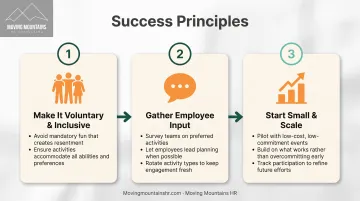
Make activities voluntary and inclusive. Forced fun creates resentment. Keep activities accessible regardless of physical ability, cultural background, work schedule, or comfort level. Not everyone wants to dress up or join physical challenges—and that's okay. Offer opportunities, not mandates.
Gather employee input. Survey your team or open a suggestion box so you pick activities people actually want. What energizes one group might bore or alienate another. Moving Mountains HR can help design employee feedback surveys that uncover what your workforce values.
Start small and scale based on feedback. Begin with one activity per quarter and track participation and reactions. Consistency matters more than frequency: quarterly celebrations with high engagement beat monthly events people dread or ignore. When something works, add lighter habits like weekly recognition in team meetings.
Measuring the Impact of Your Morale Activities
Track both participation and business outcomes so you know whether your morale activities actually deliver results.
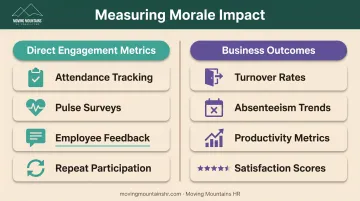
Monitor engagement directly:
- Track attendance rates at activities as a percentage of eligible employees
- Conduct brief pulse surveys asking how valued, connected, and satisfied employees feel
- Gather direct feedback: ask employees which activities they enjoy most and what they'd change
- Watch for repeat participation. If the same small group attends everything, diversify your offerings
Watch for business outcome shifts:
- Compare voluntary turnover rates before and after implementing regular activities
- Monitor absenteeism and sick-day usage trends
- Track changes in productivity, customer service scores, or quality metrics
- Review employee survey scores on morale, satisfaction, and intent-to-stay questions
Morale activities are one piece of a larger workplace culture. A single trivia game won't fix deep issues with management, compensation, or workload. Consistent, thoughtful activities can still drive measurable improvements over time.
Conclusion
Boosting employee morale doesn't require expensive programs or elaborate events. Consistent, inclusive activities that bring teams together—a monthly recognition circle, quarterly volunteer day, or weekly desk game—improve workplace culture, retention, and performance.
According to Gallup, even low-cost recognition like personal thank-you notes has high impact when you do it consistently and authentically.
Activities lift day-to-day morale. Sustainable engagement still depends on solid HR systems and a compliant workplace culture.
Moving Mountains HR helps small to mid-size businesses design performance management systems, run employee feedback initiatives, and build retention plans that support long-term satisfaction. Reach out for a free consultation to see how professional HR guidance can complement your morale-building efforts.
Frequently Asked Questions
What are some employee morale boosting activities?
Morale-boosting activities range from quick desk games and recognition circles to volunteer events and team challenges. The best ones are inclusive, regular, and tied to what employees actually enjoy, not one-size-fits-all programs pushed from above.
How often should you organize employee morale activities?
Consistency matters more than frequency. Start with one structured activity per month or quarter, plus smaller weekly touchpoints like recognition in team meetings, then adjust based on participation and feedback.
What are low-cost morale boosting activities for small businesses?
Affordable options include themed dress-up days, potluck lunches, office trivia on free platforms, peer recognition programs, and short desk games. Meaningful morale work does not need a big budget. Personal notes and authentic recognition often land as well as expensive events.
How do you measure if morale activities are working?
Track participation, run brief pulse surveys on satisfaction and feeling valued, and watch retention and absenteeism. Compare those metrics before and after you start regular activities, and ask employees which ones they value most.
Can morale-boosting activities backfire?
Yes. Forced participation, culturally insensitive themes, or activities that exclude some employees can hurt morale. Keep activities voluntary and inclusive so they reflect real interests and respect different needs.
What's the difference between team building and morale boosting?
Team building focuses on collaboration, communication, and working relationships through structured exercises. Morale boosting is broader: it aims at job satisfaction, engagement, and workplace happiness through recognition, fun, and connection, not only better teamwork.