
Introduction
Picture this: a manager sits across from an employee who just missed a critical deadline. "I thought you knew this was urgent," the manager says, frustrated. The employee looks equally confused: "You never told me when you needed it."
This disconnect happens every day in workplaces across the country. Expectations that seem "obvious" to managers are rarely as clear as they think.
Setting clear employee expectations in 2026 is harder to skip than most leaders admit. Only 46% of U.S. workers clearly know what's expected of them at work, according to Gallup's 2024 survey, down from 56% in March 2020.
Hybrid work, shifting norms, multi-generational teams, and strict legal compliance (especially in California) leave little room for guesswork.
In this guide, you'll learn the step-by-step process for setting expectations, key success factors, common pitfalls to avoid, and practical tools you can use right away, whether you manage a team of two or twenty.
Key Takeaways
- Effective expectations combine results (measurable outcomes) and behaviors (how work gets done)
- Written expectations reduce disputes and give you a clear record if issues escalate
- Two-way dialogue builds buy-in faster than one-way directives
- Regular check-ins keep progress visible and expectations current as work changes
- California labor laws, disability accommodations, and union contracts define what you can require
How to Set Employee Expectations in 2026
Step 1: Define Clear, Specific Expectations (Results + Behaviors)
Effective expectations include two distinct components: results (what employees should achieve) and behaviors (how they should work). A customer service representative, for example, needs both an outcome target ("maintain a 90% satisfaction score")and process guidance ("respond to inquiries within 24 hours and escalate complex issues within two hours").
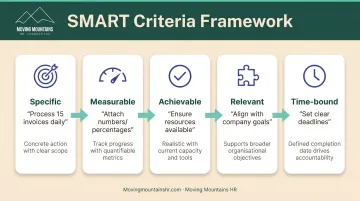
Use SMART criteria to create performance objectives:
- Specific: "Process 15 invoices daily" beats "handle invoices efficiently"
- Measurable: Attach numbers, percentages, or observable evidence
- Achievable: Ensure employees have the resources and time to succeed
- Relevant: Align with department and company goals
- Time-bound: Set clear deadlines or review periods
Focus on critical responsibilities first. Identify which job duties directly impact team success or customer outcomes and deserve explicit expectations. Secondary tasks may need less formal structure.
In 2026, expectations must account for hybrid work realities. Specify location, availability windows, response times for asynchronous communication, handoff protocols for distributed teams, and output standards that don't assume everyone is in the office. "Hybrid" is not self-explanatory. Clarify what it means for each role.
Step 2: Align Expectations with Company Goals and Culture
Individual expectations must ladder up to department and organizational objectives. When employees understand how their work contributes to bigger-picture success, engagement rises sharply.
Gallup reported in 2025 that 50% of employees with a strong sense of work purpose were engaged, compared to far lower engagement among those who couldn't connect daily tasks to broader impact.
Ensure expectations reflect actual company values, not just stated ones:
- If your company values innovation, expectations should include "propose process improvements," not just "follow procedures exactly"
- If collaboration is a core value, include "share knowledge proactively with teammates" as a behavioral expectation
- If your culture rewards firefighting and heroics, expecting "proactive planning" won't stick
Review existing job descriptions and update them to reflect current role requirements and organizational priorities. Many descriptions are years out of date and no longer match what the role actually requires.
Moving Mountains HR's HR Document Audit service helps California employers find these gaps by reviewing job descriptions, policies, and employee-facing materials against current practices and compliance requirements.
Step 3: Document Expectations in Writing
Written documentation is non-negotiable. It does four jobs at once:
- Prevents "he said/she said" disputes
- Gives employees a clear reference
- Creates legal protection for employers
- Sets the baseline for performance reviews
Build from that baseline when you put expectations on paper.
Include these elements in written expectations:
- Specific performance standards (quantity, quality, deadlines)
- Behavioral expectations (communication protocols, collaboration requirements)
- Work schedule and availability requirements
- Key deadlines and milestones
- How performance will be measured and evaluated
For California employers specifically: documented expectations must comply with state labor laws, including:
- At least 40 hours or five days of paid sick leave
- Meal periods by the end of the fifth hour for shifts over five hours
- Reasonable disability accommodation through an interactive process for employers with five or more employees
Attendance and scheduling expectations must leave room for these requirements.
Warehouse employers covered by Assembly Bill 701 must provide written quota details at hire, and quotas cannot prevent meal/rest breaks, bathroom use, or safety compliance. Union-covered employers cannot unilaterally change schedules, output standards, or evaluation procedures without bargaining.
Store written expectations in accessible locations: employee handbook, onboarding documents, performance management system, or shared drive. Require employees to acknowledge receipt.
Step 4: Communicate Expectations Through Two-Way Dialogue
Expectations should never be dictated top-down. Effective feedback works as a two-way exchange, according to Gallup's guidance on performance communication.
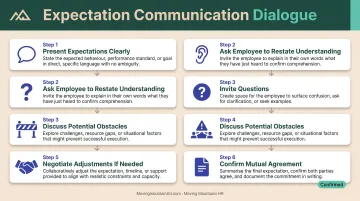
Structure the conversation this way:
- Present expectations clearly - explain both the outcome and the behavior
- Ask the employee to restate their understanding in their own words
- Invite questions - create space for concerns or confusion
- Discuss potential obstacles - identify resource gaps or conflicting priorities
- Negotiate adjustments if needed - be willing to revise unrealistic expectations
- Confirm mutual agreement - document what you both agreed to
Connect the dots. Tell the story of why expectations matter and how they contribute to team and company success, not just what is expected. When a warehouse worker understands that accurate inventory counts prevent customer shipment delays, the expectation becomes meaningful, not arbitrary.
Adapt your communication style to different employee personalities, experience levels, and cultural backgrounds. Multi-generational teams in 2026 may interpret "professionalism" or "initiative" differently. Provide concrete behavioral examples of what these terms mean in your workplace.
Step 5: Establish Regular Check-Ins and Feedback Loops
Expectation-setting is not a one-time event. It requires regular status updates, feedback sessions, and course corrections. Gallup recommends 15-30 minute conversations that happen frequently, with goals and priorities among the five defining topics.
Recommended cadence:
- Weekly 1-on-1s: New employees or those struggling with performance
- Bi-weekly check-ins: Established employees performing well
- Monthly team discussions: Review team-wide expectations and progress
- Formal quarterly or annual reviews: Assess overall performance and update expectations
What to discuss during check-ins:
- Progress toward goals (specific examples and evidence)
- Obstacles encountered (and how to remove them)
- Resources needed (tools, training, support)
- Expectations that may need adjustment due to changing priorities
- Positive reinforcement for meeting or exceeding expectations

Document check-in discussions to create a paper trail. This record becomes essential for performance reviews and, if necessary, disciplinary actions or termination decisions.
When Should You Set or Reset Employee Expectations?
Critical moments to set expectations
- During hiring: Preview role expectations in the job description and interviews
- First day or week: Cover standards, priorities, and how success is measured in onboarding
- End of probation: Confirm expectations formally and document performance to date
- Annual review cycles: Update expectations and align them with new goals
When to reset or update expectations
- Role changes or promotions: Redefine responsibilities, authority, and success metrics
- Restructuring or realignment: Clarify new reporting lines, scope, and team priorities
- New business objectives: Translate strategy shifts into day-to-day performance standards
- Emerging performance issues: Address gaps immediately—waiting months only hardens bad habits
- Return from extended leave: Reconfirm duties after FMLA, parental leave, or disability leave
- Work arrangement changes: Reset norms when moving remote, hybrid, or on-site
Set expectations before work starts, and revisit them as soon as the role, team, or business changes—not after someone has already missed the mark.
What You Need Before Setting Employee Expectations
Before you sit down with an employee, lock in three foundations: current job descriptions, legal and compliance clarity, and performance standards tied to company goals.
Updated Job Descriptions and Role Clarity
Job descriptions should accurately reflect:
- Current responsibilities and required skills
- Reporting relationships
- How the role fits in the organization
Many companies still use descriptions written years ago that no longer match the work. Spot gaps between the written description and what the role demands day to day. If customer service reps now handle live chat and social media on top of phone calls, update the description to match that reality.
Understanding of Legal and Compliance Requirements
For California employers, review relevant employment laws before setting expectations that touch on schedules, attendance, or performance metrics. California's Fair Employment and Housing Act (FEHA) generally covers employers with five or more employees and applies to working conditions, compensation, promotion, discipline, and termination.
Attendance expectations must accommodate disability, pregnancy, religious practice, and protected leave. Employers must engage in a timely, good-faith interactive process to identify reasonable accommodations for qualified individuals with disabilities.
Union-covered employers face additional constraints. The National Labor Relations Board states employers may not unilaterally change wages, hours, working conditions, or other mandatory bargaining subjects before bargaining to agreement or lawful impasse.
Review the collective bargaining agreement and consult counsel before changing schedules, production standards, or evaluation procedures. Moving Mountains HR helps California businesses catch policy and documentation gaps early through HR Document Audits, policy updates, and ongoing support.
Clear Company Goals and Performance Standards
Confirm department and company objectives for the year so individual expectations line up with them. If customer retention is the priority, emphasize relationship-building and problem resolution—not just transaction speed.
Define what "meets expectations," "exceeds expectations," and "needs improvement" look like for each major responsibility. Without those benchmarks, evaluations turn subjective and inconsistent.
Key Factors That Affect Expectation Success
Even well-defined expectations can fail if certain critical factors aren't addressed.
Manager Consistency and Follow-Through
Managers must model the behaviors they expect, consistently enforce standards across all team members, and follow through on commitments made during expectation-setting conversations.
When managers are inconsistent (enforcing deadlines for some employees but not others, or promising resources they never deliver), the fallout is predictable:
- Employee confusion
- Resentment
- Perception of favoritism
- Erosion of trust
Gallup's 2026 study found managers who rated leaders outstanding or exceptional at accountability had 51% engagement, versus 17% among those who did not. Consistency matters. Apply standards and follow up consistently, and document legitimate differences in role requirements or accommodations.
Cultural Alignment and Values Integration
Expectations must align with actual company culture, not just stated values. If your company culture rewards firefighting and last-minute heroics, expecting "proactive planning" won't stick. Employees learn what is truly valued by watching what gets rewarded, promoted, and celebrated.
Assess whether expectations match culture by watching what actually happens:
- Which behaviors earn praise in meetings?
- Who gets promoted, and why?
- What do leaders spend time on?
- What gets punished or ignored?
If the gap between stated values and actual culture is wide, address the culture first or adjust expectations to reflect reality.
Realistic Resource Allocation and Support
Employees cannot meet expectations if they lack the resources to succeed:
- Adequate time
- Appropriate tools and technology
- Sufficient budget
- Proper training
- Support from colleagues and leadership
Managers are responsible for ensuring resources are available or adjusting expectations accordingly. If you expect a sales representative to generate 20 qualified leads per week but provide no CRM system, no lead-generation budget, and no training, the expectation is unrealistic. That failure is yours, not theirs.
Remove obstacles that prevent employees from succeeding. Clear blockers, secure approvals, provide access, and advocate for your team.
Individual Circumstances and Flexibility
One-size-fits-all expectations may not work for all employees due to differences in experience level, personal circumstances, disabilities requiring accommodation, or role-specific variables.
Balance fairness across the team with flexibility for individual needs, within legal and ethical boundaries. A new hire may need more time to reach full productivity than a veteran. An employee with a documented disability may need modified duties or schedule adjustments.
Document the business reasons for any differences in expectations to avoid claims of favoritism or discrimination.
Common Mistakes When Setting Employee Expectations
Even experienced managers make predictable mistakes when setting expectations.
Assuming expectations are obvious or implied
Managers often treat "common sense" as universal. It isn't. Generations, cultures, and industries read the same phrase differently.
State expectations out loud and in writing, even when they feel obvious. Name the behaviors you mean—for example, what "proactive communication" looks like on your team.
Setting expectations in a one-way monologue without employee input
When managers dictate expectations without questions or feedback, employees feel disempowered, skip flagging unrealistic goals, and own the outcome less.
Treat expectation-setting as a dialogue. Ask whether the goals fit their current workload and what obstacles they foresee.
Making expectations too vague or subjective
Phrases like "show initiative" or "maintain high quality" invite different readings and make reviews feel unfair. Anchor each expectation in observable behavior: "Initiative means proposing at least one process improvement per quarter and volunteering for cross-functional projects."
Setting expectations once and never revisiting them
Business priorities, team dynamics, and employee circumstances change constantly. Expectations set in January may be obsolete by June. Schedule regular check-ins, and formally review expectations at least annually, or whenever roles, priorities, or resources shift in a meaningful way.
Failing to connect expectations to consequences
If you never explain what happens when expectations are met, exceeded, or consistently missed, employees won't know the stakes. Tie expectations to performance reviews, pay, advancement, and, when needed, corrective action or termination.
Alternatives to Traditional Expectation-Setting Methods
While the traditional manager-led expectation-setting process works in most situations, some organizations and roles benefit from alternative approaches.
Collaborative Team-Based Expectation Setting
Approach: Team members collectively define expectations for roles, behaviors, and outcomes that apply to everyone on the team.
When it's better:
- Highly collaborative or self-managed teams
- Creative or innovation-focused roles where autonomy matters
- Cultures that emphasize flat hierarchy
Key trade-offs:
- Needs team maturity and strong facilitation
- Can be time-intensive to run well
- Fits poorly where hierarchical accountability is clear
- Still needs a process for when someone misses the shared bar
30-60-90 Day Plans for New Hires and Role Transitions
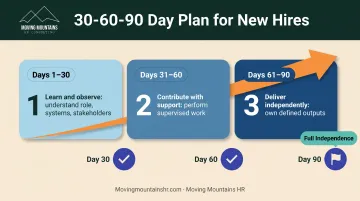
Approach: Break expectations into progressive phases with clear milestones for each period:
- Days 1-30: Learn and observe: understand the role, systems, stakeholders, and baseline measures
- Days 31-60: Contribute with support: perform supervised work and review evidence
- Days 61-90: Deliver results independently: own defined outputs and evaluate performance
When it's better:
- New hires and newly promoted employees
- People moving into a different role
- Organizations with complex onboarding
Key trade-offs:
- Front-loads manager time in the first 90 days
- Needs more structured check-ins and feedback
- Works best when plans are customized, not generic templates for every hire
Fractional or Outsourced HR Support for Strategic Expectation-Setting
Approach: Bring in external HR expertise (for example, fractional CHRO support) to define organization-wide performance standards, build expectation-setting frameworks, train managers, and stay compliant.
When it's better:
- Small to mid-size businesses without dedicated HR staff
- Companies in rapid growth mode
- Employers in complex compliance environments, especially California
- Leadership teams that want senior HR guidance without a full-time executive
Key trade-offs:
- Requires external investment
- Depends on leadership buy-in to act on recommendations
- Works best when the advisor partners with leadership instead of dictating solutions
For teams in that last category, Moving Mountains HR provides fractional CHRO and HR consulting for small to mid-size businesses. That can include performance management support, compliance audits, manager training, and ongoing strategic HR guidance.
Conclusion
Setting clear employee expectations is a core responsibility for managers and leaders. Clear standards drive engagement, productivity, accountability, and retention. Vague or missing expectations create confusion, resentment, legal risk, and turnover.
Strong expectation-setting rests on two habits: clarity (specific, documented, measurable standards) and ongoing communication (two-way dialogue, regular check-ins, and room to adjust). In 2026, hybrid schedules, diverse teams, and shifting employee priorities make that discipline harder—and more valuable. Put expectations in writing, revisit them often, and treat them as a living agreement, not a one-time speech.
Frequently Asked Questions
What is the 30-60-90 rule at work?
The 30-60-90 rule is a plan for setting progressive expectations in an employee's first three months. Days 1–30 focus on learning, days 31–60 on contributing with guidance, and days 61–90 on delivering independently.
Can you give an example of effectively setting employee expectations?
For a customer service role: "Respond to inquiries within 24 hours, maintain a 90%+ satisfaction score, and escalate complex issues to your manager within 2 hours." That pairs clear outcomes with process standards.
What are common expectations employers have for their employees?
Common expectations include punctuality, work quality and accuracy, professional communication, policy adherence, teamwork, and ongoing skill development. These shift by industry, role, and company culture.
What are good expectations to have of a manager?
Employees can expect clear priorities, regular feedback and coaching, adequate resources, fair treatment, team advocacy, and a manager who is available for questions and guidance.
How often should managers review expectations with employees?
Use weekly or bi-weekly check-ins for progress and obstacles, plus monthly one-on-ones for deeper discussion. Reset expectations in quarterly or annual reviews as priorities change.
What should I do if an employee consistently fails to meet expectations?
Start with a direct conversation to find the root cause: unclear expectations, missing resources, personal issues, or skill gaps. Build a performance improvement plan with specific goals, support, and regular check-ins. If results still fall short, follow your disciplinary process.