Introduction: Performance Appraisal Systems for 2026
Picture a business owner who can't pinpoint why some employees meet targets while others fall short—and who lacks any formal process to close those gaps. Without structured reviews, compensation decisions feel arbitrary and top performers go unrecognized.
Skill gaps widen unchecked. That scenario plays out across thousands of small and mid-size businesses every year.
Performance appraisals have moved far past the annual "report card" model. Today's systems work as strategic development tools that keep teams aligned and improving over time.
This guide covers core appraisal methods, how to choose the right approach for your organization, implementation essentials, and how to handle the obstacles that sink even well-designed systems.
Key Takeaways
- Structured appraisal systems tie employee evaluation to clear organizational goals
- Continuous feedback and development outperform infrequent annual reviews
- Choose a system that fits your size, industry, culture, and business objectives
- Job-specific criteria, trained managers, and solid record-keeping make implementation stick
What Are Performance Appraisal Systems? [Definition & Purpose]
A performance appraisal system is a structured process for evaluating employee performance against predefined standards. It typically includes multiple perspectives (manager assessments, peer input, and self-evaluation) to create a clear view of how well someone meets job expectations and contributes to the business.
Core purposes include:
- Identifying top performers for advancement and rewards
- Making informed compensation decisions
- Pinpointing skill gaps and training needs
- Supporting succession planning
- Ensuring individual work aligns with organizational goals
Performance appraisals are one component of a broader performance management system that includes goal setting, ongoing feedback, coaching, and development planning. While the appraisal is a formal evaluation conducted at defined intervals, performance management is the year-round cycle that supports employee growth and business results.
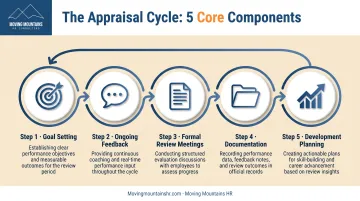
Typical Appraisal Cycle Components
- Goal setting: Shared, measurable objectives agreed on by manager and employee
- Ongoing feedback: Regular check-ins on progress and obstacles
- Formal review meetings: Structured sessions using standardized criteria
- Documentation: Written records of ratings, accomplishments, and improvement areas
- Development planning: Training, stretch assignments, or other skill-building next steps
McKinsey's 2024 analysis of 1,800+ companies found that organizations with strong people-performance practices experienced 30% higher revenue growth and five points lower attrition compared to peers. Those results reflect broader performance management, not appraisals alone, but they still show why structured evaluation and development support stronger growth and lower turnover.
Why Performance Appraisals Matter in 2026
The Shift Toward Skills-Based Evaluation
Rapid technological change and evolving job requirements have made skills-based evaluation a priority for growing teams. Deloitte's 2022 global survey of 1,021 workers and 225 executives revealed that only 14% strongly agreed their organizations fully used workers' skills. Traditional role-based appraisals often fail to capture the capabilities employees bring or need to develop.
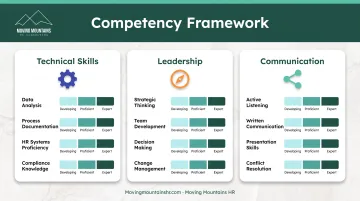
Modern appraisal systems increasingly evaluate competencies such as technical skill, leadership, communication, and adaptability, not task completion alone. That shift helps organizations spot skill gaps and build development plans for roles that may not exist yet.
Employee Retention and Engagement as Competitive Advantages
Tight labor markets make retention a business priority. U.S. employee engagement dropped to 31% in 2024, the lowest level in a decade, according to Gallup's survey of 79,087 workers.
Appraisals are only one driver of engagement, but frequency matters. Gallup research found that employees receiving daily feedback rather than annual reviews reported 3.6 times higher odds of strong motivation.
Performance appraisals that focus on development and clear, actionable feedback help retain top performers and re-engage people who feel overlooked.
Legal Compliance and Documentation Protection
For California businesses, performance documentation serves a critical legal function. California law sets clear recordkeeping rules:
- Retain personnel records, including performance evaluations, for at least three years after termination
- Allow current and former employees to inspect and copy performance or grievance records
- Fulfill those requests, typically within 30 calendar days of a written request
Well-documented appraisals protect against wrongful termination claims and discrimination allegations by establishing a clear, contemporaneous record of performance issues and employer actions. At-will employment does not remove the need for defensible documentation. Employers with five or more employees still must not discriminate on protected grounds or retaliate for asserting legal rights.
Top 10 Performance Appraisal Methods for Modern Workplaces
No single appraisal method fits every team. Use the breakdowns below to match each approach to your roles, culture, and capacity—especially if you are a small or mid-size employer building a system from scratch.
Management by Objectives (MBO)
How it works: Manager and employee collaboratively set specific, measurable objectives tied to organizational goals. Throughout the review period, they conduct periodic progress reviews. At appraisal time, evaluation focuses on the degree to which the employee achieved agreed-upon goals.
Ideal use cases:
- Roles with quantifiable objectives (sales targets, project milestones, production quotas)
- Organizations with clear strategic goals that cascade to individual contributors
- Knowledge workers who manage their own workflows
- Teams that judge success by outcomes more than hours worked
Potential drawbacks: Goals may become outdated when business priorities shift mid-cycle. MBO can undervalue qualitative contributions (teamwork, mentoring, innovation) that don't fit neatly into objective frameworks.
360-Degree Feedback
What it is: Multi-source evaluation collecting input from the employee's manager, peers, direct reports, and sometimes customers or external partners. The multi-source view shows how the employee's work affects multiple stakeholders.
Strengths: Gives useful insight into interpersonal skills, leadership effectiveness, and collaboration that a single manager may not observe. Especially helpful for leadership development.
Best environments:
- Leadership and management roles
- Team-based or matrix organizations
- Positions requiring cross-functional collaboration
Common mistakes: SHRM research found that a majority of employees reject 360-degree reviews, citing bias and political considerations. Implementation pitfalls include inadequate training for raters, insufficient anonymity protections, and failure to act on feedback, which erodes trust and participation.
Self-Assessment Appraisals
How it works: Employees evaluate their own performance before meeting with their manager, promoting reflection and ownership. The self-assessment typically uses the same criteria the manager will apply.
Value: Reveals alignment—or gaps—between employee and manager perceptions. Significant discrepancies become conversation starters that surface misunderstandings, unrecognized contributions, or performance blind spots.
Best practices:
- Provide structured prompts tied to job competencies
- Compare self-ratings with manager ratings before the review meeting
- Use differences to explore evidence and expectations, not to penalize honesty
Behaviorally Anchored Rating Scales (BARS)
Definition: Rating scales where each performance level (exceeds expectations, meets expectations, needs improvement) is anchored to specific behavioral examples. Instead of a generic "communication" rating, a BARS scale describes what excellent, satisfactory, and poor communication look like in practice for that role.
Advantage: Reduces subjectivity by grounding ratings in observable behaviors. Managers and employees have a shared understanding of what each rating level means.
Development process:
- Identify critical incidents—examples of effective and ineffective job behavior
- Categorize behaviors by competency or performance dimension
- Create scales with behavioral anchors for each level
Limitation: Time-intensive to develop and requires customization for each role or job family. Small organizations may lack the resources to build comprehensive BARS frameworks.
Continuous/Real-Time Feedback Systems
The model: Ongoing check-ins, project-based reviews, and immediate feedback replace or supplement annual reviews. Managers provide coaching and course correction in the moment rather than waiting months to address issues.
Alignment with modern work: Fits agile environments, remote teams, and fast-paced industries where priorities shift frequently. Adobe replaced annual reviews with its Check-in model in 2012, emphasizing regular manager-employee conversations.
Technology enablers:
- Performance management software that tracks goals and feedback continuously
- Mobile apps and collaboration tools (Slack, Teams) for real-time recognition and coaching notes
Cultural shift required: Managers must be trained and comfortable giving regular, candid feedback. Continuous feedback only works when it is specific and actionable. Gallup research emphasizes that not all feedback is equal.
Ranking and Forced Distribution Methods
How it works: Employees are ranked relative to peers or placed into performance categories (for example, top 20%, middle 70%, bottom 10%). The intent is to clearly identify top performers for rewards and bottom performers for intervention.
Rationale: Differentiates performance when managers inflate ratings or avoid difficult conversations.
Significant criticisms:
- Damages morale and teamwork by forcing competition
- May violate employment laws in certain jurisdictions
- Often perceived as unfair, especially in high-performing teams
- Can lead to bias and discrimination claims
SHRM has raised legal questions about forced ranking, noting that it may disproportionately affect protected classes and create legal exposure. Most experts recommend against this method for small to mid-size organizations.
Manager/Supervisor Evaluation
Traditional top-down appraisal: The direct supervisor assesses employee performance based on observations, measurable results, and demonstrated competencies. This remains the most common method but is increasingly supplemented with peer or self-assessment.
Best fit: Small teams and roles where the manager has direct line of sight into daily work. Standalone manager ratings are weaker in matrix or heavily remote setups where the supervisor sees only part of the job.
Importance of training: SIOP research confirms extensive evidence that rater bias affects appraisal ratings. Manager training on recognizing bias, documenting evidence, and conducting effective review conversations improves evaluation quality and fairness.
Peer Review/Assessment
Process: Colleagues at similar levels evaluate each other's performance, often focusing on teamwork, collaboration, and contribution to shared goals. Peer input is typically one component of a broader appraisal, not the sole basis for decisions.
Appropriate contexts:
- Project-based or cross-functional work where peers observe daily contributions
- Organizations with flat hierarchies and collaborative cultures
Potential issues:
- Friendship bias or reluctance to give critical feedback
- Office politics and personal conflicts
- Need for clear evaluation criteria and training to ensure fairness
Project-Based/Milestone Appraisals
Definition: Performance is evaluated at the completion of specific projects or milestones rather than on a fixed calendar schedule. Feedback is timely and contextual, delivered when the work is fresh in everyone's mind.
Benefits:
- Aligns with actual work cadence
- Provides flexibility for contract or project-based roles
- Supports continuous improvement by closing feedback loops quickly
- Creates documentation you can roll into mid-year or annual reviews
Suitable environments:
- Consulting firms and creative agencies
- Software development teams using sprint or agile methodologies
- Matrix organizations where employees rotate across projects
Challenge: Attribution can be difficult in team-based projects. Clear documentation of individual contributions is essential.
Competency-Based Appraisals
Approach: Evaluation focuses on demonstrated competencies such as technical skills, leadership, communication, and problem-solving, rather than task completion alone. Competencies are defined through job analysis and aligned with organizational values and future needs.
How competencies are defined:
- Conduct job analysis to identify critical skills
- Align with organizational values and strategic priorities
- Include future-focused competencies needed for advancement
Advantage for development: Clearly identifies skill gaps and training needs. When employees understand which competencies drive success, they can pursue targeted development opportunities.
Requirement: Competencies must be job-related, observable, and translated into objective, measurable standards to avoid subjective judgments.
How to Choose the Right Appraisal System for Your Business
The right appraisal system fits how you operate today and how you plan to grow. Match the approach to your size, culture, workforce, and goals before you invest in process or tools.
Assess Your Organizational Context
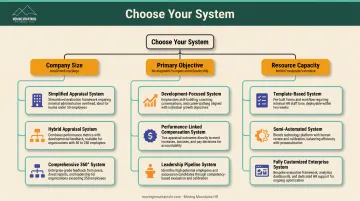
- Company size — Small businesses often lack capacity for complex 360-degree or BARS systems
- Growth stage — Startups need flexibility; mature organizations benefit from structured processes
- Industry norms — Professional services often use project-based reviews; manufacturing may emphasize task completion
- Management capacity — Do managers have time and training to run frequent reviews?
- Budget constraints — Technology, training, and administrative support all require investment
Evaluate Your Workforce Characteristics
- Job types — Knowledge workers and creative roles often benefit from competency-based or MBO approaches; production and operational roles usually need behaviorally anchored standards
- Geographic distribution — Remote and hybrid teams need systems that don’t rely only on in-person observation; continuous feedback tools help bridge distance
- Tenure and demographics — Younger workers often expect frequent feedback and development conversations; tenured employees often value stability and predictability in reviews
Align with Company Culture and Values
Participative cultures that emphasize collaboration usually fit 360-degree feedback and peer review. Hierarchical organizations with clear reporting lines often prefer traditional top-down appraisals, sometimes paired with self-assessment.
If your culture values innovation and agility, rigid annual reviews can feel outdated. Continuous feedback and project-based appraisals better support fast iteration and learning.
Consider Your Specific Objectives
Match the system to what you need most:
- Employee development — Emphasize continuous feedback, competency-based evaluation, and clear development planning. Focus on growth, not just ratings.
- Compensation decisions — You need clear performance differentiation. MBO and BARS give measurable, defensible criteria for merit increases and bonuses.
- Leadership pipelines — 360-degree feedback and competency-based appraisals surface leadership potential and readiness.
Factor in Resource Requirements
Implementation costs include:
- Time for managers to prepare, conduct, and document reviews
- Technology infrastructure (performance management software, tracking tools)
- Training for managers and employees
- Ongoing administrative support to keep the process consistent
Small businesses should start simple—manager evaluation with self-assessment and clear criteria—then evolve as capacity grows. Complexity without support creates compliance risk and manager frustration.
Essential Components of an Effective Appraisal Process
An effective appraisal process rests on three foundations: clear standards, consistent documentation, and people trained to use both. Skip any one and ratings drift, trust drops, and the system turns into paperwork.
Clear Performance Criteria and Standards
Develop job-specific competencies from a real job analysis. What does success look like in this role? Which behaviors and outcomes separate high performers from the rest?
Strong criteria share three traits:
- Measurable: You can quantify or clearly evidence the behavior or outcome
- Observable: The manager gets enough exposure to rate this dimension fairly
- Job-related: The criterion ties to essential job functions and business goals
Communicate expectations up front. Employees should know at the start of the review period how they will be evaluated. Surprises at appraisal time erode trust and engagement.
Structured Documentation and Forms
Clear criteria only help when every manager records performance the same way. Use standardized templates so ratings stay consistent across managers and departments. Templates should include:
- Goal review and progress assessment
- Competency ratings with behavioral examples
- Development planning section
- Space for employee comments and signature
Standardization pays off in three practical ways:
- Reduces bias by pushing managers to rate the same dimensions
- Creates legally defensible records
- Makes calibration and quality checks easier
Training for Managers and Employees
Even strong forms fall short without skilled conversations. Train managers on:
- Giving specific, actionable feedback
- Recognizing and mitigating rater bias (halo effect, recency bias, similarity bias)
- Conducting difficult conversations with empathy and clarity
- Documenting performance issues as they happen
Train employees on:
- Preparing for review meetings (self-assessment, evidence gathering)
- Receiving feedback constructively without getting defensive
- Advocating for development needs and career goals
A 2019 study found that combined rater training—covering both appraisal dimensions and common biases—improved rating accuracy. That investment shows up in fairer ratings and more useful development conversations.
Common Challenges and How to Overcome Them
Even strong appraisal systems hit the same friction points. These three show up most often—and each has a practical fix.
Bias and Subjectivity in Ratings
Unconscious bias still skews ratings when managers lack structure and shared standards.
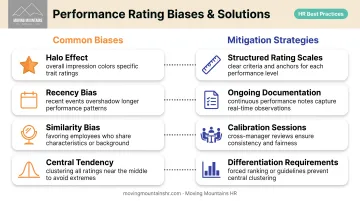
Common biases:
- Halo/horn effect - One strong trait colors the entire evaluation
- Recency bias - Recent events outweigh performance earlier in the cycle
- Similarity bias - Managers rate employees similar to themselves more favorably
Mitigation strategies:
- Use structured rating scales (Behaviorally Anchored Rating Scales or competency-based) with behavioral anchors
- Require managers to document specific examples supporting each rating
- Conduct calibration sessions where managers review and discuss ratings collectively
- Hold managers accountable for real differentiation so ratings reflect true performance distribution
Manager Discomfort with Difficult Conversations
Many managers avoid honest feedback or inflate ratings to sidestep conflict. Gallup found that only 14% of employees strongly agreed reviews inspired improvement, suggesting many appraisals fail to deliver meaningful insight.
Solutions:
- Provide training programs focused on feedback delivery and active listening
- Offer HR support for particularly challenging cases (performance improvement plans, terminations)
- Create clear accountability: managers should explain rating distributions and development plans to HR or senior leadership
- Normalize feedback as an ongoing practice, not a once-a-year ordeal
Lack of Follow-Through on Development Plans
Appraisals often produce thoughtful development plans that are never implemented. Employees lose confidence in the process when promised training, stretch assignments, or coaching fail to materialize.
Strategies to ensure accountability:
- Link development plans to the next review cycle and track progress on commitments
- Allocate budget and time for training, conferences, or certifications identified during appraisals
- Assign ownership by specifying who is responsible for each development action (employee, manager, HR)
- Review development plan status during mid-cycle check-ins
Frequently Asked Questions
How do you appraise staff performance?
Set clear expectations at the start of the period, gather evidence throughout (metrics, observations, and feedback), and hold a structured evaluation using standardized criteria. Document results in writing, agree on a development plan, and use regular check-ins to keep feedback timely.
What is the best software for performance appraisal?
The best fit depends on company size and needs. Prioritize goal tracking, multi-rater feedback, automated reminders, clear reporting, and HRIS integration. Smaller teams often start with tools like 15Five or Lattice; larger orgs usually prefer modules in Workday or BambooHR.
What are 10 effective performance appraisal methods?
Ten common methods are Management by Objectives (MBO), 360-degree feedback, self-assessment, Behaviorally Anchored Rating Scales (BARS), continuous feedback, peer review, manager evaluation, project-based appraisals, competency-based appraisals, and traditional rating scales. Many organizations combine several, such as manager evaluation plus self-assessment and periodic 360 input.
What are some good performance appraisal examples?
Examples include quarterly OKR (Objectives and Key Results) reviews for goal-oriented roles, monthly one-on-ones with documented feedback for continuous improvement, annual 360-degree reviews for leadership positions, and project retrospectives for creative or agile teams. The best approach matches your work cadence, culture, and objectives.
What are the 5 elements of a performance management system?
The five core elements are planning (goals and expectations), monitoring (progress and feedback), developing (coaching and skill-building), rating (formal appraisal), and rewarding (pay, recognition, and advancement). Appraisals are one part of this year-round cycle.
A strong appraisal system needs clear criteria, trained managers, and alignment with your goals and culture. Whether you're building a first review process or refining an existing one, Moving Mountains HR helps small and mid-size businesses with performance management, feedback, and engagement.
Support options include passive guidance, active participation in HR meetings, and fractional CHRO services. Contact us at 866-474-3575 for a complimentary consultation.