Introduction
Human capital management (HCM) processes are the operational workflows and strategic activities organizations use to recruit, manage, develop, compensate, and retain their workforce throughout the entire employee lifecycle.
For small business owners and HR leaders, weak HCM processes show up fast: compliance gaps, costly turnover, uneven performance management, and hours pulled away from running the business. Strong processes protect the organization and keep people work consistent as you grow.
This article breaks down the distinct HCM processes, shows how they connect across the employee lifecycle, and clarifies when to build them in-house versus outsource to external HR experts.
Key Takeaways
- HCM processes manage the full employee lifecycle: hiring, onboarding, performance, pay, development, and succession
- Small and mid-size businesses use HCM to stay compliant, cut turnover, and align workforce skills with strategy
- Run HCM in-house, through software, or with external consultants based on company size and resources
- Treating HCM as a one-time setup is a common mistake; it needs continuous monitoring and adjustment
- Startups and very small teams often benefit more from outsourced HR until they reach scale for formal HCM
What Are Human Capital Management Processes?
If your HR work stops at payroll and paperwork, you are managing transactions—not building a workforce that can grow with the business. Human capital management (HCM) processes are the structured, repeatable workflows organizations use to manage people strategically: boosting productivity, engagement, and retention while staying compliant and lined up with business goals.
HCM goes further than traditional HR administration:
- HR administration handles transactional work—payroll, recordkeeping, and day-to-day employee transactions
- HCM processes cover those basics plus strategic workforce planning, talent development, and performance optimization
According to the Society for Human Resource Management (SHRM), HRM is managing employees to meet organizational goals. HCM builds on that with measurement, future workforce needs, and strategic outcomes.
Processes and technology are not the same thing. HCM processes are the workflows themselves—how you recruit, onboard, evaluate, and develop people. HCM software only automates and supports those workflows.
You can run strong HCM processes without advanced software, and tools alone will not fix a weak workflow. Design the process first; technology is an enabler.
That design scales with you. Small businesses do not need enterprise complexity, but they do need core processes early—to limit compliance risk and avoid talent gaps as they grow. Below, we break down the core HCM process areas and how they work in practice.
The Core HCM Processes Across the Employee Lifecycle
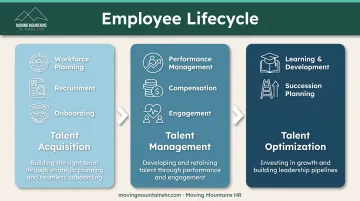
Understanding HCM processes begins with the employee lifecycle—the journey from attraction and recruitment through development, retention, and eventual separation. These processes fall into three categories: Talent Acquisition (bringing people in), Talent Management (developing and engaging current employees), and Talent Optimization (maximizing workforce value and planning for succession).
Talent Acquisition Processes
Workforce Planning
Identifies future staffing needs based on business strategy, analyzes skills gaps, and creates proactive hiring plans. The U.S. Office of Personnel Management (OPM) defines workforce planning as a systematic comparison of today's workforce with tomorrow's needs, so organizations can avoid reactive "we need someone now" scrambles.
Recruitment and Selection
Attracts qualified candidates through job postings, employer branding, applicant tracking, screening, and interviewing. Effective recruitment aligns hiring with both technical requirements and cultural fit so new hires contribute quickly and stay longer.
Onboarding and Orientation
Integrates new hires through paperwork, benefits enrollment, policy training, role-specific training, and cultural immersion. Gallup research shows that effective onboarding sets clear expectations, builds relationships, and accelerates time-to-productivity.
Talent Management Processes
Performance Management
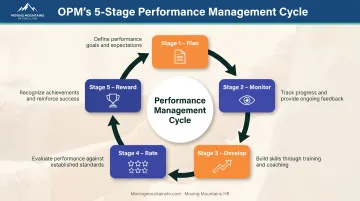
The OPM performance management cycle includes five stages: plan, monitor, develop, rate, and reward. In practice, that means setting clear goals, running regular reviews, giving ongoing feedback, identifying high and low performers, and linking results to pay and development.
Compensation Management
Covers how organizations design and run total rewards, including:
- Pay structures and payroll processing
- Internal equity and external market competitiveness
- Benefits administration
- Bonuses, equity, and non-monetary rewards
Employee Engagement
Improving satisfaction, motivation, and connection to the organization takes more than an annual survey. Strong engagement programs typically include:
- One-on-ones and stay interviews
- Focus groups and recognition programs
- Culture initiatives and retention strategies
According to Gallup's 2025 analysis, engaged business units had 21% less turnover in high-turnover organizations and 51% less in low-turnover organizations.
Talent Optimization Processes
Learning and Development
The Association for Talent Development (ATD) defines talent development as building knowledge, skills, and capabilities. Typical workflows include:
- Identifying training needs
- Delivering formal programs and supporting informal learning
- Tracking certifications and skill growth
- Creating career pathways that build internal bench strength
Succession Planning
Succession planning protects business continuity by identifying critical roles, assessing internal leadership candidates, developing high-potential employees, and building contingency plans for when key people leave or retire.
Why HCM Processes Are Critical for Business Success
Formal HCM processes reduce legal and financial risk by keeping your business compliant with employment laws on wages and hours, anti-discrimination, benefits, and safety.
The dollars at stake are real. In FY2025, the Department of Labor recovered more than $259M in back wages for 176,957 workers. In FY2024, the EEOC received 88,531 charges and secured almost $700M in relief.
Compliance is only one side of the cost picture. Structured HCM processes also improve retention and cut turnover expense. Gallup estimates replacement costs at 50–200% of an employee's annual salary per departure. Clear career paths, fair pay, consistent performance feedback, and an engaging workplace help you avoid that hit.
Strong processes also give you the data to manage the workforce on purpose—not only after a problem shows up. Useful visibility includes:
- Hiring timelines and recruiting effectiveness
- Turnover patterns and retention risk factors
- Performance trends and capability gaps
- Compensation benchmarks and equity issues
- Skills gaps and training needs
With that view, you can fund hiring, pay, and training where they matter instead of scrambling after every staffing fire drill.
Key Factors That Affect HCM Process Implementation
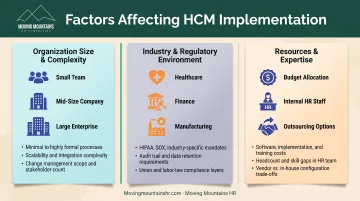
HCM process design rarely follows a single template. Three factors usually decide how formal, automated, or outsourced your processes need to be.
Organization size and complexity set the baseline. Smaller organizations often need simpler, flexible processes. Larger ones typically require formal structures, multiple approval layers, and stronger tracking systems.
SHRM's 2022 benchmark reported 1.5–4.5 HR staff per 100 employees, a spread that shows how staffing needs scale with size.
Industry and regulatory environment then shape the compliance load. Healthcare, finance, and manufacturing need tighter documentation, safety training, and audit trails than less-regulated sectors.
OSHA's bloodborne pathogens rule is one clear example: healthcare employers must provide covered-employee training at no cost during work hours and annually. That requirement alone drives specific training and recordkeeping workflows.
Available resources and expertise decide what you can run in-house. Teams with dedicated HR staff and budget can build full internal HCM processes. Organizations without that capacity often prioritize core processes and outsource specialized work such as benefits administration, payroll, or workplace investigations.
Common Mistakes and Misconceptions About HCM Processes
Three misconceptions show up often when organizations build or buy HCM capabilities.
Buying software before defining processes. Software can automate work, but it cannot create or fix weak processes. Define workflows first, then choose technology to support them. A sophisticated platform without clear processes simply automates confusion.
Treating HCM as a one-and-done project. The OPM framework spans planning, implementation, and evaluation for a reason. Effective HCM needs ongoing monitoring and adjustment as business needs, regulations, and workforce demographics change.
Running complex HCM without enough expertise. Many growing companies hand HR compliance, performance management, and workforce planning to inexperienced staff or overloaded owners. That creates compliance gaps and legal risk. Federal obligations start early:
- Form I-9 Section 2 must be completed within three business days of the employee's first workday
- EEOC coverage begins at 15 employees
- FMLA generally applies at 50 employees
Fractional HR consultants or outsourced HR providers give smaller organizations expert HCM process design and implementation without the cost of a full-time HR executive.
When to Build Internal HCM Processes vs. Outsource
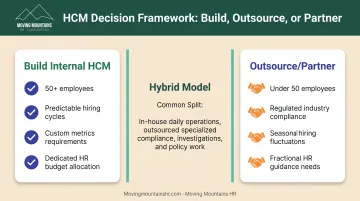
Consider building internal HCM processes when:
- Your organization reaches 50+ employees
- You have predictable hiring needs
- You need performance management tied to your own business metrics
- You have the budget to hire dedicated HR staff for compliance and talent management
Consider outsourcing or partnering with external HR consultants when:
- Your organization is below 50 employees
- You operate in a highly regulated industry requiring specialized compliance knowledge (like healthcare)
- You experience seasonal workforce fluctuations
- You need fractional CHRO guidance without funding a full-time executive
Many mid-size businesses use a hybrid model. They keep day-to-day work in house—onboarding, performance reviews, and routine employee relations—and outsource higher-risk work such as workplace investigations, compensation benchmarking, and compliance audits.
That split adds expert oversight where mistakes are expensive, without standing up a full HR department before you need one.
Conclusion
HCM processes are the operational workflows organizations use to recruit, manage, develop, and retain people across the employee lifecycle. For business owners and HR managers, effective HCM cuts legal risk, improves retention, supports better workforce decisions, and ties people capability to business strategy.
Scale implementation to your company size, resources, and complexity. Not every startup needs formal HCM on day one—but every growing business hits a point where structured, repeatable workflows are essential to sustain that growth. When informal habits stop keeping up, document the core processes first and build from there.
Frequently Asked Questions
What are the 7 functions of human capital management?
The seven core functions typically include workforce planning, recruitment and hiring, onboarding, performance management, compensation and benefits administration, learning and development, and succession planning. These functions span the employee lifecycle from attraction through retirement, though frameworks may group them differently.
What is the difference between HCM and HR?
Traditional HR focuses on administrative tasks like payroll and recordkeeping, while HCM takes a strategic approach that treats employees as valuable assets. HCM includes both administrative functions and talent management, workforce planning, and employee development, with emphasis on measurement, outcomes, and alignment with business objectives.
What is the difference between HCM processes and HCM software?
HCM processes are the operational workflows themselves: how you recruit, onboard, evaluate, and develop employees. HCM software is the technology that automates and supports those workflows. You can run processes without sophisticated tools, but software alone will not create effective processes—workflow design comes first.
Do small businesses need formal HCM processes?
Yes. Even small businesses need basic HCM processes for employment-law compliance, consistent employee treatment, and fewer costly mistakes. Formality should scale with company size; very small teams often outsource to HR consultants instead of building complex internal systems.
How do you implement HCM processes in a growing business?
Start with core compliance: hiring, onboarding, payroll, and basic performance feedback, and document workflows as you standardize them. Add strategic processes—formal performance management, learning programs, and succession planning—as you scale past about 50 employees. HR consultants can audit gaps and help design processes that grow with you.
When should a company consider outsourcing HCM processes?
Outsource when you lack internal HR expertise, face heavy compliance demands, need fractional executive guidance without a full-time hire, or want leadership focused on growth instead of HR admin. Many mid-size businesses outsource specialized work like workplace investigations or compliance audits while keeping day-to-day HR in-house.