If this sounds familiar, you're not alone. 63% of workers with a highly effective manager report deep commitment to their organization, compared to just 28% whose manager is not highly effective. The gap isn't about working harder—it's about managing smarter. Effective team management directly impacts business outcomes, employee satisfaction, retention, and the daily reality of whether your workplace runs smoothly or constantly feels one step behind.
Key Takeaways
- Clear communication, trust-building, and adaptability drive stronger team performance than process alone
- Balance direction with ownership so employees stay accountable without constant oversight
- Match your management style to team maturity, culture, and business context—not a fixed playbook
- Stronger management skills cut turnover, raise productivity, and build healthier workplace cultures
What is Team Management?
Team management is the process of organizing, guiding, and supporting a group of individuals to achieve shared business goals. It turns separate individual efforts into coordinated work that hits shared targets. Managers assign tasks, remove roadblocks, and set expectations so each person's work lines up with broader organizational objectives.
Why does it matter? Because teams don't self-organize by default. Without clear direction, accountability, and support, even talented employees can work at cross-purposes, duplicate effort, or miss deadlines. Effective management provides the structure that allows people to do their best work.
Team Management vs. Team Leadership
- Team management focuses on operational coordination and performance oversight: scheduling, task assignment, monitoring progress, and enforcing standards.
- Team leadership focuses on setting vision, motivating people toward longer-term goals, and shaping culture.
The best managers blend both. They handle day-to-day logistics and still build an environment where people feel valued and know how their work ties to something larger.
Benefits of Effective Team Management
Strong team management delivers measurable results across productivity, engagement, and retention.
Productivity and Efficiency
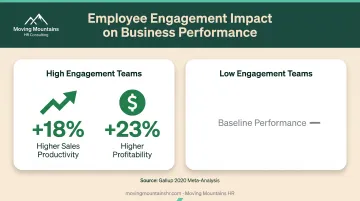
When managers align individual strengths with team objectives, reduce wasted effort, and remove obstacles quickly, teams accomplish more in less time. When managers align individual strengths with team objectives, cut wasted effort, and clear obstacles quickly, teams get more done in less time. Engagement is a major driver of those gains. Gallup's 2020 meta-analysis of 2.7 million employees found that top-quartile engagement teams showed 18% higher sales productivity and 23% higher profitability than bottom-quartile teams.
Employee Engagement and Retention
Manager quality is one of the strongest predictors of whether employees stay or leave. Among employees who voluntarily left their jobs, 42% said their manager or organization could have prevented their departure, and 45% had no proactive conversation about satisfaction, performance, or future in the prior three months.
Turnover is expensive. Replacing an employee can cost 50% to 200% of annual salary once you factor in recruiting, onboarding, lost productivity, and knowledge loss. Regular, meaningful check-ins help managers catch disengagement early—before people start job hunting.
Communication and Workplace Culture
Effective managers reduce conflict by opening clear feedback channels, handling interpersonal issues promptly, and modeling respectful communication. Employees who feel heard and supported are more likely to:
- Contribute ideas freely
- Ask questions instead of guessing
- Flag problems before they escalate
That openness builds a culture where people feel valued, stay longer, and perform at a higher level.
Essential Team Management Skills
Communication and Active Listening
Clear, transparent communication is the foundation of effective team management. Managers must tailor messages to different audiences—executives, peers, direct reports—and actively listen to team concerns rather than just broadcasting instructions.
Active listening means restating what you've heard to confirm understanding, asking clarifying questions, and responding to the substance of concerns rather than dismissing them. SHRM's conflict framework emphasizes respectful ground rules, behavior-specific language, and listening without interruption as core communication practices.
Delegation and Trust
Delegation transfers responsibility for specific tasks while maintaining accountability. Effective delegation matches tasks to team members' strengths, defines clear outcomes, provides necessary resources and authority, and gives people room to learn without micromanaging.
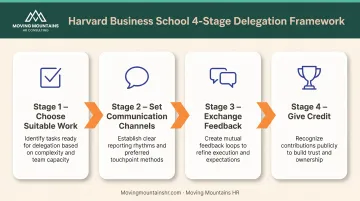
Harvard Business School's delegation framework recommends choosing suitable work, setting communication channels, exchanging feedback, and giving credit. Managers who delegate well free up their own time for higher-level work while building team capability and trust.
Emotional Intelligence and Empathy
Emotional intelligence (the capacity to recognize, manage, and express emotions) helps managers spot disengagement, burnout, or conflict early and respond supportively. The four components are self-awareness, self-management, social awareness, and relationship management.
Research from the Center for Creative Leadership found that managers showing more empathy were rated as better performers by their bosses. Empathy still leaves room for hard conversations: you read how feedback will land, then deliver it so the person can grow.
Conflict Resolution and Problem-Solving
Interpersonal conflicts, if left unaddressed, drain morale and productivity. Skilled managers address conflicts promptly and fairly, creating psychological safety for open dialogue.
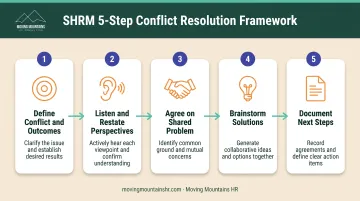
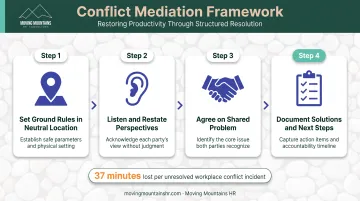
Key steps in SHRM's conflict resolution framework include:
- Define the conflict and desired outcomes
- Listen and restate each party's perspective
- Agree on the shared problem
- Brainstorm and screen solutions
- Document next steps
This approach turns emotional disputes into solvable problems.
Performance Management and Feedback
Performance management is the ongoing cycle of planning, monitoring, developing, and evaluating work against goals. Effective managers set clear expectations, give regular constructive feedback, and treat performance conversations as tools for improvement rather than paperwork.
Employees receiving meaningful feedback weekly are 4x as likely to be highly engaged. Annual reviews alone don't cut it; timely, specific feedback delivered in the moment is what drives behavior change and skill development.
Team Management Styles
No single management style works in every situation. Effective managers adapt their approach based on team needs, project complexity, and organizational culture.
Common Management Styles:
| Style | Best For | Trade-Off |
|---|---|---|
| Authoritative | Crises, urgent decisions, inexperienced teams | Fast decisions; can suppress creativity and input |
| Democratic | Collaborative projects, experienced teams, strategy discussions | Builds buy-in and satisfaction; slower and potentially confusing |
| Coaching | Individual development, skill-building, long-term growth | Supports capability; requires substantial time and energy |
| Laissez-faire | Highly experienced, self-directed teams | Encourages innovation and autonomy; unmanaged conflict risk |
| Transactional | Clear targets, measurable outputs, incentive-driven roles | Clear expectations; may not generalize across all contexts |
A 2024 meta-analysis of 11,640 participants found a positive relationship between leadership and adaptive performance (r=.37), but high variability across studies means no single style is universally strongest. The best managers blend styles to fit the moment instead of locking into one approach.
Practical Strategies for Managing Teams Effectively
Set Clear Goals and Expectations
Define SMART goals (Specific, Measurable, Achievable, Relevant, and Time-bound) and ensure every team member understands their role in achieving them. SHRM's goal-setting framework adds progress tracking and follow-up conversations to keep goals aligned with changing priorities.
When employees know exactly what success looks like and how their work contributes to team objectives, they spend less time guessing and more time delivering.
Build Trust Through Transparency and Consistency
Managers build trust by following through on commitments, communicating openly, and creating an environment where employees feel safe to speak up. Psychological safety, the shared belief that interpersonal risk-taking is safe, ranked first among five team-effectiveness dynamics in Google's study of 180 teams.
Consistency matters: if you promise to address a concern and then ignore it, trust erodes quickly. If you invite feedback but punish dissent, people stop sharing.
Foster Collaboration
Encourage teamwork by facilitating open discussions, valuing diverse perspectives, and recognizing team achievements publicly. Strategies include:
- Running regular team retrospectives where everyone can speak
- Rotating meeting facilitators to share ownership
- Celebrating collaborative wins, not just individual performance
- Addressing blame culture promptly when it appears
Provide Regular, Constructive Feedback
Don't wait for annual reviews. Employees receiving daily rather than annual manager feedback were 3.6x as likely to be motivated to do outstanding work. Give feedback while the work is still fresh, keep it specific, and balance course-corrections with recognition.
Effective feedback is behavior-specific ("You missed the deadline without notifying the team"), not personality-based ("You're careless"). It focuses on actions people can change and includes clear next steps.
Manage Remote and Hybrid Teams with Intention
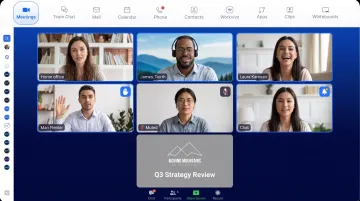
Remote and hybrid teams require deliberate communication structures. Best practices include:
- Use collaboration tools effectively (Slack, Microsoft Teams, Asana)
- Schedule regular check-ins; don't rely solely on email
- Set clear communication norms (response times, when to use which channel)
- Support work-life balance by respecting off-hours
Gallup's 2024 study of 2,877 hybrid workers found that employees with a clear hybrid plan were 2.2 times as likely to say their policy had an extremely positive impact on collaboration, 66% more likely to be engaged, and 29% less likely to be burned out.
Support Employee Development and Career Growth
Invest in training, mentorship, and development opportunities. Among employees who left voluntarily, only 29% had a recent conversation about their future career. Employees who see a clear path forward are more likely to stay and contribute at higher levels.
Development doesn't always mean promotion. It can mean new skills, lateral moves, or project leadership opportunities that build capability and engagement.
Tools and Resources for Team Managers
The right stack will not manage your team for you, but it will make priorities, feedback, and accountability easier to see. Most managers combine lightweight software with outside HR help when people issues outgrow day-to-day tools.
Project Management and Task Tracking Software
Platforms such as Asana, Trello, and Monday.com give shared visibility into work so deadlines and owners stay clear.
They typically help you:
- Assign tasks and track progress in one place
- Spot bottlenecks before they stall delivery
- Keep accountability visible across the team
Communication and Collaboration Platforms
Slack and Microsoft Teams keep remote and hybrid teams connected without relying only on email.
Common uses include:
- Project or topic channels for focused discussion
- Direct messaging for quick decisions
- File sharing and integrations with your other tools
Performance Management and Feedback Systems
Performance platforms support ongoing conversations instead of once-a-year reviews alone.
Look for systems that handle:
- Goal-setting and regular check-ins
- Continuous and 360-degree feedback
- Development planning and recognition
HR Consulting and Fractional HR Support
Small to mid-size businesses often cannot justify a full-time HR executive, yet still face complex people-management issues. Fractional CHRO services and HR consulting supply executive-level expertise on a project or retainer basis.
Moving Mountains HR provides fractional CHRO support through its Premium ongoing HR package, including participation in company HR meetings, strategic guidance, and availability by email or phone. That gives you senior HR leadership for performance management, compliance, retention, and culture without a full-time hire.

Bring in HR consulting when team problems need structure beyond software:
- Underperformance, conflict, or unclear expectations
- Neutral workplace investigations
- Leadership and communication training
- Policy documentation and ongoing management support
Common Challenges and How to Overcome Them
Managing Underperformance and Difficult Team Members
Address performance issues early through direct, supportive conversations. Identify root causes: Are expectations unclear? Is the employee facing personal challenges? Is there a skill gap?
SHRM recommends a structured conversation:
- Specific, behavior-based feedback
- Clear expectations and employee input
- Agreed actions with follow-up
Document improvement plans, set measurable milestones, and provide coaching and resources. If performance doesn't improve, that documentation supports fair, legally defensible next steps.
Navigating Conflict and Interpersonal Dynamics
Mediate team conflicts fairly and promptly. Create space for open dialogue where all parties feel heard.
A simple mediation process:
- Meet in a neutral location and set respectful ground rules
- Listen actively and restate each perspective
- Agree on the shared problem
- Brainstorm feasible solutions and document next steps
U.S. workers reported an average of 0.49 acts of workplace incivility per day in Q4 2024, resulting in approximately 37 minutes of lost productivity per incident. Addressing conflicts promptly protects both morale and performance.
Balancing Competing Priorities and Preventing Burnout
Protect team well-being by setting realistic workloads, encouraging time off, and modeling healthy boundaries.
In the 2023 APA Work in America survey, 57% of employees reported negative effects from work-related stress tied to burnout. Workload, insufficient staffing, and long hours were the main drivers.
Managers can prevent burnout by:
- Prioritizing work ruthlessly—not everything is urgent
- Distributing workload fairly across the team
- Checking in regularly on capacity and stress levels
- Seeking HR support when employee relations issues arise
Frequently Asked Questions
What are 6 key tips for effective team management?
Communicate clearly and transparently, set SMART goals aligned with business objectives, delegate effectively based on strengths, provide regular constructive feedback, build trust through consistency, and support employee development and career growth.
What is the difference between a team manager and a team leader?
Team managers focus on operational oversight, performance tracking, task coordination, and accountability. Team leaders inspire vision, motivate people, shape culture, and guide long-term direction. The best managers do both.
What are the most important skills for managing a team?
Communication, emotional intelligence, delegation, conflict resolution, and performance management consistently rank as the most critical management skills. SHRM's 2024 survey of senior executives found 54% wanted managers to develop coaching and mentoring capabilities.
How do you manage a difficult or underperforming team member?
Address issues early with direct, supportive conversations. Identify root causes such as unclear expectations or skill gaps, set clear expectations, coach, and document progress. Focus on specific behaviors and measurable outcomes, not personality labels.
What tools can help with team management?
Project management software (Asana, Trello, Monday.com), communication platforms (Slack, Microsoft Teams), and performance management systems that support goals, feedback, and development planning are the most commonly used team management tools.
How can small businesses improve team management without a full HR department?
Use fractional HR for strategy and compliance, train managers internally, and put clear policies and performance systems in place. Moving Mountains HR and similar outsourced HR partners provide executive-level expertise—including investigations and fractional CHRO support—without a full-time hire.