
Introduction: What Business Owners Need to Know About Performance Management and Discipline
Picture this: A manager notices an employee's productivity has dropped over the past month. Deadlines are being missed, work quality is inconsistent, and the team is feeling the impact.
The manager isn't sure whether to document this as a performance issue requiring coaching or begin formal disciplinary action. Sound familiar?
This scenario plays out daily in California workplaces, and the distinction matters more than many employers realize. California's Fair Employment and Housing Act (FEHA) applies to employers with five or more employees. Mishandling performance or discipline can trigger retaliation claims, discrimination allegations, and costly legal exposure.
In 2024 alone, California's Civil Rights Department received 33,505 intake forms and investigated 4,077 employment cases, with 1,775 investigations involving retaliation bases.
Knowing when to coach versus when to discipline is essential legal protection for your business. This guide covers the core differences, when to use each approach, and how to document decisions so you protect the company while supporting employees.
Key Takeaways
- Use performance management to coach and develop employees who are falling short of job expectations
- Reserve progressive discipline for behavioral or policy violations, with clear steps and escalating consequences
- Mixing up the two confuses staff, damages morale, and raises legal exposure for your business
- Document both processes thoroughly and apply them consistently to reduce discrimination and retaliation risk in California
- Bring in HR support early on complex cases so you stay aligned with California employment law
Understanding the Fundamental Difference Between Performance Management and Discipline
What Performance Management Really Means
Performance management is an ongoing developmental process designed to help employees improve job performance through coaching, feedback, goal-setting, and training. The process is collaborative and developmental: a partnership aimed at improvement, not punishment.
The process assumes the employee wants to succeed but may lack:
- Skills or training needed for the role
- Clarity about expectations or priorities
- Resources or support to meet standards
- Understanding of how their work impacts the organization
Key characteristics of performance management:
- Focuses on building capability and closing skill gaps
- Uses frequent check-ins and constructive feedback
- Identifies obstacles and provides resources
- Sets measurable improvement goals with timelines
- Emphasizes development rather than consequences
Performance management targets "can't do" problems: the employee lacks ability, clarity, or resources, not willingness.
What Progressive Discipline Involves
Progressive discipline is a corrective action process that addresses conduct, behavioral, or policy violations through increasingly serious consequences. It assumes the employee knows expectations but chooses not to meet them, requiring accountability.
Typical progressive discipline stages:
- Counseling and documented verbal warning
- Written warning (may include a performance improvement plan)
- Suspension and final written warning
- Recommendation for termination
Each step should clearly communicate the unacceptable behavior, reference applicable policies, state consequences if behavior continues, and document the employee's response.
While California is an at-will employment state under Labor Code section 2922, employers must still avoid discrimination, retaliation, and inconsistent application of policies.
Progressive discipline targets "won't do" problems: the employee understands expectations but chooses not to comply.
The Core Question to Ask Yourself
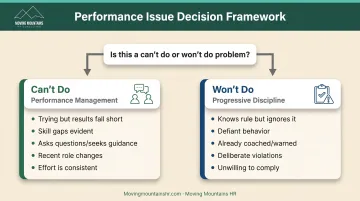
Before taking any action, ask: Is this a "can't do" problem or a "won't do" problem?
"Can't do" signals:
- Employee is trying but results fall short
- Skill gaps or unclear expectations are evident
- Employee asks questions or seeks guidance
- Recent role changes or new systems are involved
- Work quality varies but effort is consistent
"Won't do" signals:
- Employee knows the rule but ignores it
- Behavior is defiant or disrespectful
- You already coached or warned the employee
- Policy violations are deliberate
- Employee shows unwillingness to comply
This distinction guides your entire approach. Misclassify the problem and you can open legal risk, undercut morale, and apply a fix that never addresses the real issue.
When to Use Performance Management: Coaching Employees to Success
Typical Performance Management Scenarios
Performance management is appropriate when an employee is struggling with job execution rather than conduct. Common situations include:
- Missed deadlines due to unclear priorities or workload management
- Inconsistent work quality despite visible effort
- Difficulty adapting to new software, processes, or systems
- Declining productivity without behavioral red flags
- Skill gaps in technical or job-specific areas
- Confusion about role expectations or success metrics
These issues often show up in day-to-day work:
- An employee produces reports that don't meet quality standards but is receptive to feedback
- A team member struggles with new project management software after a system migration
- A worker seems overwhelmed and unsure which tasks to prioritize when multiple deadlines collide
In each case, the employee is trying to succeed but needs support, clarity, or development.
The Performance Management Process
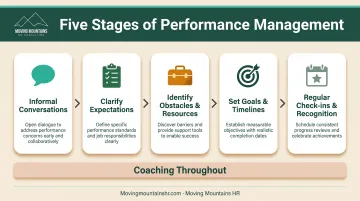
Effective performance management follows a structured but flexible approach:
- Have informal conversations early - Address concerns promptly before they escalate
- Clarify expectations with specific examples - Show what "good" looks like
- Identify obstacles and provide resources - Remove barriers to success
- Set measurable goals with timelines - Define what improvement looks like
- Schedule regular check-ins - Review progress weekly or biweekly
Coaching anchors each of those steps:
- Ask questions to understand what's blocking performance
- Provide constructive feedback using specific, observable examples
- Offer training, mentorship, or additional resources
- Adjust approaches based on employee needs and progress
- Recognize improvements to reinforce positive change
According to the Center for Creative Leadership's SBI model, feedback should identify the specific Situation, observable Behavior, and resulting Impact, while avoiding generalities, opinions, and judgments.
When to Implement a Performance Improvement Plan (PIP)
A PIP becomes appropriate when informal coaching hasn't led to sufficient improvement and more formal structure is needed. A PIP is still part of performance management, not discipline, and should give the employee a genuine opportunity to succeed.
A PIP should include:
- Specific performance gaps with concrete examples
- Measurable improvement goals tied to job requirements
- Reasonable timeline for achievement (typically 30-90 days)
- Resources and support the employer will provide
- Consequences if improvement doesn't occur
- Employee acknowledgment of receipt
How you run the PIP matters as much as what you put on paper:
- Schedule weekly or biweekly check-ins during the PIP period
- Document each meeting with written summaries
- Adjust support or timeline if reasonable obstacles emerge
- Evaluate progress objectively against stated goals
- Extend the timeline if the employee is making genuine progress
According to the Society for Human Resource Management (SHRM), most PIPs run 60 or 90 days to allow meaningful improvement, though 30 days is the minimum.
Supporting Employee Improvement Through Resources and Feedback
Performance management requires genuine employer investment in support such as:
- Training opportunities - Workshops, online courses, or certifications
- Clearer processes - Written procedures, checklists, or templates
- More frequent feedback - Regular touchpoints, not just annual reviews
- Adjusted workload - Temporary reduction during the improvement period
- Mentorship or job shadowing - Learning from experienced colleagues
That good-faith effort shows you are invested in the employee's success and strengthens your legal position if termination later becomes necessary. California courts and agencies look favorably on employers who document real coaching support and provide genuine improvement opportunities.
When to Use Progressive Discipline: Addressing Conduct and Behavioral Issues
Progressive discipline is appropriate when an employee violates policies, disregards rules, or engages in unacceptable conduct. Common situations include:
- Repeated unexcused tardiness or absences
- Insubordination or refusal to follow reasonable instructions
- Disrespectful behavior toward colleagues, customers, or supervisors
- Failure to follow safety protocols or procedures
- Misuse of company resources (time, equipment, funds)
- Violation of attendance, confidentiality, or conduct policies
Key distinction: Disciplinary situations involve the employee knowing what's expected but choosing not to comply. These cases turn on willingness and accountability rather than ability or understanding.
The Progressive Discipline Framework
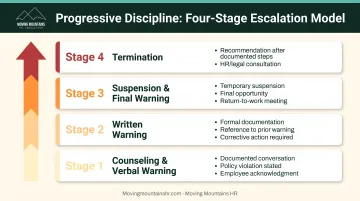
A typical progressive discipline structure includes four stages, each with escalating consequences:
Stage 1: Counseling and Verbal Warning
- Documented conversation addressing the conduct issue
- Clear statement of the violated policy or expectation
- Employee acknowledgment and opportunity to explain
- Warning that continued behavior will result in further action
Stage 2: Written Warning
- Formal written documentation of the issue
- Reference to prior verbal warning and continued violation
- Specific corrective action required
- Timeline for improvement
- Consequences of further violations
Stage 3: Suspension and Final Written Warning
- Temporary suspension (with or without pay, depending on circumstances and role)
- Final opportunity to correct behavior
- Clear statement that termination will follow if behavior continues
- Return-to-work meeting to review expectations
Stage 4: Termination
- Recommendation for termination after documented progressive steps
- Review of all prior warnings and employee's response
- Consultation with HR or legal counsel before finalizing
California context: While California's Labor Code section 2922 establishes at-will employment, the Fair Employment and Housing Act (FEHA) still prohibits discrimination and retaliation. Progressive discipline creates a documented record showing the termination was based on legitimate, non-discriminatory reasons.
When to Skip Steps in Progressive Discipline
Serious misconduct may warrant immediate action without progressive steps. Examples include:
- Workplace violence or threats of violence
- Theft or embezzlement
- Sexual harassment or discrimination
- Falsification of company records or timekeeping
- Behavior creating immediate safety risks
- Gross insubordination or egregious policy violations
Important: Before skipping progressive discipline steps, consult with HR or legal counsel. You must document why the misconduct was severe enough to warrant immediate termination and ensure the decision is consistent with past practice. Inconsistency can expose you to discrimination or wrongful termination claims.
Maintaining Consistency and Fairness in Discipline
Consistency is critical to legal defensibility. Apply disciplinary policies uniformly across all employees in similar situations to avoid claims of discrimination or unfair treatment.
Best practices:
- Review past practice before taking action
- If similar conduct was handled differently before, document why this case differs
- Train all managers on your disciplinary policies and decision framework
- Maintain confidential records of all disciplinary actions
- Consult HR before finalizing significant disciplinary decisions
That same documentation protects you under California retaliation rules. Labor Code section 98.6 creates a rebuttable presumption favoring the employee when adverse action occurs within 90 days of protected activity. Record your legitimate, non-retaliatory reasons clearly.
Documentation Best Practices for Both Approaches
Clear documentation protects you legally and gives managers a reliable record of what happened. What you capture depends on whether you are coaching performance or applying progressive discipline.
Performance Management Documentation
- Dates and summaries of coaching conversations
- Specific performance gaps with concrete examples
- Expectations set and goals established
- Resources, training, or support provided
- Employee responses, questions, or concerns
- Progress or lack of progress over time
- PIP documents, check-in notes, and outcome evaluations
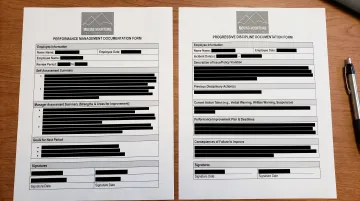
Progressive Discipline Documentation
- Date, time, and location of the incident
- Specific conduct or behavior observed
- Policies or rules violated with section references
- Prior warnings or corrective actions given
- Employee's explanation, response, or acknowledgment
- Witnesses present (if applicable)
- Specific disciplinary action taken
- Consequences if behavior continues
Universal Documentation Best Practices
- Keep records factual and objective, without personal opinions or emotional language
- Focus on observable behaviors and measurable outcomes
- Avoid assumptions about intent or character
- Maintain confidentiality and store records securely
- Follow California Labor Code section 1198.5 personnel file requirements (employees must have access within 30 days)
- Retain personnel records at least three years after termination
Common Mistakes Employers Make and How to Avoid Them
Even solid managers slip into patterns that blur accountability, invite legal risk, or leave a weak paper trail. These five mistakes show up often in performance and discipline work—and each has a straightforward fix.
Using Performance Language When Discipline Is Needed
Many managers try to "be nice" by treating conduct violations as performance issues. That blurs whether the employee is being coached or held accountable.
Example: An employee repeatedly arrives 30 minutes late despite reminders, and the manager calls it "time management coaching" instead of an attendance violation.
Fix: Separate performance gaps from policy violations. When someone breaks a rule, use disciplinary language and clear consequences.
Inconsistent Application of Policies
Disciplining one employee for behavior you've tolerated in others creates serious discrimination risk.
Example: Terminating a female employee for attendance issues while male employees with similar records keep working.
Fix: Check past practice before you act. If standards have been uneven, say so, commit to uniform application going forward, and document your reasoning.
Inadequate or Last-Minute Documentation
Waiting until termination is near to start documenting issues undercuts your position if the decision is challenged.
Example: Three years of "meets expectations" reviews, then a sudden termination for poor performance with no record of decline.
Fix: Document performance and conduct issues when they happen. Contemporaneous notes show good-faith effort and build a credible record.
Failing to Provide Resources During Performance Management
Telling someone to "do better" without support or clarity sets them up to fail and weakens your legal footing.
Example: A PIP that lists outcome targets but offers no training, tools, or clearer workload priorities.
Fix: Provide specific resources—training, clearer instructions, or adjusted expectations—and record what you offered.
Ignoring Protected Activity Timing
Adverse action within 90 days of protected activity can trigger a retaliation presumption under California Labor Code section 98.6.
Example: Issuing final discipline shortly after an employee files a wage claim or reports harassment, without a clean pre-existing record of the same issue.
Fix: If you must act near protected activity, document legitimate, non-retaliatory reasons in detail and loop in HR or counsel first.
When to Seek Expert HR Guidance
Complex situations need professional HR expertise to limit legal and operational risk. Consider consulting an HR professional when:
- Repeated performance issues persist despite coaching and PIPs
- Serious misconduct may warrant immediate termination
- Potential discrimination or retaliation claims are a concern
- You're unsure whether performance management or discipline fits
- An employee requests accommodation under FEHA or disability laws
- Multiple issues overlap (performance, conduct, and protected activity)
- Past practice has been inconsistent and you need to reset expectations
How Moving Mountains HR helps California employers:
Moving Mountains HR helps you choose the right response, reviews documentation before you act, and keeps the process aligned with California employment law. Support can include:
- Fractional CHRO and ongoing performance management guidance
- Neutral workplace investigations
- HR document audits and fresh compliance documentation
- Customized training programs
- Active or passive HR support matched to your organization
With deep experience in healthcare and other regulated industries, the team works with small and mid-size businesses on performance concerns and compliant policies and procedures.
A free consultation can clarify the right approach for your situation. Call 866-474-3575 or email questions@movingmountainshr.com to discuss performance management or discipline challenges.
Frequently Asked Questions
Is employee performance management a disciplinary process?
No. Performance management is a supportive, developmental process designed to help employees improve through coaching, feedback, and resources. Discipline is a corrective action process that imposes consequences for behavioral or policy violations.
What are the key components or stages of employee performance management?
Performance management includes setting clear expectations, providing regular feedback, identifying performance gaps, offering coaching and resources, implementing PIPs when needed, and documenting progress. The process is collaborative and focused on employee development.
What is the difference between coaching and disciplinary action?
Coaching is supportive guidance to build skills and improve performance when an employee needs help to succeed. Disciplinary action imposes consequences for policy violations or unacceptable conduct when expectations were clear but not met.
When should I use a Performance Improvement Plan (PIP)?
Use a PIP when informal coaching hasn't resolved performance issues and you need to formalize expectations, timelines, and support measures before considering termination. A PIP gives the employee a structured opportunity to improve with clear benchmarks.
Do I need to document every performance conversation?
While not every casual conversation requires documentation, any substantive discussion about performance concerns, expectations, or improvement steps should be documented. This creates a clear record and protects both you and the employee.
Can I skip progressive discipline steps for serious misconduct?
Yes. Serious misconduct such as workplace violence, theft, or sexual harassment may warrant immediate termination without progressive steps. Consult HR or legal counsel first to confirm the decision is legally justified and consistent with past practice.
Ready to strengthen your performance management and discipline practices? Moving Mountains HR offers California-focused HR compliance audits, policy development, training programs, and fractional CHRO support for employee relations situations. Schedule your free consultation at 866-474-3575 or visit movingmountainshr.com.