
Culture is no longer a soft HR initiative. Companies in the top quartile for engagement see 23% higher profitability and 18% higher sales productivity than those in the bottom quartile. This article defines what workplace culture is, identifies warning signs of decline, and provides 10 evidence-backed strategies to build a stronger culture—along with a practical roadmap for implementation.
Key Takeaways
- Strong workplace culture drives measurable gains in retention, productivity, and profitability
- Toxic culture accelerates turnover and disengagement, often costing employers thousands per lost employee
- Leadership commitment and clear communication determine whether culture change sticks
- Small and mid-size teams can lift employee experience with practical, low-cost strategies
- Meaningful culture change takes sustained effort, typically measured over 12–24 months
What Is Workplace Culture?
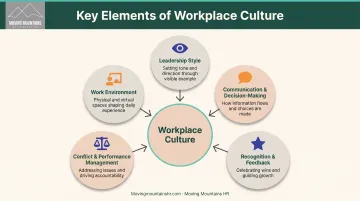
Workplace culture is the collection of shared values, beliefs, behaviors, and expectations that shape how employees experience their daily work. It shows up in the decisions leaders make under pressure, how managers give feedback, and whether employees feel safe raising concerns.
Key elements of culture include:
- Leadership style and day-to-day visibility
- Information flow and decision-making habits
- Frequency of recognition and feedback
- Handling of conflict, mistakes, and poor performance
- Physical and virtual work environment
Culture operates at every level of the organization. Gallup's meta-analysis of 736 studies across 347 organizations found that engagement-related culture conditions directly correlate with turnover, absenteeism, safety, customer loyalty, and business performance.
Why Workplace Culture Matters
Strong culture shows up in the metrics leaders already watch: turnover, output, hiring, and customer loyalty. Weak culture shows up there too, usually as cost.
Retention and Turnover Costs
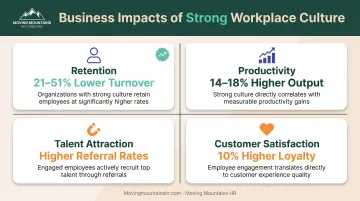
Organizations with top-quartile engagement see 21% lower turnover in high-turnover industries and 51% lower turnover in low-turnover settings. The financial hit adds up fast. SHRM's 2025 benchmark puts average recruiting cost at $5,475 per non-executive hire and $35,879 per executive hire, and that covers recruiting only, not lost productivity or onboarding time.
Productivity and Engagement
Engaged employees consistently outperform disengaged peers. Top-quartile units show 14% higher productivity and 18% higher sales productivity. People who feel supported and know what good work looks like stay longer, put in extra effort, and speak well of the company.
Talent Attraction
In competitive hiring markets, culture is a differentiator. Employees in healthy cultures are far more willing to refer candidates. Toxic conditions such as disrespect, unclear values, and weak inclusion push people out faster than pay alone can keep them.
Customer Satisfaction
Employee experience shapes customer experience. Top-quartile engagement units report 10% higher customer loyalty, because engaged employees tend to be more responsive, helpful, and invested in quality outcomes.
Signs Your Workplace Culture Needs Improvement
Culture problems rarely show up as one dramatic event. They build through patterns you can spot early if you know what to watch.
Common warning signs include:
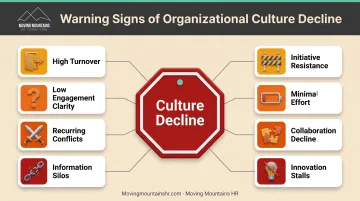
- Turnover above industry benchmarks or your own historical averages
- Engagement surveys where fewer than half of employees feel clear on expectations or believe someone cares
- Recurring disputes, grievances, blame-shifting, or chronic workplace negativity
- Information silos, rumors, or little transparency from leadership
- Persistent pushback on new initiatives without constructive dialogue
- People who show up but stay disengaged and do only the minimum
Other behavioral clues often appear alongside those signs:
- Collaboration drops as teams retreat into silos
- Innovation stalls because employees fear mistakes or rejection
- Recognition is missing or feels hollow
- Managers skip hard conversations and withhold feedback
Ignoring these signals gets expensive fast. Turnover, recruiting, onboarding, and lost productivity hit the budget directly, while disengagement weakens customer service and day-to-day performance.
How to Assess Your Current Workplace Culture
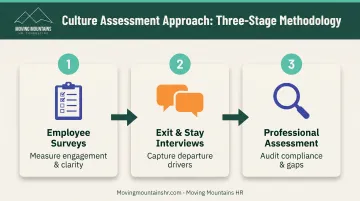
You can't improve culture you haven't measured. Start with a clear read on how employees experience leadership, recognition, and day-to-day work—then prioritize fixes from real signal, not assumptions.
Employee Surveys
Surveys are the most direct way to measure culture. Gallup recommends semiannual deep surveys with quarterly or monthly pulses for targeted monitoring. Surveys should assess:
- Role clarity and expectations
- Recognition and appreciation frequency
- Connection to mission and purpose
- Trust in leadership and communication
- Inclusion and belonging
- Development opportunities
- Work-life balance
Best practices:
- Explain how data will be collected, protected, and aggregated
- Use minimum reporting groups to protect anonymity
- Report results promptly and commit to specific follow-up actions
- Give managers their team results so they can act locally
Exit and Stay Interviews
Exit interviews show why people leave. Cover topics such as:
- Supervisor relationships and feedback frequency
- Development opportunities
- What could have prevented the departure
Stay interviews happen before someone decides to leave. They surface friction points, growth interests, and risks you can still fix.
Professional Culture Assessments
For deeper insight, bring in professional HR support for a structured culture and compliance review. Firms like Moving Mountains HR run HR compliance audits that examine policies, procedures, handbooks, and employee-facing documents, then flag gaps against regulations and best practices.
Those reviews often expose where written policy and real management behavior diverge. That gap is a common driver of cultural disconnect.
10 Ways to Improve Workplace Culture
1. Leadership Commitment and Modeling
Cultural change starts at the top. Managers account for 70% of the variance in team engagement, making leadership behavior the single most powerful culture driver. Leaders must visibly model the behaviors they expect: transparency, accountability, respect, and continuous learning.
What this looks like in practice:
- Leaders hold all-hands meetings and answer difficult questions honestly
- Leaders admit mistakes and share what they're learning
- Manager scorecards include clarity, feedback, recognition, and development metrics
- Leadership decisions explicitly reference company values
Without visible leadership commitment, culture initiatives feel like empty slogans.
2. Define and Communicate Core Values
Values should be observable behaviors, not aspirations. Define 3–5 core values with specific examples of what they mean in hiring, decision-making, reviews, and recognition. Embed values in daily operations by referencing them in meetings, performance conversations, and promotion decisions.
Treat values as decision rules: when faced with trade-offs, leaders should explain which value drove the choice and why.
3. Implement Recognition and Appreciation Programs
Employees who feel well-recognized are 45% less likely to turn over after two years. Recognition must be timely, specific, and tied to values. Effective programs combine:
- Manager-led praise for specific contributions
- Peer-to-peer recognition systems
- Milestone and service celebrations
Personalize recognition. Some employees value public acknowledgment, while others prefer private appreciation.
4. Invest in Professional Development
Only 30% of U.S. workers strongly agree someone encourages their development, down from 36% before the pandemic. Development signals investment and opens growth paths.
Practical steps:
- Quarterly growth conversations between managers and employees
- Individual skill plans with clear next steps
- Internal mentoring or job-shadowing opportunities
- Visible promotion pathways and transparent criteria
Development requires intentionality more than large budgets.
5. Prioritize Work-Life Balance and Flexibility
60% of remote-capable workers prefer hybrid arrangements, with about one-third preferring fully remote work. Flexibility is now a baseline expectation.
Implementation strategies:
- Set role-based flexibility policies with clear team norms
- Manage workload and monitor for burnout signals
- Respect boundaries—avoid after-hours emails unless urgent
- Measure output and engagement, not hours logged
Fairness matters. When teams co-design hybrid policies together, they're more likely to view arrangements as equitable.
6. Champion Diversity, Equity, and Inclusion
Effective DEI work focuses on equal access to opportunities, fair treatment, and a voice for every employee. MIT Sloan research identified failure to promote DEI, disrespect, and unethical behavior as top predictors of toxic culture.
Concrete actions:
- Use structured hiring criteria to reduce bias
- Conduct pay and promotion reviews for equity gaps
- Offer bias training and inclusive leadership development
- Track representation and advancement by demographic group
- Create safe channels for reporting discrimination or exclusion
DEI efforts must be authentic and sustained, not performative.
7. Build Transparency and Trust Through Communication
Only 46% of employees feel clear about expectations, a 10-point drop since early 2020. Clarity and transparency reduce uncertainty and build trust.
Best practices:
- Weekly updates on priorities, decisions, and changes
- Open Q&A forums where leaders answer tough questions
- Explain the reasoning behind decisions, not just the outcome
- Share both successes and challenges honestly
- Create psychological safety so employees can raise concerns without fear
Transparency means sharing what matters and being honest when you can't share everything.
8. Create a Positive Physical and Virtual Environment
Environment shapes experience. Physical workspaces should support focus, collaboration, learning, and social connection. Virtual environments require equally intentional design.
For hybrid teams:
- Co-design in-office schedules to balance collaboration and flexibility
- Invest in collaboration tools that enable seamless virtual participation
- Designate quiet spaces for focus work and open areas for teamwork
- Ensure remote employees have equal access to meetings, information, and recognition
Only 11% of teams set hybrid policies together, yet co-designed policies are most likely to feel fair.
9. Establish Clear Feedback Mechanisms
80% of employees receiving meaningful feedback weekly are fully engaged. Feedback should be frequent, specific, and two-way.
Effective feedback systems:
- Regular one-on-one check-ins (weekly or biweekly)
- Discussion of specific behaviors, contributions, and roadblocks
- Manager questions about support needs and roadblocks
- Employee input on team processes and decisions
- Suggestion programs with transparent response timelines
Feedback builds trust when it's balanced, actionable, and leads to visible change.
10. Foster Team Building and Celebration
Workplace friendships correlate with retention and satisfaction. Connection happens through authentic interaction, not forced fun.
Low-lift connection strategies:
- Start meetings with brief personal check-ins
- Celebrate project wins and team milestones in real time
- Create cross-functional collaboration opportunities
- Recognize peer support publicly
- Host informal virtual coffee chats or in-person gatherings
Team building works best when it's tied to real work and respects employees' time.
Implementing Cultural Change: A Practical Roadmap
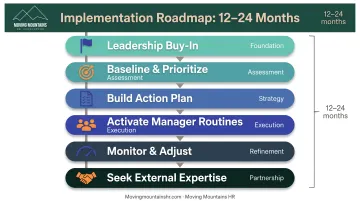
Culture change holds when you run it like a project, not a one-off initiative. Work through these steps in order.
Secure leadership buy-in. Appoint culture champions at the executive level who model new behaviors, hold others accountable, and allocate resources. Without sustained sponsorship, initiatives stall.
Baseline and prioritize. Run an engagement survey, review voluntary turnover data, and analyze exit interview themes. Compare results to national benchmarks, then pick 2–3 specific behaviors tied to one business outcome—for example, improving role clarity to reduce turnover.
Build an action plan. Assign owners for each initiative, set clear metrics, and establish a review cadence. Document current performance and targets, then share the plan with employees so everyone knows what success looks like.
Activate manager routines. Shift the daily employee experience through weekly check-ins, specific recognition, clear expectations, and development conversations. Managers carry culture into teams.
Monitor and adjust. Use quarterly pulse surveys to track progress. Report results, celebrate wins, and adjust based on feedback. SHRM notes that culture change can take months to several years, so avoid expecting overnight transformation.
Seek external expertise when needed. Bring in outside HR help when confidentiality matters, internal capacity is thin, or culture issues touch compliance risk. Moving Mountains HR can support these efforts with consulting, workplace investigations, and fractional CHRO services, which is especially useful for teams navigating California employment law.
Frequently Asked Questions
What are some ways to improve the workplace?
Focus on communication, recognition, and leadership. Ensure employees have clear expectations, receive regular feedback, and feel appreciated for contributions. Invest in development opportunities and model respectful, transparent leadership behaviors daily.
What are 5 areas of improvement in the workplace?
The five most common improvement areas are communication (clarity and transparency), leadership development (manager effectiveness), work environment (physical and virtual), employee recognition (frequency and specificity), and work-life balance (flexibility and reasonable workload).
How long does it take to change workplace culture?
Meaningful culture change typically requires 12–24 months of sustained effort, though some improvements can be felt within weeks. Culture transformation is gradual and requires repeated measurement, visible accountability, and consistent leadership follow-through.
What role do managers play in workplace culture?
Managers are culture carriers. 70% of team engagement variance is related to management. They shape daily experience through feedback, recognition, and decision-making, so manager development is one of the highest-ROI culture strategies.
Can small businesses afford to invest in culture improvement?
Yes. Many high-impact improvements (clarity, recognition, feedback, transparency) need commitment more than budget. Start with manager training, regular check-ins, and peer recognition; the cost of turnover and disengagement often exceeds what culture work requires.
How do you measure workplace culture improvement?
Track engagement scores, voluntary turnover, absenteeism, productivity, and customer satisfaction. Watch survey drivers like clarity, recognition, belonging, and trust, plus exit and stay interview themes. Gallup's meta-analysis supports these as meaningful culture indicators.