

Introduction
A supervisor and direct report leave work together most evenings. Rumors spread. As a business owner, you wonder: should you act, or is this private? The answer depends on whether the relationship creates legal risk for your company.
Workplace relationships are common. The fallout is not always private: 35% of workers report a negative work environment after a breakup, according to SHRM research.
While many workplace romances remain genuinely consensual, some cross boundaries that expose employers to harassment claims, favoritism disputes, retaliation lawsuits, and workplace violence. Power imbalances, conflicts of interest, and non-consensual advances turn private matters into compliance risks.
This article explains what makes a workplace relationship inappropriate, the risks these relationships create, and the policies small to mid-size businesses need to protect themselves while respecting employee privacy.
Key Takeaways
- Supervisor-subordinate romances carry the highest legal risk due to power imbalances
- Liability arises when conduct is unwelcome, creates favoritism, or brings retaliation
- Require disclosure of reporting-line relationships rather than banning all romances
- Keep investigations neutral, timely, thorough, and as confidential as possible
- California employers with 5+ employees need harassment training every two years
What Constitutes an Inappropriate Workplace Relationship
Inappropriate workplace relationships are romantic or sexual relationships that involve power imbalances, create conflicts of interest, violate company policy, or are non-consensual. These relationships become legal issues when they affect employment decisions, create hostile environments, or involve unwelcome conduct.
Federal and California law define actionable conduct in specific categories: quid pro quo harassment (job benefits tied to sexual conduct), hostile environment (severe or pervasive unwelcome conduct), and coworker harassment (employer knew or should have known but failed to act).
Power Dynamics and Supervisory Relationships
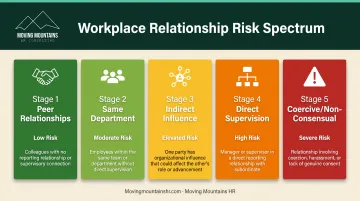
Supervisor-subordinate relationships are the highest-risk category. A supervisor's authority over performance reviews, raises, assignments, discipline, schedules, and career advancement creates inherent power imbalances that affect whether an employee can freely consent.
In Meritor Savings Bank v. Vinson, the Supreme Court rejected "voluntary participation" as a harassment defense. The question is whether advances were unwelcome under the totality of circumstances, not whether the employee eventually participated.
High-risk examples include:
- Manager dating direct report
- Executive involved with someone they can promote or terminate
- Department head in a relationship with staff they supervise
- Team lead dating someone whose performance they evaluate
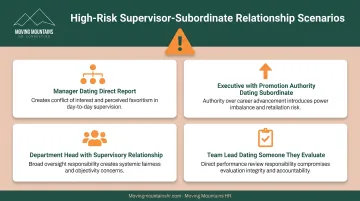
Under federal law, when supervisor harassment causes a tangible employment action (such as termination, demotion, or undesirable reassignment), the employer is vicariously liable with no affirmative defense. Removing reporting-line authority or reassigning employees promptly is essential.
Relationships That Create Conflicts of Interest
Even without direct supervisory authority, relationships may compromise objectivity and fairness. Conflicts arise when employees in romantic relationships work on the same projects, report to the same supervisor, or where one influences the other's compensation, assignments, or opportunities.
Conflict scenarios include:
- Employees dating while working on the same client account or project team
- One partner influencing the other's performance evaluation indirectly
- Access to confidential information that benefits a romantic partner
- Decisions about overtime, schedules, or desirable shifts affected by personal relationships
In Miller v. Dept. of Corrections, a California prison warden had concurrent relationships with three subordinates and allegedly arranged transfers, promises, and promotions. The California Supreme Court allowed coworkers' hostile-environment claims based on widespread favoritism.
Isolated favoritism is not automatically illegal, but severe or pervasive patterns that alter working conditions may support claims.
Non-Consensual or Coercive Relationships
Quid pro quo scenarios, where professional advancement, job security, or favorable treatment is explicitly or implicitly tied to romantic or sexual involvement, are unlawful harassment. Even if one party initially claims consent, coercion can invalidate true consent when power dynamics exist.
Warning signs of coercion:
- Promises of promotion or raises tied to romantic involvement
- Threats of demotion, termination, or unfavorable assignments if advances are rejected
- Supervisor pressuring subordinate to keep relationship secret
- Repeated unwelcome advances despite clear rejection
In EEOC v. Prospect Airport, a coworker continued sexual overtures after repeated rejection. Management knew its response was ineffective but failed to stop the conduct. The Ninth Circuit found triable hostile-environment issues and employer-response failures. Corrective action should target the harasser, not burden the victim.
The Risks of Inappropriate Workplace Relationships
Inappropriate workplace relationships create multiple liability risks. While no comprehensive dataset isolates claims caused specifically by workplace romances, research and case law reveal consistent risk patterns.
Sexual Harassment and Hostile Work Environment Claims
Inappropriate relationships frequently lead to harassment claims, especially when relationships end badly, advances are rejected, or public displays of affection make others uncomfortable. Third-party employees may file hostile-work-environment claims when witnessing favoritism or inappropriate behavior.
Federal law defines harassment as unwelcome sexual conduct that unreasonably interferes with work performance or creates an intimidating, hostile, or offensive environment. Supervisors who use their authority to pressure subordinates into relationships or retaliate after rejection create direct employer liability.
A 2022 survey of 259 organizational members found that supervisor romances were associated with lower trust, honesty, and interpersonal closeness. Respondents also reported negative judgments about productivity, performance, decision-making, and perceived inequity.
Retaliation Claims
Employees may claim retaliation if they face negative treatment after ending a relationship, reporting unwanted advances, or refusing a supervisor's romantic interest. California law prohibits adverse treatment for opposing harassment or participating in a complaint or proceeding.
Protected activity includes:
- Reporting unwelcome advances to HR
- Refusing to continue a romantic relationship
- Participating in workplace investigations
- Filing harassment complaints with the California Civil Rights Department or EEOC
Employers must monitor evaluations, schedules, assignments, exclusion from meetings, discipline, and communications after a report or breakup. Even if the original relationship appeared consensual, subsequent adverse actions may support retaliation claims.
Favoritism and Morale Issues
Actual or perceived favoritism damages team dynamics, reduces morale, and may lead to discrimination claims from employees passed over for opportunities. When supervisors give romantic partners preferential assignments, schedules, raises, or promotions, other employees notice.
SHRM's 2024 research found that 35% of respondents said their work environment became negative after a coworker breakup. That fallout drives productivity losses, turnover, and potential claims.
Third-party favoritism claims succeed when favoritism is severe or pervasive enough to alter working conditions. Isolated incidents ordinarily are not actionable, but patterns affecting promotions, assignments, pay, or access create hostile environments.
Workplace Violence Risks
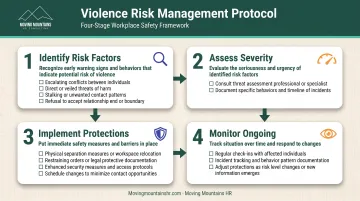
When relationships sour, jealousy arises, or advances are repeatedly rejected, employers face potential workplace violence.
California Labor Code 6401.9 classifies violence by a present or former employee, supervisor, or manager as Type 3 violence and requires covered employers to maintain emergency response procedures.
Violence risk factors include:
- Escalating conflicts between former partners
- Threats, intimidation, or stalking behavior
- Obsessive pursuit or refusal to accept relationship end
- Known history of violence or controlling behavior
Employers who know about these risks but fail to take protective action may face liability for failing to provide a safe workplace.
Essential Policies to Prevent Inappropriate Relationships
Clear, enforceable policies set expectations, reduce legal risk, and provide a framework for addressing concerns before they escalate.
Supervisor-Subordinate Relationship Prohibitions
Implement policies that ban or require disclosure of romantic relationships between supervisors and anyone in their chain of command or whose career they can influence. These policies should specify that violations may result in discipline up to and including termination, with the supervisor bearing primary responsibility.
California authority supports disclosed, tailored supervisor-subordinate conflict policies. In Barbee v. Household Automotive Finance, the California Court of Appeal upheld termination of a national sales manager who failed to disclose relationships with subordinates despite policy requirements and warnings.
The case does not validate every blanket relationship ban. It supports narrowly drawn disclosure requirements that target reporting-line conflicts.
Key policy elements:
- Define "supervisor" broadly to include direct and indirect authority
- Cover promotion, evaluation, compensation, discipline, scheduling, and assignment decisions
- Require disclosure to HR within a specified timeframe
- Provide reassignment or reporting-line change options
- Specify consequences for non-disclosure or policy violations
Mandatory Disclosure Requirements
Disclosure policies require employees to report relationships with coworkers, especially when they work closely or share a department. That notice lets employers set management plans, adjust reporting lines, or handle conflicts early.
Effective disclosure policies:
- Require reporting of relationships that create actual or potential conflicts
- Provide confidential reporting channels
- Protect employees from retaliation for disclosure
- Outline the process for reviewing and managing disclosed relationships
- Specify timelines for disclosure (for example, within 10 business days of relationship beginning)
Disclosure does not mean approval or disapproval—it provides information needed to manage conflicts and protect all parties.
Consensual Relationship Agreements (Love Contracts)
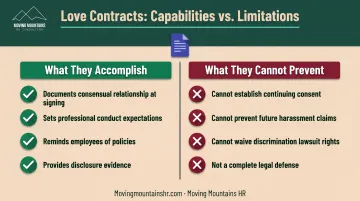
Love contracts are written agreements where employees acknowledge their relationship is consensual, not harassment, and commit to maintaining professionalism. Both parties sign, confirming they understand company policies, reporting channels, and anti-retaliation protections.
What love contracts accomplish:
- Document that the relationship was consensual at signing
- Set clear expectations for professional workplace conduct
- Remind employees of harassment policies and reporting channels
- Provide evidence of disclosure and mutual understanding
Limitations:
- Do not establish continuing consent—employees can withdraw consent at any time
- Do not prevent harassment claims if conduct later becomes unwelcome
- Cannot waive the right to sue over discrimination arising after signature
- No California or federal authority makes them a complete harassment defense
Love contracts work best as documentation tools within broader relationship policies, not standalone protections.
Anti-Fraternization and Professional Conduct Standards
Beyond disclosure and documentation, day-to-day conduct rules keep relationships from disrupting the workplace. Professional conduct policies cover public displays of affection, use of work time or resources for personal relationships, and basic boundaries on the job so coworkers are not put in an uncomfortable position.
Professional conduct expectations:
- No public displays of affection in the workplace
- No use of company email, phones, or systems for romantic communications
- Maintain professional demeanor in meetings and interactions
- Avoid discussing personal relationships during work time
- No sharing of confidential information with romantic partners
Moving Mountains HR helps small businesses build relationship policies that fit their industry and California employment law. Through HR Document Audits and Fresh Compliance Docs, employers get clear rules on supervisor-subordinate conflicts, disclosure, and professional conduct—without overlooking employee privacy.
How to Handle Suspected Inappropriate Relationships
When you suspect an inappropriate relationship, act deliberately. Investigations based on rumors or assumptions create legal risk and damage morale.
Conduct a Preliminary Assessment
Gather initial information before launching a full investigation. Ask:
- Who reported the concern, and is the source credible?
- What specific behaviors were observed (for example, frequent private meetings, public displays of affection, preferential treatment)?
- Is there documentation such as texts, emails, photos, witness statements, or performance records?
- Does the relationship involve a supervisor-subordinate reporting line or other conflict?
Do not act on rumors alone. Credible information means specific, firsthand observations or documented evidence, not speculation or gossip.
Initiate a Formal Investigation
When preliminary assessment reveals credible information that policies may have been violated or harassment may have occurred, launch a formal investigation.
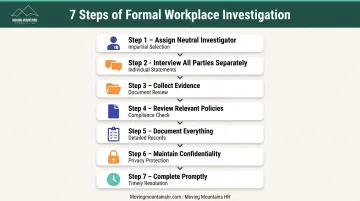
Investigation steps:
- Assign a neutral investigator trained in workplace investigations
- Interview all parties separately, including the reporting party, involved employees, and witnesses
- Collect evidence such as emails, texts, performance reviews, schedules, and assignment records
- Review relevant policies, including relationship, harassment, and code of conduct policies
- Document everything: interview summaries, evidence collected, event timelines, and investigator notes
- Maintain confidentiality to the extent possible, sharing information only on a need-to-know basis
- Complete the investigation promptly. California expects timely, thorough, impartial investigations, and delays raise legal exposure.
If you lack in-house HR expertise, bring in a professional rather than running sensitive interviews yourself. Moving Mountains HR conducts neutral third-party workplace investigations involving harassment, conflicts of interest, code of conduct issues, and related policy concerns.
Determine Appropriate Disciplinary Action
Discipline should align with policy violations and investigation findings. Consensual relationships that violate disclosure policies may warrant coaching or reassignment, while coercive relationships or harassment require stronger action.
Disciplinary decision factors:
- Severity of policy violation
- Whether conduct was consensual or coercive
- Impact on other employees
- Prior violations or warnings
- Consistency with past disciplinary decisions
Document the rationale for all decisions. Inconsistent enforcement creates discrimination and retaliation claims.
Protect Victims and Prevent Retaliation
If the investigation reveals harassment or coercion, immediately protect the victim. Separate the victim from the harasser through reassignment, schedule changes, or leave. Offer counseling support through an Employee Assistance Program (EAP) or a comparable resource when available.
Monitor for retaliation by:
- Tracking performance evaluations and discipline
- Reviewing assignment changes and schedule modifications
- Watching for exclusion from meetings or opportunities
- Documenting any negative treatment
Emphasize zero-tolerance for retaliation against anyone who reports concerns or participates in investigations. California law protects complainants and participants, and retaliation claims often succeed even when underlying harassment claims do not.
Creating a Culture of Professional Boundaries
Policies alone do not prevent problems. Consistent training, clear communication, and accessible reporting channels create workplace cultures that discourage inappropriate relationships and address concerns early.
Implement Regular Training Programs
California requires harassment prevention training for employers with 5+ employees:
- Supervisors: at least 2 hours every 2 years
- Nonsupervisory employees: at least 1 hour every 2 years
- New hires and newly promoted supervisors: within 6 months of hire or promotion
- Seasonal or temporary workers hired for under 6 months: within 30 days or 100 hours worked, whichever comes first
Effective training includes:
- Scenarios about appropriate workplace relationships and power dynamics
- Recognizing warning signs of coercion, favoritism, and harassment
- Reporting responsibilities for managers who observe or receive complaints
- Anti-retaliation protections for employees who report concerns
- Policy expectations for disclosure and professional conduct
A 2024 study testing harassment training effectiveness found improvements in knowledge and self-efficacy, but behavioral change remained unclear and self-efficacy gains faded after 1-2 months. Regular, scenario-based refresher training helps reinforce learning.

Establish Clear Reporting Channels
Provide multiple confidential reporting options so employees uncomfortable reporting to their supervisor have alternatives. California policy must allow employees to bypass the immediate supervisor.
Recommended reporting channels:
- Designated HR contact
- Anonymous hotline
- Online reporting portal
- Outside third-party investigator
- Direct contact with the California Civil Rights Department or EEOC
Share these options during onboarding and at least annually so every employee knows how to raise a concern without going through their manager.
Communicate Policies Consistently
Ensure all employees receive, acknowledge, and understand relationship policies through employee handbooks, onboarding, and regular reminders. Document receipt with one of these methods:
- Signed paper or email acknowledgment
- Tracked intranet confirmation
- Hire or orientation discussion with a recorded sign-off
Translate policies when at least 10% of a facility's workforce speaks another language.
Review and update policies each year to reflect legal changes and how people actually work—including remote settings where colleagues interact outside a traditional office.
Moving Mountains HR helps small to mid-size businesses build compliant handbooks, run HR Document Audits to close policy gaps, and apply those standards consistently so professional boundaries hold day to day.
Frequently Asked Questions
What is considered an inappropriate relationship at work?
Inappropriate workplace relationships are those involving power imbalances (supervisor-subordinate), conflicts of interest, policy violations, or non-consensual advances. Relationships become problematic when they affect employment decisions, create favoritism, or involve unwelcome conduct.
What is considered inappropriate workplace behavior?
Inappropriate behavior includes public displays of affection, using work time or company property for personal relationships, favoritism in assignments or evaluations, and any conduct creating a hostile or uncomfortable environment for coworkers.
Can an employer ban all workplace relationships?
Outright bans are difficult to enforce and may impact recruitment and morale. Employers can prohibit supervisor-subordinate relationships, require disclosure of relationships creating conflicts, and enforce professional conduct standards without banning all romances.
What should I do if I suspect employees are in an inappropriate relationship?
Gather credible information about specific observed behaviors, consult your policies to determine if violations exist, and conduct a professional investigation before taking disciplinary action. Do not act on rumors or assumptions.
Are love contracts legally enforceable?
Love contracts document consent and expectations at the time of signing but do not prevent harassment claims if conduct later becomes unwelcome. They cannot waive future discrimination claims or guarantee enforceability if coercion existed.
What are the consequences for employees who violate relationship policies?
Consequences range from counseling and reassignment to termination depending on policy language, severity of violation, and whether harassment occurred. Discipline should be consistent and proportionate to the violation.
Inappropriate workplace relationships create real legal and operational risks for small to mid-size businesses.
Clear policies on supervisor-subordinate relationships, professional conduct standards, accessible reporting channels, and prompt, neutral investigations protect employers while respecting employee privacy.
Moving Mountains HR helps California businesses develop compliant relationship policies, conduct workplace investigations, and provide ongoing HR support tailored to your industry and needs. Contact Moving Mountains HR at 866-474-3575 or staff@movingmountainshr.com to discuss your workplace relationship policies.