Introduction
Labor is a company's biggest expense and its biggest risk. Workforce optimization consulting firms help US businesses turn scheduling data, performance metrics, and compliance requirements into measurable returns instead of line-item costs.
This guide covers both ends of the spectrum: enterprise platforms built for AI-driven analytics and boutique firms built for hands-on compliance work. Many business owners struggle to tell the difference, and picking the wrong size of partner wastes budget fast.
Workforce optimization today spans AI scheduling tools, labor analytics dashboards, HR compliance audits, and fractional leadership that helps smaller companies avoid costly staffing mistakes.
The US healthcare workforce management system market alone generated $662.8 million in 2023 and is projected to reach $1.51 billion by 2030, according to Grand View Research. That growth is why choosing the right consulting partner matters as much as the tools you buy.
Key Takeaways
- Workforce optimization lifts productivity and cuts compliance risk by blending workforce management technology with strategic HR practices.
- Firm types span global enterprise consultancies and boutique shops focused on SMB compliance and fractional HR—match the model to your size and needs.
- Evaluate firms on industry expertise, technology capability, track record, and fit for your company's size.
- Moving Mountains HR fits SMBs that want executive-level, compliance-driven workforce optimization without enterprise overhead.
Overview of Workforce Optimization Consulting in the US Market
Workforce optimization uses data, technology, and HR expertise to align staffing, performance, and compliance with business goals. It goes beyond scheduling software: the work is getting people into roles that fit, at a cost the business can sustain, while staying legally compliant.
Beyond the healthcare-specific figures cited above, workforce management software and consulting reach nearly every labor-intensive U.S. industry, from call centers and hospitals to retail chains. That breadth is why buyer needs split so sharply by company size.
Enterprise vs. SMB needs look very different:
- Large organizations often need analytics-heavy WFM platforms that model thousands of employees across shifts, locations, and union rules
- Small and mid-size businesses usually need a hands-on, compliance-first approach: policy fixes and retention strategy, not another dashboard
The firms below cover both ends of that spectrum, so you can match a partner to the problem you actually have.
Top 12 Workforce Optimization Consulting Firms and Companies
We selected these firms based on expertise depth, technology and data capability, industry specialization, and proven client outcomes, with options sized for both enterprise and SMB budgets.
1. Moving Mountains HR Consulting
Moving Mountains HR is a California-based HR consulting firm founded in 2023 by Michelle Schwanhauser. It offers executive-level workforce strategy, compliance audits, and fractional CHRO services built for small and mid-size businesses without a full internal HR department.
Unlike enterprise WFO platforms focused purely on scheduling and analytics, Moving Mountains HR optimizes the workforce across compliance, retention, and policy design. That means closing policy gaps, reducing turnover-driven costs, and preventing the compliance violations that drain SMB budgets.
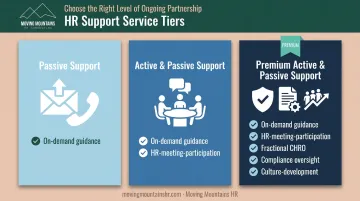
The firm's tiered ongoing support model lets growing businesses choose the right level of involvement:
- Passive Support: on-demand HR guidance via email or phone, available with a compliance package purchase
- Active & Passive Support: adds direct participation in company HR meetings
- Premium Active & Passive Support: fractional CHRO services, HR strategy, compliance oversight, and workplace culture development
Michelle's background includes deep healthcare industry expertise, paired with strong California employment law knowledge. That mix is especially useful for regulated, high-risk sectors navigating HR compliance and labor rules together.
2. Deloitte
Deloitte runs a dedicated Workforce Optimization practice that combines AI-driven workforce analytics with HR technology and change management. Its strategic workforce planning approach treats staffing as a continuous, data-based process rather than a once-a-year exercise, according to Deloitte Insights.
Large enterprises use it when talent needs shift across multiple business units and annual headcount planning is no longer enough.
3. The Hackett Group
The Hackett Group built its reputation on empirical performance benchmarking. Its proprietary database draws from tens of thousands of client engagements across nearly 9,300 organizations, giving enterprises a data-backed way to shift from reactive staffing decisions to proactive workforce planning grounded in peer comparisons.
4. Mercer
Mercer is one of the largest global HR and workforce consulting firms, covering workforce planning, total rewards, and organizational design. Its Total Remuneration Survey operates in more than 140 countries, giving clients extensive benchmarking data that ties workforce optimization directly to compensation and talent strategy.
5. Korn Ferry
Korn Ferry blends executive search with workforce and talent strategy consulting. Its people-strategy practice aligns talent decisions with business needs across attraction, engagement, retention, and development. That dual focus suits companies optimizing organizational structure and leadership pipeline together.
6. Willis Towers Watson (WTW)
WTW brings a strong workforce analytics and total rewards practice to large, complex organizations. Its Workforce Analytics Dashboard pairs pay and benefits data with human expertise, while its total-rewards portfolio ties compensation, wellbeing, and career programs together for long-term retention ROI.
7. Aon
Aon offers human capital consulting that treats employees as a major asset, cost center, and risk factor. That framing ties workforce optimization to enterprise risk management, which helps regulated industries balance labor efficiency against liability exposure.
8. Accenture
Accenture delivers large-scale workforce transformation projects powered by AI and automation. In one published transformation case, Accenture's Workday-powered engagement helped onboard 40 acquisitions, improved hiring speed by 30%, and cut HR costs as a share of revenue by 9%.
9. Alight Solutions
Alight specializes in payroll, benefits administration, and workforce analytics through its Alight Worklife platform. It connects health, wealth, payroll, and leave data in one AI-powered system. That gives organizations a single backbone for HR data instead of juggling disconnected tools.
10. MBO Partners
MBO Partners helps enterprises build agile workforce ecosystems by blending full-time staff with independent and contract talent. In one published case study, a Big Four consulting firm saved $6 million through MBO's independent-contractor compliance strategy, demonstrating real financial upside from getting contingent-workforce classification right.
11. Axsium Group
Axsium focuses specifically on workforce management for retail, hospitality, and healthcare, using labor modeling and WFM software implementation. Its proprietary time-study methodology produces labor standards, often measured in seconds, giving clients precise, data-backed staffing models built from measured labor standards.
12. ADP Strategic Advisory Services
ADP's advisory arm benchmarks workforce data using its DataCloud platform, which draws from a US client base of roughly 1 million employers and more than 39 million workers. That scale gives ADP broad access to real-world compensation and labor-cost benchmarking data few competitors can match.
How to Choose the Right Workforce Optimization Consulting Partner
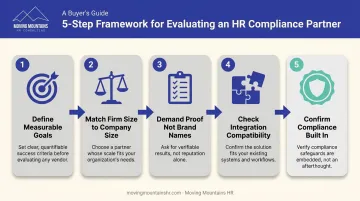
Picking a firm off a "best of" list is a mistake if it doesn't match your actual situation. Work through these steps before signing anything:
- Define measurable goals first. "Reduce overtime by 15%" or "cut turnover by five points" keeps proposals focused instead of generic sales pitches.
- Match firm size to your company size. Enterprise WFM platforms are overkill for a 20-person business. Boutique compliance firms may lack the technology bench for a 50,000-employee retailer.
- Demand proof, not brand names. Ask for case studies, pilot results, or direct client references rather than trusting reputation alone.
- Check integration compatibility. Verify how the firm's tools or processes work with your existing payroll and HRIS systems. Clunky integrations erase promised efficiency gains fast.
- Confirm compliance is built in, not bolted on. A plan that ignores wage-and-hour rules creates legal exposure that can erase any efficiency gains.
In fiscal year 2025 alone, the US Department of Labor's Wage and Hour Division recovered more than $259 million in back wages for 176,957 workers, according to DOL enforcement data.
The right partner treats compliance as part of the optimization work itself, not an afterthought handled by a separate legal team.
Why Workforce Optimization Looks Different for Small and Mid-Size Businesses
SMBs rarely need enterprise workforce management (WFM) software. Their version of workforce optimization usually looks like fixing policy gaps, right-sizing roles, and building retention strategies through fractional HR leadership instead of analytics platforms nobody has time to run.
The hidden cost most SMBs miss: without dedicated HR leadership, many businesses absorb turnover and compliance costs for years. Turnover alone can cost 50% of an employee's salary for entry-level roles and up to 200% for skilled or technical positions.
Add wage-and-hour penalty risk, and the "we'll just handle HR ourselves" approach gets expensive quietly. Fractional CHRO services close that gap:
- Executive-level HR strategy without a six-figure full-time salary
- Compliance audits that catch problems before they become lawsuits
- Retention planning that cuts the turnover tax most SMBs never track
- Scalable support that grows with the business, not a fixed enterprise contract
Moving Mountains HR's tiered model, including its Premium fractional CHRO tier, gives SMBs executive-level workforce strategy without enterprise overhead.
Conclusion
There's no single "best" workforce optimization firm. The right partner depends on matching your company's size, industry, and specific goals, not chasing the biggest name on this list.
Before signing a contract, evaluate scalability, compliance expertise, and cost-effectiveness side by side. A firm that's a great fit for a 5,000-employee manufacturer may be a poor fit for a 30-person healthcare practice, and vice versa.
If you're a small or mid-size business trying to figure out where your workforce strategy has gaps, Moving Mountains HR offers a free consultation to talk through compliance risk and workforce strategy — no enterprise price tag required.
Frequently Asked Questions
What is a workforce optimization specialist?
A workforce optimization specialist analyzes staffing, scheduling, and performance data to align labor with business demand and goals. Most combine data analysis with HR or operations experience and recommend practical staffing changes.
What are the 4 pillars of WFM?
The widely recognized framework includes forecasting, scheduling, intraday management, and employee engagement, according to NICE's contact-center WFM model. Some firms substitute performance management for engagement depending on their methodology.
What is the difference between workforce optimization and workforce management?
Workforce management (WFM) handles the day-to-day mechanics: scheduling, time tracking, and shift coverage. Workforce optimization (WFO) adds strategic analytics, engagement initiatives, and performance improvement on top of that operational base.
How much does workforce optimization consulting cost for a small business?
Costs vary widely based on scope, from a one-time compliance audit to ongoing fractional HR support. Tiered service models let small businesses control spending instead of locking into a flat enterprise-style contract.
Which industries benefit most from workforce optimization consulting?
Contact centers, retail, healthcare, and manufacturing use workforce optimization tools and consulting most heavily. Regulated industries gain even more when that work ties directly to compliance monitoring.
How does workforce optimization support HR compliance in states like California?
Effective optimization embeds state-specific labor rules, such as meal and rest break requirements and staffing ratios, directly into scheduling and policy design. Building those rules in up front helps businesses avoid wage-and-hour penalties instead of treating compliance as an afterthought.