
Workplace inclusion extends far beyond hiring diverse employees. It's about creating an environment where everyone—regardless of background, identity, abilities, or communication style—feels valued, respected, and empowered to contribute fully. When inclusion is missing, businesses lose out on ideas, productivity, and talent retention.
This guide breaks down what an inclusive workplace actually looks like, why it matters for your bottom line, the key elements that drive inclusion, and practical strategies small businesses can implement without breaking the budget.
Key Takeaways
- Inclusive workplaces combine diverse hiring with systems ensuring everyone can succeed and contribute
- Higher psychological safety is tied to 19% planning to leave vs. 41% in low-safety environments (SHRM Foundation)
- Core elements include psychological safety, equitable advancement access, and inclusive leadership at all levels
- Small businesses can start with low-cost policy changes, flexible practices, and leadership training rather than expensive programs
What Is an Inclusive Workplace?
An inclusive workplace is an environment where all employees feel valued, respected, and able to contribute their ideas and experiences. According to the Center for Creative Leadership, people can participate fully without hiding or minimizing parts of themselves.
Diversity vs. Inclusion: Understanding the Difference
Many business owners confuse diversity with inclusion, but they're distinct concepts:
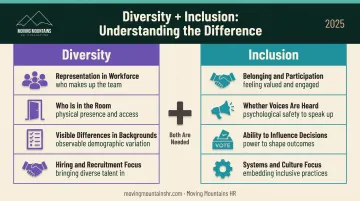
- Diversity describes who is in the room—the differences in backgrounds, experiences, identities, and perspectives represented in your workforce
- Inclusion determines whether those people feel they belong, whether their voices are heard, and whether they can influence decisions that affect their work
You can have a diverse workforce without inclusion, but you cannot achieve true inclusion without some level of diversity. A workplace might hire people from varied backgrounds yet still fail to create conditions where everyone can succeed equally.
What Inclusion Looks Like in Practice
Inclusive workplaces share several observable characteristics:
- Meaningful input from employees across levels, departments, and backgrounds influences actual decisions
- Psychological safety allows people to speak up, admit mistakes, and share ideas without fear of negative consequences
- Equal access to opportunities for training, mentoring, advancement, and high-visibility projects regardless of background
- Respectful communication that acknowledges different perspectives and communication styles
- Bias-aware leadership that recognizes how unconscious assumptions affect decisions
- Regular policy review to identify and remove barriers to participation
Common Misconception: Equal Treatment vs. Equitable Support
A common misconception is that inclusion means treating everyone exactly the same. Inclusion requires equitable support tailored to individual needs so everyone can perform at their best.
For example, one employee might need flexible hours to accommodate childcare, while another might require screen-reading software to access digital documents. Both are reasonable supports that remove barriers so each person can contribute fully.
Why Workplace Inclusion Matters for Your Business
Workplace inclusion delivers measurable business advantages. Inclusive workplaces tend to outperform competitors on retention, productivity, innovation, and talent outcomes.
Retention and Turnover Cost Reduction
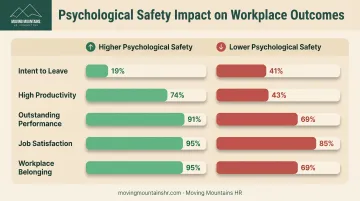
Employee turnover is expensive, particularly for small businesses with limited resources. The American Psychological Association's 2024 study of 2,027 U.S. workers found that intent to seek a new job within one year was 19% among workers with higher psychological safety versus 41% among those with lower safety.
What this means for your business:
- Lower recruitment and training costs
- Reduced productivity loss from vacant positions
- Preservation of institutional knowledge
- Stronger team cohesion and continuity
Productivity and Performance Gains
The same APA research found significant performance differences tied to psychological safety:
- Self-rated productivity: 74% high versus 43% low
- Very good or outstanding performance: 91% versus 69%
- Job satisfaction: 95% versus 85%
- Workplace belonging: 95% versus 69%
These are self-reported measures and associations, not proven causation. Still, the pattern is consistent: when employees feel safe and included, they perform better.
Innovation and Financial Performance
Deloitte's research on inclusive cultures found that organizations with inclusive cultures were 6 times as likely to be innovative and agile, and 2 times as likely to meet or exceed financial targets. These are organizational associations. Companies with inclusive cultures tend to perform better, though inclusion alone does not explain every gain.
Talent Acquisition Advantage
Inclusive companies access wider talent pools and stand out when candidates hold multiple offers. SHRM research indicates that an authentic employer brand attracts qualified applicants and turns them into advocates who refer others.
Compliance and Risk Management
Inclusive practices help organizations meet legal requirements under the Americans with Disabilities Act (ADA) and Equal Employment Opportunity Commission (EEOC) guidelines while reducing discrimination liability. The ADA applies to employers with 15 or more employees and requires reasonable accommodation for qualified individuals with disabilities.
Proactive inclusion reduces the risk of discrimination claims, harassment complaints, and hostile work environment lawsuits, all of which can be financially devastating for small businesses.
Key Elements of an Inclusive Workplace
Building an inclusive workplace means getting several core elements right. Focus on these areas to create an environment where everyone can succeed.
Psychological Safety
Psychological safety means employees feel comfortable speaking up, sharing ideas, admitting mistakes, and being their authentic selves without fear of negative consequences. The APA's 2024 survey measured psychological safety through seven key indicators:
- Mistakes held against people
- Value placed on unique skills
- Freedom to raise difficult issues
- Rejection when people differ
- Safety around risk-taking
- Comfort asking for help
- Undermining behavior among coworkers
In the APA study, higher psychological safety was associated with 27% typical-workday stress versus 61% in lower-safety environments.
Equitable Access to Opportunities
All employees should have fair access to advancement, development, high-visibility projects, and leadership opportunities regardless of background. This means:
- Extending growth opportunities beyond employees already labeled "high potential"
- Creating transparent promotion processes that reduce bias
- Offering mentoring and training broadly across the organization
- Assigning challenging projects based on skills and potential, not favoritism
McKinsey's 2025 Women in the Workplace study found that in the U.S. and Canada, 93 women were promoted to manager for every 100 men. That gap is why promotion-rate parity should be measured rather than assumed.
Inclusive Leadership at All Levels
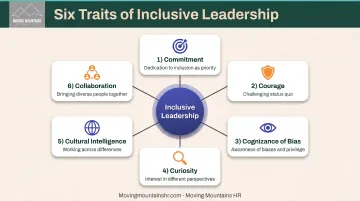
Managers and executives must model inclusive behaviors, actively seek diverse perspectives, and hold themselves accountable for creating belonging. Deloitte's research identifies six signature traits of inclusive leadership:
- Commitment – Dedication to inclusion as a strategic priority
- Courage – Willingness to challenge the status quo and have difficult conversations
- Cognizance of bias – Awareness of personal biases and privilege
- Curiosity – Genuine interest in different perspectives and experiences
- Cultural intelligence – Ability to work effectively across differences
- Collaboration – Skill at bringing diverse people together to solve problems
Flexible Policies and Practices
Work arrangements, communication methods, and performance expectations should accommodate different needs, work styles, and life circumstances. Practical options include:
- Flexible work schedules that accommodate caregiving and religious observances
- Floating holidays that employees can use for personally meaningful occasions
- Multiple communication channels for different preferences (written, verbal, anonymous)
- Outcome-focused performance measures rather than activity tracking
- Accessible meeting formats that work for different abilities
Authentic Representation and Voice
Employees from all backgrounds should see themselves reflected in leadership and have genuine influence on decisions that affect them. This goes beyond token representation. It includes:
- Input from different functions, locations, levels, ages, and cultural backgrounds
- Decision-making processes that incorporate diverse viewpoints
- Leadership demographics that reflect your workforce
- Employee feedback that actually changes policies and practices
How to Build an Inclusive Workplace Culture
Inclusive culture takes sustained effort and systemic change. Build it through leadership commitment, honest assessment, clear policies, inclusive communication, and real accountability.
1. Start with Leadership Commitment and Education
Secure buy-in from executives and managers through training on inclusive leadership, unconscious bias, and the business case for inclusion. However, Deloitte's 2023 research warns that individual-focused training alone generally does not produce the behavior change needed for equitable outcomes.
Effective leadership development includes:
- Executive sponsorship of inclusion initiatives
- Training paired with process redesign and accountability
- Ongoing coaching and support for managers
- Clear expectations tied to performance evaluations
2. Conduct an Honest Assessment of Your Current Culture
Use employee surveys, focus groups, and policy reviews to identify gaps and barriers. SHRM recommends offering both anonymous written surveys and face-to-face channels because anonymity can increase comfort while some employees communicate better in person.
Assessment strategies:
- Anonymous surveys measuring psychological safety, belonging, and satisfaction
- Confidential focus groups with employees from different backgrounds
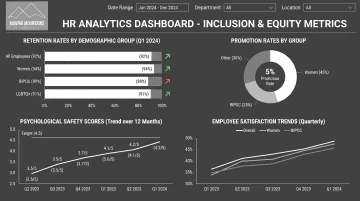
- Analysis of retention, promotion, and advancement data by demographic group
- Review of policies and practices against best-practice benchmarks
If you need help with a full policy review, Moving Mountains HR's compliance audits can flag gaps and keep inclusion work aligned with legal requirements.
3. Create or Update Policies That Support Inclusion
Develop clear policies that remove barriers and establish expectations:
- Anti-discrimination and anti-harassment policies
- Flexible work arrangement guidelines
- Simple, stigma-free accommodation request processes
- Inclusive leave policies (parental leave, religious observances, caregiving)
- Transparent promotion and advancement criteria
- Clear complaint and investigation procedures
The EEOC recommends neutral, objective criteria to reduce decisions driven by stereotypes or hidden bias.
4. Implement Inclusive Communication Practices
Communication shapes culture. Practical shifts include:
- Encourage use of preferred names and pronouns
- Use inclusive language in all materials (job postings, handbooks, emails)
- Structure meetings so all voices are heard, not just the loudest
- Provide multiple channels for employee feedback
- Make digital content accessible to people using assistive technology
- Consider language, literacy, and cultural differences in written communications
5. Establish Accountability Systems
Set measurable inclusion goals, track progress through data, and tie leadership performance to inclusion outcomes. Deloitte found that 24% of organizations were not establishing accountability or measuring progress on equity commitments.
Accountability measures:
- Disaggregated data showing outcomes by employee group
- Transparent reporting of retention, promotion, and advancement rates
- Regular review of psychological safety and belonging metrics
- Leadership performance evaluations that include inclusion outcomes
- Budget allocated to inclusion initiatives with measurable ROI
Creating Inclusive Policies and Practices That Work for Small Businesses
Small businesses often worry that inclusion initiatives require resources they don't have. In reality, many high-impact practices cost little to nothing.
Design Simple, Stigma-Free Accommodation Processes
According to the Job Accommodation Network's 2025 analysis, 61% of reported workplace accommodations cost nothing, and one-time accommodations had a median cost of just $300.
Cost-effective accommodations include:
- Schedule changes or flexible hours
- Policy modifications (allowing remote work, breaks)
- Workspace adjustments (different desk location, lighting)
- Communication accommodations (written instructions, extra time)
Make the request process simple: allow employees to ask for what they need without requiring formal medical disclosure when possible. For small businesses, a conversation with a manager often suffices.
Build Flexibility into Everyday Operations
Flexibility benefits everyone and costs nothing. Consider:
- Adaptable schedules with core hours and flexible start/end times
- Multiple communication options: email, chat, phone, and in-person meetings
- Outcome-focused performance measures that judge results, not when or where work happens
- Cross-training so operations keep running when someone needs time off
- Floating holidays so employees can observe occasions that matter to them
Invest Strategically in Low-Cost, High-Impact Initiatives
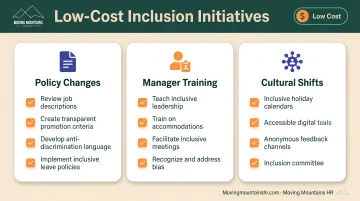
Start with the changes that move the needle most:
Policy changes:
- Review job descriptions to remove unnecessary requirements
- Create transparent promotion criteria
- Develop clear anti-discrimination language
- Implement inclusive leave policies
Manager training:
- Teach inclusive leadership behaviors
- Train managers on handling accommodation requests
- Build skills for facilitating inclusive meetings
- Practice recognizing and addressing bias
Cultural shifts:
- Inclusive holiday calendars that recognize diverse celebrations
- Accessible digital tools (screen readers, captioning)
- Anonymous feedback channels (suggestion boxes, surveys)
- A small inclusion committee or rotating employee roundtable
Common Challenges and How to Overcome Them
Even with the best intentions, you'll face obstacles. Anticipate these common challenges and have strategies ready.
Address the "We're Too Small for This" Mindset
Small businesses often believe inclusion is only for large corporations with dedicated HR departments. In reality, small businesses especially benefit from inclusion because:
- You depend heavily on each employee's contribution
- You have less room for costly turnover
- You compete for talent against larger employers with bigger budgets
- Inclusive cultures become key differentiators in attracting quality candidates
- Small size means culture changes can happen faster with less bureaucracy
Start with foundational practices like clear policies, fair processes, and open communication. These cost nothing but attention and commitment.
Navigate Resistance and Discomfort
Change is uncomfortable, and some employees or leaders may resist inclusion efforts. Common pushback includes:
- "This is just political correctness"
- "Why do we need to change what's always worked?"
- "I'm afraid I'll say the wrong thing"
- "We don't have the resources for this"
Strategies for handling resistance:
- Lead with retention, productivity, and performance data to make the business case
- Build skills over time instead of demanding perfection on day one
- Give people room to ask uncomfortable questions without judgment
- Have leaders model vulnerability by sharing their own learning curve
- Listen to worries and answer them with concrete next steps
- Recognize small wins so progress stays visible and momentum builds
In the Conference Board's 2024 study of 1,345 U.S. workers and leaders, 58% believed their employer devoted an appropriate level of effort and resources to workplace inclusion. That finding suggests balanced, sustained efforts resonate with most employees.
Maintain Momentum Beyond Initial Efforts
Inclusion is not a one-time project or annual training. It requires ongoing attention and evolution. Many organizations launch with enthusiasm but lose focus over time.
How to sustain effort:
- Survey employees each year on psychological safety, belonging, and satisfaction
- Stay current on best practices and legal requirements
- Track complaint data, exit interview themes, and promotion patterns over time
- When something doesn't work, adjust the approach rather than abandon it
- Connect inclusion metrics to strategic goals so the work stays visible
- Revisit your tactics as the organization grows and the workforce changes
The EEOC recommends leadership that establishes respect and civility, trend analysis of complaint data, and regular workplace-climate assessments to sustain progress.
Frequently Asked Questions
What defines an inclusive workplace?
An inclusive workplace welcomes diverse employees and builds systems, policies, and culture so everyone has equal opportunity to contribute and succeed. People feel valued, respected, and able to participate fully without hiding parts of themselves.
Can you give me an example of an inclusive workplace?
Common examples include flexible scheduling for religious observances and caregiving, meetings structured so quieter voices are heard, transparent promotion processes, simple accommodation requests, and leaders who seek input at all levels before decisions that affect employees.
What are the 6 signature traits of inclusive leadership?
Deloitte's framework names six traits: Commitment to inclusion as a priority, Courage to challenge the status quo, Cognizance of bias and privilege, Curiosity about different perspectives, Cultural Intelligence across differences, and Collaboration that brings diverse people together.
What's the difference between diversity and inclusion?
Diversity is representation: who is in the room and the range of backgrounds present. Inclusion is participation and belonging: whether those people feel valued and can fully contribute. You can have diversity without inclusion, but not true inclusion without some diversity.
How much does it cost to build an inclusive workplace?
Many inclusive practices cost little or nothing. Policy changes, clearer communication, and leadership behaviors mainly need commitment, not large budgets. JAN's 2025 data shows 61% of accommodations cost nothing, with one-time fixes averaging $300; better retention often offsets the rest.
Do small businesses need inclusion initiatives?
Yes. Small businesses depend heavily on each employee, have less room for turnover, and compete with larger employers for talent. Inclusive cultures help attract and keep people, and smaller teams can shift culture faster than large bureaucracies.
Building an inclusive workplace takes sustained effort, not a one-time checklist. Start with an honest assessment, prioritize high-impact low-cost changes, and stay consistent. Gains in retention, productivity, innovation, and competitive advantage make the work worthwhile.
If you need help identifying policy gaps or building compliant, inclusive HR practices, Moving Mountains HR offers compliance audits, policy development, and strategic HR guidance tailored to small and mid-size businesses. Contact us to discuss how we can support your inclusion goals.